

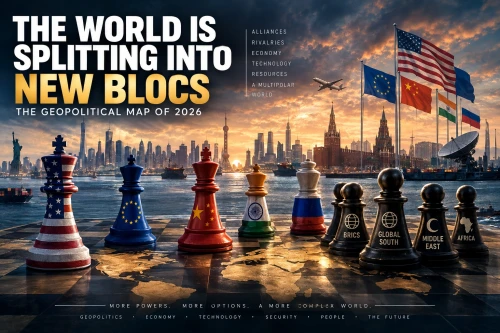

As we move deeper into the 21st century, artificial intelligence (AI) is not only transforming our present—it is also offering us glimpses into the future. One of the most captivating uses of AI is predictive modeling, where algorithms analyze vast datasets to forecast future trends. When asked to envision the world in the year 2100, AI systems paint a compelling picture of global development, economic power shifts, and the safest places for future generations to live.
So, what will the world look like in 2100? Which continents will rise to the top economically, technologically, and socially? And where will people enjoy the best quality of life? Here's what AI sees in our future.
🌍 The Most Developed Continents by 2100
1. Asia: The Global Innovation Hub
According to AI-generated models, Asia is projected to become the most technologically advanced and economically powerful continent by 2100. Here’s why:
- Economic Powerhouses: Countries like China, India, and South Korea will dominate global GDP rankings due to rapid urbanization, tech innovation, and large populations.
- Megacities: Cities like Shanghai, Mumbai, and Seoul are expected to become "smart megacities," powered by AI, clean energy, and advanced infrastructure.
- Education and Talent: Heavy investment in education and R&D is projected to turn Asia into a global leader in science, biotech, and space exploration.
AI forecasts a significant shift from manufacturing economies to AI-driven services and green technologies, especially in East and Southeast Asia.
2. Africa: The Rising Star
Africa may surprise many with its projected trajectory by 2100. With one of the youngest and fastest-growing populations in the world, AI models predict that Africa will evolve from a resource-dependent continent to a digital and sustainable innovation center.
- Population Boom: Africa’s population is expected to exceed 4 billion by 2100, creating a vast labor force and consumer market.
- Technological Leapfrogging: Many African countries are already skipping traditional development steps—adopting mobile banking, AI in agriculture, and renewable energy at unprecedented rates.
- Investment Magnet: AI predicts a surge in global investment, especially in countries like Nigeria, Kenya, Rwanda, and Ghana, leading to massive infrastructure and education reforms.
If political stability continues to improve, Africa could become a major tech and economic player on the global stage.
3. Europe: The Sustainability Leader
Europe in 2100 is envisioned as a stable, environmentally conscious region with high living standards, advanced healthcare, and robust social systems.
- Green Economy: The EU's long-term focus on climate neutrality, renewable energy, and sustainable living will pay off, making Europe the "greenest" continent.
- Quality of Life: Countries like Sweden, Germany, and the Netherlands are expected to lead in social equity, safety, healthcare, and education.
- AI and Robotics: Europe will be known for ethical AI development, privacy-first technology, and high-tech manufacturing.
Despite slower population growth, Europe’s steady governance and innovation in sustainability will keep it globally competitive.
🌎 The Safest Continents for Living and Economic Stability
1. Europe: A Model of Stability and Safety
AI sees Europe as the safest place to live in 2100 due to:
- Low crime rates
- Strong healthcare systems
- High environmental standards
- Political stability and low corruption
European cities are likely to remain among the world’s most livable, especially in Scandinavia, Switzerland, and the Netherlands.
2. Oceania: A Climate-Conscious Paradise
Australia and New Zealand are projected to be some of the safest and most climate-resilient countries by 2100.
- Climate Adaptation: Advanced water management, renewable energy adoption, and ecological protection will help the region withstand climate change.
- High Quality of Life: With strong economies, low population density, and political transparency, Oceania will remain a desirable place to live and work.
AI forecasts that Oceania will attract migrants from more volatile regions, boosting diversity and innovation.
3. North America: Innovation with Caveats
The United States and Canada will continue to be global innovation leaders. However, AI predictions highlight a complex future:
- U.S.: Still a tech and defense powerhouse, but internal inequality and climate challenges (wildfires, rising sea levels) could pose risks to safety and cohesion.
- Canada: More stable and socially cohesive, with massive potential due to climate resilience and immigration-friendly policies.
Canada may emerge as a safe economic haven and attract skilled migrants, while the U.S. continues to shape global culture and technology.
⚠️ Regions at Risk: AI’s Warning Signs
AI models also identify areas likely to face serious challenges by 2100:
- South Asia and Southeast Asia: While economically dynamic, these regions may suffer from overpopulation, water scarcity, and climate risks (floods, heatwaves).
- Middle East and North Africa: Geopolitical instability and extreme heat could impact quality of life and economic growth.
- Parts of South America: While rich in resources, deforestation and governance issues may hinder sustainable development.
Without global cooperation and reform, these regions could struggle with climate migration, food insecurity, and political unrest.
🧠 What Role Will AI Itself Play in 2100?
By 2100, AI will be deeply embedded in every aspect of life:
- Personal AI assistants will manage health, finance, education, and even emotional well-being.
- Governments and cities will rely on AI for planning, public services, and law enforcement.
- Economies will shift toward post-scarcity models, with AI handling most production, leaving humans free to pursue creative and social endeavors.
However, AI also warns of potential dangers: surveillance states, ethical dilemmas, and dependency on technology. The future of AI will require global agreements on safety, privacy, and human rights.
🌐 Where to Live and Thrive in 2100
If you’re thinking ahead—or planning for your great-grandchildren—AI’s vision of 2100 suggests:
- Live in Europe or Oceania for peace, safety, and sustainability.
- Invest in Asia and Africa for innovation, opportunity, and growth.
- Watch North America for breakthroughs, but stay aware of social and climate complexities.
Ultimately, the world of 2100 will be more interconnected, technologically advanced, and environmentally conscious—if humanity collaborates wisely with AI and one another.
#predict2100 #world #prediction #asia #europe #america #africa

258 million people in the world live in conditions of severe malnutrition and lack of access to food. Last year, this phenomenon intensified compared to 2021, when 193 million people lived in a state of emergency. The data for 2022 is the worst since 2017, when a comprehensive study of the famine phenomenon began.
According to the report of the Intergovernmental Authority for Development (IGAD), an organization associating representatives of eight African countries, prepared together with the Food Security Information Network (FISN), the threat of hunger in the world is growing. The worst situation is in several African countries, as well as in the Middle East, which are at war. The population of war-torn Afghanistan is also at serious risk.
More than 26 million citizens of the Democratic Republic of the Congo, a country with numerous natural resources, but torn apart by internal conflicts and plundered by transnational corporations, are at serious risk of starvation. Ethiopia came second with 23.6 million people at risk, but the extent of malnutrition is somewhat smaller.
The share of starving people in the country's total population is highest in Yemen. In a country devastated by civil war and the aggression of Western-backed Saudi Arabia, 55% of the population is starving. The same percentage applies to Syrians, but in this case it is malnutrition, not starvation. In Yemen, an additional 31,000 people are on the brink of starvation. In Afghanistan, devastated by American occupation and civil war, 19.9 million people, or 46% of the population, are starving. 6.1 million are extremely malnourished.
The report on world hunger points out that in the most affected countries, the gap in the level of nutrition between the small elite and the general population is growing. Hunger affects mainly the weakest - refugees, the sick and children. Developmental disorders of malnourished children are a huge problem. In the most affected countries, they have problems with proper weight and height development. In 2022, the phenomenon affected 4.8 million children in Ethiopia, 2.8 million in Sudan, 1.5 million in Somalia and 1.4 million in South Sudan. In extreme cases, malnutrition causes an increase in infant and child mortality.
The report lists three main causes of famine. The first is armed conflicts. They are ongoing in most of the affected countries. The situation has deteriorated significantly in countries such as Yemen, Afghanistan, as well as South Sudan and Sudan, where internal conflicts have flared up again.
The second factor is the international crisis, including the Covid-19 pandemic and the war in Ukraine, which supplies developing countries with a significant amount of cereals. They caused an increase in the stratification of societies. The poor have felt it the most, losing food security, among other things. Poor countries have become less resilient to successive crises.
The third factor was natural disasters - the worst prolonged drought in decades in West Africa - the so-called Horn of Africa covering Ethiopia, Eritrea and Somalia, tropical cyclones in the south of the continent, and in Asia, especially in Pakistan, a series of floods on a massive scale. Natural disasters have devastated many agricultural regions whose production was used to feed millions of people. The authors of the report point to record high food prices in countries where all of the above-mentioned factors have been combined. For example, in Somalia grain prices have increased by 142% compared to the average prices of the last 5 years. In Sudan, the price of a kilogram of sorghum, one of the staple crops, increased by 243% in 2022 compared to the previous year. Many farmers lose their farms and are forced to buy food. In turn, a decrease in local production causes an increase in prices.
According to the authors of the famine report in Africa alone, in 2023 more than 30 million people will need urgent food assistance due to the situation in which they find themselves. This is especially true for the inhabitants of Somalia and South Sudan. It is estimated that infighting in Sudan may significantly increase the number of those in need of immediate assistance. More than a million Sudanese have left their homes in recent months, of which around 250,000 have taken refuge in neighboring countries. Many rural farming communities were destroyed by the war or forced to flee, and even before the outbreak of the civil war, the situation, especially in the Sudanese countryside, was difficult.
IGAD calls on the UN and the World Health Organization to take coordinated action to combat hunger. It also informs that getting out of the current crisis will require many years of action.