


Why Is Everyone Suddenly Nostalgic for 2016? The Psychology Behind the Internet's Favorite Year

2016.
The phenomenon has grown so quickly that many users jokingly claim "2026 is the new 2016." What started as a playful meme has evolved into one of the biggest nostalgia movements social media has seen in years, with millions of people revisiting old photos, recreating forgotten trends, and rediscovering a version of the internet that felt dramatically different from today's digital world. ()
But why 2016?
Why not 2012?
Why not 2019?
Why are teenagers—some of whom barely remember 2016—joining the movement alongside millennials who actually lived through it?
The answer goes far beyond fashion, music, or viral memes.
It reveals something fascinating about how humans remember the past, how social media has changed, and why the internet itself feels fundamentally different today.
This story isn't really about a calendar year.
It's about the last moment when many people felt the internet belonged to its users instead of algorithms.
The Year That Refuses to Disappear


Every decade develops a year that becomes almost mythical.
For many people born in the late 1990s and early 2000s, that year is unquestionably 2016.
Mention it almost anywhere online and people immediately begin listing memories.
"Pokémon GO Summer."
"Closer by The Chainsmokers."
"Vine."
"Harambe."
"The Mannequin Challenge."
"The Snapchat dog filter."
"Old Instagram."
None of these memories are particularly life-changing on their own.
Together, however, they create something psychologists call collective nostalgia—a shared emotional memory built around common cultural experiences rather than personal events.
Unlike childhood nostalgia, which belongs only to individuals, internet nostalgia belongs to millions of strangers simultaneously.
Millions of people laughed at the same six-second Vine videos.
Millions chased the same virtual Pokémon through city parks.
Millions added exactly the same flower crown filter to their selfies.
Millions unknowingly created a global digital memory together.
That feeling has become increasingly rare.
More Than a Trend
Recent reports suggest that searches related to 2016 exploded across social media during the first weeks of 2026. Instagram became filled with old photo dumps while TikTok creators recreated forgotten trends from exactly ten years earlier. Spotify users built thousands of playlists containing songs from 2016, and even celebrities began posting throwback content from that era. ()
At first glance, this seems like ordinary nostalgia.
It isn't.
Because most nostalgia looks back twenty or thirty years.
This one appeared after only ten.
That alone makes it fascinating.
Why Ten Years Matters
Psychologists have long observed that people naturally revisit memories in cycles.
Ten years is often enough time for ordinary moments to become emotionally significant.
The embarrassing selfie suddenly becomes charming.
The cheap smartphone photos begin to feel authentic.
Music that once played in shopping malls transforms into the soundtrack of youth.
Time edits memory.
It softens rough edges.
It removes everyday frustrations.
Eventually, what remains isn't perfect history.
It's emotional history.
And emotional history is often far more powerful.
The Last "Simple" Internet


Ask almost anyone participating in today's nostalgia movement what they truly miss.
Very few answer:
"I miss 2016."
Instead they say things like:
"I miss how social media felt."
Those two statements sound similar.
They are completely different.
The year itself wasn't perfect.
Far from it.
Politically, socially and globally, 2016 contained enormous challenges.
Brexit.
Major terrorist attacks.
Political division.
Celebrity deaths.
Global uncertainty.
Yet almost none of these events dominate today's nostalgic posts.
Instead people remember something else entirely.
They remember how being online felt.
Researchers and cultural commentators increasingly argue that today's nostalgia is less about 2016 itself and more about the final years before today's highly algorithmic, AI-driven internet transformed everyday online life. ()
Before Everything Became Content
Think about your average Instagram post today.
Professional lighting.
Perfect composition.
SEO captions.
Affiliate links.
Brand collaborations.
Engagement optimization.
Algorithm strategy.
Now compare that with a typical Instagram photo from 2016.
Someone standing in front of a sunset.
Too much saturation.
A random caption.
Three emojis.
Maybe twenty likes.
Nobody cared.
Nobody analyzed posting times.
Nobody worried about "personal branding."
People simply shared moments.
Ironically, the technical quality was worse.
The emotional quality often felt better.
Before AI Changed Creativity
Artificial intelligence has transformed the internet in remarkably little time.
Today we generate images in seconds.
Videos can be created without cameras.
Music appears with a prompt.
Entire articles can be written automatically.
None of that existed in everyday life in 2016.
Creating something required effort.
Photography required going outside.
Videos required editing.
Drawings required artists.
Memes spread because people remixed them—not because software generated endless variations.
That human imperfection created personality.
Today's internet is astonishingly efficient.
Many people simply feel it has become less personal.
This growing sense of digital fatigue is one reason commentators believe the 2016 revival resonates so strongly, especially among younger users who feel overwhelmed by algorithmic feeds and AI-generated content. ()
The Summer That Belonged to Everyone


Then came July.
A mobile game changed everything.
Not because it had the best graphics.
Not because it offered revolutionary gameplay.
But because it accomplished something modern technology rarely achieves.
It made strangers talk to each other.
Pokémon GO wasn't simply a game.
It became a worldwide social event.
Suddenly parks were full again.
Historic landmarks attracted thousands of visitors.
Families walked together.
Teenagers explored neighborhoods they had never visited.
Adults who hadn't played Pokémon for years downloaded the app "just to see what everyone was talking about."
Cities looked different.
People smiled at strangers.
Complete strangers asked each other:
"Did you catch it?"
Academic research later found measurable increases in physical activity and noticeable changes in how people used public spaces during the game's peak, making Pokémon GO one of the few digital experiences to encourage millions of people to spend more time outdoors. ()
That experience is difficult to recreate today.
Modern apps are incredibly personalized.
Pokémon GO felt universal.
For one brief summer, it seemed as if everyone was playing the same game.


The Social Internet We Didn't Know We Were Losing
The Golden Age of Instagram
If someone opened Instagram in 2016 after spending years away from social media, they would probably be surprised by how... ordinary everything looked.
There were no endless reels playing automatically. No AI-generated influencers. No "Suggested for You" posts appearing every few seconds. No sophisticated shopping integrations trying to convince users to buy products they had never searched for.
Instead, Instagram felt remarkably simple.
You followed people because you wanted to see what they were doing. Friends, classmates, relatives, photographers, travelers, musicians—they all appeared in one chronological stream that reflected real life rather than machine learning.
The app rewarded attention, not optimization.
Users rarely discussed engagement rates. The phrase "content creator" had not yet become a career aspiration for millions of people. Influencers certainly existed, but they occupied a relatively small corner of the platform.
For everyone else, Instagram was closer to a digital photo album than a business.
The photos themselves reflected this philosophy.
A cup of coffee by the window.
A sunset after work.
A train journey.
A dog sleeping on the couch.
A blurry concert picture.
None of them were perfect.
That was precisely the point.
Looking back today, many people describe those imperfections as authentic. Images were often over-edited with dramatic filters, yet they somehow felt more honest because nobody expected perfection.
Ironically, the technical quality of photographs has improved dramatically since 2016.
The emotional quality is much harder to measure.
The Era of Filters
One of Instagram's defining characteristics was its unmistakable visual style.
Each filter became part of internet culture.
Valencia made ordinary afternoons feel warmer.
Clarendon transformed cloudy skies into brilliant blue landscapes.
Juno made food appear irresistible.
Lark brightened vacations that were already unforgettable.
Today, many photographers would consider those filters excessive.
Back then, they were creative tools.
Users experimented without worrying whether their profile maintained a consistent aesthetic.
Nobody spoke about "building a personal brand."
The goal wasn't optimization.
It was expression.
This freedom allowed millions of people to document everyday life without constantly comparing themselves to professional creators.
In hindsight, those imperfect photographs now function as digital time capsules.
They preserve not only memories but also the visual language of an entire generation.
Before Every Moment Became Content
One subtle difference separates the internet of 2016 from today's digital world.
People documented experiences.
Today, many people design experiences around documentation.
This distinction may seem minor.
It changes everything.
Imagine attending a concert in 2016.
You might record your favorite song.
Take a selfie.
Capture a short video.
Then you put your phone away.
Now imagine attending the same concert today.
Many visitors record nearly every song.
Some livestream the performance.
Others create short vertical clips specifically for multiple social platforms.
Some even leave before the encore because they already captured enough material.
The event itself becomes secondary to the content it produces.
This transformation happened gradually.
Very few people noticed it while it was happening.
Only after looking backward do we recognize how dramatically our relationship with technology has changed.
The Rise of "Main Character Syndrome"
Another concept frequently discussed today would have sounded strange in 2016.
Main Character Syndrome.
The phrase describes the tendency to treat everyday life as though it were constantly unfolding inside a movie.
Ironically, social media did not invent this behavior.
Algorithms amplified it.
Platforms increasingly rewarded dramatic moments, emotional reactions, carefully curated lifestyles, and visually striking experiences.
Ordinary moments rarely performed well.
As a result, many users unconsciously began editing reality itself.
Vacations became photoshoots.
Restaurants became studios.
Friendships became collaborative content.
By comparison, 2016 appears refreshingly uncomplicated.
People still sought beautiful photos.
But they usually took them after enjoying the moment rather than instead of enjoying it.
When Going Viral Was an Accident
One fascinating aspect of early social media was how unpredictable popularity could be.
Nobody truly understood why certain posts exploded.
Sometimes an ordinary teenager uploaded a funny six-second clip.
Within hours, millions had watched it.
No expensive camera.
No marketing strategy.
No carefully researched hashtags.
Just creativity.
Today's platforms remain capable of creating overnight sensations.
However, many creators now study algorithms almost as carefully as filmmakers once studied cinematography.
The internet became measurable.
Optimization replaced experimentation.
While this evolution created incredible professional opportunities, it also removed part of the playful chaos that defined earlier online culture.
Many users miss that unpredictability.


Six Seconds That Changed Internet Comedy
Long before TikTok dominated smartphones, another platform quietly transformed internet entertainment.
Its name contained only four letters.
Vine.
The concept sounded almost absurd.
Users could upload videos lasting just six seconds.
That limitation became its greatest strength.
Instead of producing polished productions, creators focused on one thing:
Making people laugh immediately.
Every second mattered.
There was no room for long introductions.
No dramatic build-up.
No unnecessary explanation.
A joke either worked...
...or it didn't.
Millions of people opened Vine several times each day simply to see what strange idea someone had invented during the previous hour.
The platform became an endless laboratory of creativity.
Unknown teenagers developed editing techniques that filmmakers later admired.
Ordinary students accidentally became celebrities.
Quotes from Vine escaped the app itself and entered everyday conversation.
Even today, people unknowingly repeat jokes that first became popular on Vine.
Its influence extends far beyond its relatively short lifespan.
Creativity Through Limitations
Modern social media often encourages unlimited possibilities.
Long videos.
Multiple camera angles.
Artificial intelligence.
Automatic subtitles.
Professional editing.
Vine offered almost none of these features.
Instead, creators embraced constraints.
Interestingly, psychologists and designers have long argued that limitations often stimulate creativity rather than restrict it.
When every second counts, ideas become sharper.
Comedy becomes faster.
Storytelling becomes more efficient.
Many successful internet creators who later built enormous audiences on YouTube and TikTok originally learned these lessons on Vine.
The platform disappeared.
Its creative DNA survived.
Why People Still Watch Vine Compilations
It has been years since Vine officially shut down.
Yet millions of viewers continue watching old compilations on YouTube.
Why?
Partly because they remain genuinely funny.
But there is another reason.
Watching Vine today feels like opening a time capsule.
Fashion.
Hairstyles.
Phone cases.
Music.
Background conversations.
Even the image quality instantly transports viewers back to a different era of the internet.
Unlike professionally produced nostalgia documentaries, these clips were never intended to preserve history.
They simply recorded ordinary moments.
That accidental authenticity makes them surprisingly powerful.


The Faces, Sounds, and Style of 2016
Snapchat: The App That Taught Us to Be Imperfect
If Instagram was where people shared carefully chosen moments, Snapchat was where life happened in real time.
The app felt spontaneous.
Photos disappeared.
Videos lasted only a few seconds.
Nothing was meant to be permanent.
Ironically, that temporary nature encouraged people to be more authentic.
A messy bedroom wasn't embarrassing.
A bad hair day wasn't a disaster.
An awkward selfie didn't matter because it would disappear in a few hours.
For millions of teenagers and young adults, Snapchat became the closest thing to real conversation that social media had ever created.
People weren't trying to impress strangers.
They were simply talking to friends.
That subtle difference changed the atmosphere completely.
Looking back today, many users say Snapchat felt less stressful than modern social platforms because every post didn't have to become part of a permanent digital identity.
The Dog Filter That Became a Cultural Icon
Some internet trends vanish within days.
Others become symbols of an era.
Few digital filters have achieved the cultural status of Snapchat's famous dog face.
It was everywhere.
Birthday parties.
School buses.
Concerts.
Coffee shops.
Family vacations.
People who had never cared about augmented reality suddenly covered their faces with floppy ears and a cartoon tongue.
The filter was silly.
That was exactly why it worked.
Nobody expected artistic perfection.
Nobody expected professional photography.
It encouraged people to laugh at themselves.
Today's filters are technically astonishing.
They can reshape faces, apply realistic makeup, change hairstyles, and even generate entirely new environments.
Yet many people remember the old dog filter more fondly because it wasn't trying to make anyone look perfect.
It simply made people smile.
Stories Changed the Way We Shared Life
One of the biggest digital revolutions of the last decade arrived almost quietly.
The introduction of Stories changed how people documented everyday life.
Instead of publishing only the highlights, users began sharing small moments throughout the day.
Morning coffee.
Rain outside the office.
A favorite song in the car.
Walking the dog.
Dinner with friends.
These moments would disappear after twenty-four hours.
That temporary format removed pressure.
Not everything needed to become part of a carefully curated profile.
Ironically, temporary content often felt more genuine than permanent posts.
Today nearly every major social platform has adopted some version of Stories, proving how influential the idea became.


The Soundtrack of a Generation
Ask almost anyone who remembers 2016 to name a song from that year.
Chances are they won't stop at one.
Music has always been one of the strongest emotional triggers in human memory.
A familiar melody can instantly transport us back to a particular place, person, or season.
In many ways, 2016 became one of the defining years of modern pop music.
Artists such as The Chainsmokers, Twenty One Pilots, Rihanna, Drake, Justin Bieber, Sia, Adele, and Shawn Mendes dominated playlists around the world.
Songs like Closer, Heathens, One Dance, Cheap Thrills, Can't Stop the Feeling!, and Treat You Better became part of everyday life.
They played in cafés.
On buses.
At weddings.
In shopping malls.
On summer road trips.
Even people who weren't actively following popular music absorbed these songs through daily life.
Years later, hearing just the opening seconds of one of these tracks is often enough to unlock vivid memories.
Scientists call this the reminiscence bump—our tendency to form especially powerful memories around adolescence and early adulthood.
Music becomes the emotional glue that holds those memories together.
That helps explain why playlists labeled "Summer 2016" continue attracting millions of listeners.
People are not only listening to old songs.
They are revisiting old emotions.
Before Every Song Was an Algorithm
Streaming services already existed in 2016, but music discovery felt noticeably different.
Friends recommended songs.
Radio stations still shaped popular culture.
People shared playlists with classmates.
Someone played a new track during a road trip, and suddenly everyone wanted to know its name.
Today, recommendation algorithms are incredibly accurate.
They know what we like before we do.
Convenience has never been greater.
Yet something valuable has quietly faded.
The excitement of discovering music through people instead of software.
Many listeners now describe older playlists as more personal because they remind them of specific relationships rather than recommendation engines.


Fashion That Refuses to Stay in the Past
Fashion is famously cyclical.
What disappears eventually returns.
Still, few expected so many trends from 2016 to reappear so quickly.
Oversized denim jackets.
Bomber jackets.
White sneakers.
Adidas Superstars.
Chokers.
Minimalist backpacks.
Round sunglasses.
Neutral color palettes.
Many of these styles are once again visible on city streets around the world.
But this revival is about more than clothing.
Fashion acts as a visual shortcut to memory.
A single jacket can remind someone of high school.
A particular pair of sneakers can recall an unforgettable vacation.
An old backpack can bring back memories of university.
Clothes become emotional artifacts.
When people recreate 2016 outfits today, they are often trying to recreate the feeling that accompanied them.
The fabric is only part of the story.
Authenticity Wasn't Perfect—It Was Human
Perhaps the biggest reason why 2016 continues to fascinate people has nothing to do with technology, music, or fashion.
It has everything to do with emotion.
Looking back, the internet of 2016 appears less polished but more forgiving.
People uploaded blurry photos without embarrassment.
Videos shook because phones lacked advanced stabilization.
Selfies weren't edited with AI.
Travel photos didn't need drones.
Nobody expected every moment to be cinematic.
The imperfections became part of the memory.
Today, perfection is easier than ever to achieve.
Ironically, genuine imperfection has become increasingly rare.
That may explain why millions of users are returning to 2016—not because it was objectively better, but because it reminds them of a time when sharing life online felt less like a performance and more like a conversation.
As the nostalgia trend continues to grow, one question becomes impossible to ignore:
Why do our brains transform an ordinary year into something that feels almost magical?
The answer has less to do with smartphones and social media than with the fascinating way human memory works.
And that is where our journey continues.


Part 3 – Why Our Brains Keep Returning to 2016
Nostalgia Isn't About the Past
Most people think nostalgia means wanting to go back.
Psychologists disagree.
Modern research describes nostalgia not as an attempt to escape reality but as a complex emotional response that helps people make sense of who they are. Once considered an unhealthy fixation on the past, nostalgia is now widely understood as an emotion that can strengthen identity, increase optimism, reinforce social bonds, and even improve emotional well-being.
That changes everything.
When people say,
"I miss 2016."
they usually don't mean:
"I want to relive every day exactly as it happened."
Instead, they are saying something much more personal.
"I miss the way I felt."
The memories we revisit are often symbols.
A favorite song is really about the people who listened to it with us.
A Pokémon GO screenshot is really about warm summer evenings spent outdoors.
An old Instagram filter reminds us of weekends when nobody cared about building an online identity.
The object itself is rarely what matters.
It is the emotion attached to it.
Memory Is Not a Recording
One of the biggest misconceptions about the human brain is the belief that memories function like videos stored inside our heads.
They do not.
Every time we remember something, we reconstruct it.
Our brains quietly fill missing details, soften unpleasant experiences, and emphasize moments carrying the strongest emotional meaning.
That explains why childhood vacations often seem longer.
Why old friendships appear simpler.
Why school summers feel endless.
Our memories are not lying.
They are editing.
The editor is emotion.
The Beautiful Trick Our Minds Play
Imagine opening your phone and finding a photograph from July 2016.
Perhaps it shows nothing extraordinary.
A coffee.
A city street.
Friends sitting on a bench.
At the time, you probably thought almost nothing about that moment.
Yet ten years later it suddenly feels magical.
What changed?
Not the photograph.
You changed.
Life continued.
Responsibilities increased.
Technology accelerated.
Relationships evolved.
The picture remained frozen while everything else moved forward.
Because of that contrast, ordinary moments gain extraordinary emotional value.
They become anchors.
Small reminders that another version of ourselves once existed.


Psychologists use a fascinating term to describe one of the strongest patterns in autobiographical memory.
It is called the reminiscence bump.
Researchers have consistently found that people remember a disproportionately large number of meaningful events from adolescence and early adulthood compared with most other periods of life. It is considered one of the most robust findings in memory research. ()
Why?
Because those years are full of first experiences.
First love.
First solo trip.
First apartment.
First concert.
First job.
First heartbreak.
First real independence.
The brain pays special attention to experiences that shape identity.
Those memories become deeply connected to our sense of self.
For millions of people now in their twenties and early thirties, 2016 happened at exactly the right moment.
It became part of their personal foundation.
That is why remembering the year often feels surprisingly emotional.
Why Music Unlocks Forgotten Memories
Have you ever heard a song you hadn't listened to in years...
...and instantly remembered where you were?
The weather.
The people.
Even what you were wearing.
Music has a remarkable ability to activate autobiographical memory because it becomes associated with powerful emotional experiences.
A three-minute song can unlock an entire chapter of life.
That explains why playlists titled:
"Summer 2016."
"Driving at Night."
"Old Spotify Hits."
continue attracting millions of listeners.
People are not searching for songs.
They are searching for themselves.
Nostalgia Is Becoming Younger
Something unusual has happened over the last decade.
Historically, nostalgia was associated with middle age.
People looked back thirty or forty years.
Today the cycle is dramatically shorter.
Many internet users became nostalgic for 2016 after only ten years.
Experts believe several factors contribute to this accelerated nostalgia.
Digital photographs preserve everyday life in extraordinary detail.
Social media constantly reminds us what happened "On This Day."
Streaming platforms make old music immediately accessible.
Cloud storage prevents memories from disappearing.
Instead of fading naturally, the past remains permanently available.
The result is a new phenomenon:
People revisit recent memories much sooner than previous generations ever could. ()


Why Does Gen Z Miss a Year They Barely Remember?
Perhaps the most surprising aspect of the 2016 phenomenon is that many participants were children at the time.
Some were only ten.
Others were twelve.
A few were even younger.
How can someone feel nostalgic for a period they barely experienced?
The answer reveals something fascinating about culture.
Not all nostalgia is personal.
Some of it is inherited.
Movies create nostalgia.
Older siblings create nostalgia.
Parents create nostalgia.
The internet creates nostalgia.
A teenager watching hundreds of Vine compilations today may develop genuine emotional attachment despite never using Vine when it originally existed.
Likewise, millions of people feel nostalgic for the 1980s despite being born decades later.
Culture travels.
Emotion travels with it.
Digital Archaeology
Every generation becomes an archaeologist.
Instead of digging through ancient ruins...
...today we dig through old hard drives.
Archived Instagram accounts.
Forgotten Facebook albums.
Old YouTube channels.
Abandoned Tumblr blogs.
Expired Snapchat memories.
Every click uncovers another fragment of digital history.
Unlike physical history, however, this archive remains astonishingly complete.
The internet remembers almost everything.
That permanence fundamentally changes how nostalgia works.
For the first time in history, an entire generation can revisit ordinary Tuesday afternoons from a decade earlier with remarkable accuracy.
"2026 Is the New 2016"
What began as a joke quickly became one of the internet's defining cultural conversations.
Users compared side-by-side photographs.
Fashion returned.
Music resurfaced.
Old memes reappeared.
Flower crowns.
Polaroid aesthetics.
Skinny jeans.
Vintage filters.
Even photo editing intentionally became less perfect.
Many creators explained that they weren't trying to recreate 2016 exactly.
They were trying to recreate its atmosphere.
The trend reflects more than simple nostalgia. Cultural observers have linked it to a desire for authenticity in an online world increasingly shaped by algorithms, AI-generated content, and constant optimization.
Comfort During Uncertain Times
Research suggests that nostalgia often becomes stronger during periods of uncertainty.
When the future feels unpredictable, people naturally seek emotional stability by revisiting meaningful memories.
In other words...
The more complicated the present becomes...
...the more attractive the past appears.
Recent psychological work supports this idea, showing that various forms of threat or uncertainty can trigger nostalgic reflection, which in turn helps people feel more connected, purposeful, and emotionally resilient.
That does not mean the past was objectively better.
It means it feels emotionally safer.
Sometimes...
That feeling is exactly what people need.


Nostalgia Has Become a Billion-Dollar Business
For decades, nostalgia was considered a deeply personal emotion.
Today, it is also one of the world's most powerful marketing strategies.
Once companies realized that memories influence purchasing decisions, nostalgia transformed from a psychological phenomenon into a global industry.
It is now everywhere.
Movie studios revive classic franchises.
Game developers remaster titles that millions played as children.
Fashion brands reintroduce discontinued collections.
Technology companies redesign products using retro aesthetics.
Streaming platforms promote playlists filled with songs from previous decades.
Even restaurants occasionally bring back discontinued menu items because they know customers remember them with surprising affection.
The strategy works because memories are emotional.
And emotions influence decisions far more than logic.
People rarely buy only a product.
More often, they buy the feeling attached to it.
A familiar logo can remind someone of childhood.
A particular ringtone can recall their first smartphone.
A sneaker design can transport someone back to high school.
Companies understand this remarkably well.
Instead of selling objects, they increasingly sell emotional experiences.
Why the World Keeps Recycling the Past
Every generation believes it is creating something completely new.
History tells a different story.
Fashion constantly returns.
Music samples older songs.
Architecture revives forgotten styles.
Interior design cycles between minimalism and maximalism.
Photography imitates vintage film.
Even digital interfaces often borrow ideas from earlier decades.
This pattern repeats because creativity rarely begins from nothing.
Innovation usually builds upon memory.
The internet has accelerated this process dramatically.
Instead of waiting thirty years for a trend to return, today's culture can revive an aesthetic from only ten years ago.
Ideas travel faster than ever.
So do emotions.
Can We Ever Recreate 2016?
It is a tempting thought.
What if we brought back the same music...
The same fashion...
The same apps...
Would the feeling return?
Probably not.
Because nostalgia does not preserve reality.
It preserves perspective.
The people we were in 2016 no longer exist.
We have learned.
Failed.
Succeeded.
Moved cities.
Changed careers.
Built families.
Lost friends.
Discovered new dreams.
The world changed.
So did we.
That does not make nostalgia meaningless.
It makes it deeply human.
We cannot travel backward.
But we can revisit the emotions that shaped us.


The Digital Memory Revolution
No generation before us has documented ordinary life so completely.
Thousands of photographs.
Millions of text messages.
Videos from random Tuesday afternoons.
Voice notes.
Travel itineraries.
Fitness records.
Streaming history.
Food deliveries.
Location timelines.
Our lives have quietly become searchable archives.
In previous generations, memories faded naturally.
Today they appear automatically.
A phone reminds us where we were exactly ten years ago.
A streaming service recommends the playlist we loved during university.
A social platform shows photographs we had forgotten existed.
Technology has become our external memory.
This changes nostalgia in profound ways.
For the first time in human history, we are not only remembering the past.
We are constantly being reminded of it.
Is Nostalgia Good for Us?
The answer depends on how we use it.
When nostalgia encourages gratitude, strengthens relationships, or reminds us of our personal growth, it can become a valuable psychological resource.
Looking through old travel photographs may inspire us to explore again.
Listening to favorite songs can reconnect us with forgotten ambitions.
Remembering old friendships may encourage us to reach out.
In these moments, nostalgia becomes a bridge between who we were and who we hope to become.
Problems arise only when nostalgia convinces us that happiness exists exclusively in the past.
No year was perfect.
Not 1996.
Not 2006.
Not 2016.
Every era contained uncertainty, disappointment, and challenges that often disappear from memory over time.
Recognizing this balance allows nostalgia to become inspiration instead of escape.
The Next Great Wave of Nostalgia
Imagine someone opening an old photo album in 2036.
What might they find?
Screenshots from today's conversations.
Videos created with artificial intelligence.
Early virtual reality experiences.
Electric vehicles that once seemed revolutionary.
The first generation of AI assistants.
Photos taken during weekend trips that felt completely ordinary at the time.
Those moments may eventually carry the same emotional weight that 2016 carries today.
That realization changes how we think about the present.
Perhaps...
We are living inside someone else's future nostalgia.
The ordinary moments happening today may become tomorrow's treasured memories.
The coffee shared with a friend.
The spontaneous road trip.
The rainy afternoon spent reading.
The family dinner nobody photographed perfectly.
These are the moments that quietly become unforgettable.

Looking Back to Move Forward
The internet often gives the impression that life is moving too quickly.
New trends appear every week.
Applications rise and disappear.
Technologies evolve almost overnight.
Algorithms constantly compete for our attention.
Against this backdrop, nostalgia offers something increasingly rare:
A moment to pause.
The fascination with 2016 is not really about smartphones, flower crowns, Pokémon GO, or Instagram filters.
Those are symbols.
The real story is much deeper.
People miss feeling connected.
They miss discovering music through friends instead of recommendation engines.
They miss taking photographs without wondering how they will perform online.
They miss laughing at imperfect videos that were never intended to become content.
Most importantly...
They miss a version of themselves that existed before life became more complicated.
That does not mean the past was better.
It simply means it was different.
And different can feel comforting.
Perhaps the greatest lesson of the 2016 nostalgia movement is not that we should recreate the past.
It is that we should protect the experiences that make the present worth remembering.
Spend more time with people who matter.
Travel without photographing every minute.
Listen to music simply because you enjoy it.
Take pictures that never need to be posted.
Allow some moments to belong only to you.
Because one day...
Someone may ask why everyone is suddenly nostalgic for 2026.
And the answer will not be found in technology.
It will be found in the memories we choose to create today.
Frequently Asked Questions
Why are people nostalgic for 2016?
Many people associate 2016 with a simpler online experience, memorable pop culture, the rise of Pokémon GO, Vine, early Instagram, and a period before AI-generated content and highly personalized algorithms became part of everyday digital life.
Is nostalgia psychologically healthy?
Research suggests that nostalgia can improve mood, strengthen social connections, reinforce personal identity, and increase optimism when experienced in moderation. It becomes problematic only when it prevents people from engaging with the present.
Why does music trigger nostalgic memories so strongly?
Music is closely connected to emotional memory. Songs often become linked with important life events, making them powerful cues that instantly recall people, places, and experiences from the past.
Why is Gen Z nostalgic for 2016?
Not all nostalgia comes from direct experience. Social media, YouTube archives, streaming platforms, and older siblings expose younger generations to the culture of previous years, allowing them to develop emotional connections to periods they barely remember.
Will people eventually become nostalgic for 2026?
Almost certainly. Every generation romanticizes certain periods of its life. As technology and society continue to change, today's ordinary experiences may become tomorrow's treasured memories.
Final Thoughts
Perhaps nostalgia is not asking us to return to the past.
Perhaps it is quietly reminding us to pay closer attention to the present.
Because while we spend so much time remembering yesterday...
We are also creating the memories that someone—perhaps even ourselves—will one day look back on with the very same smile.
 arxiv.org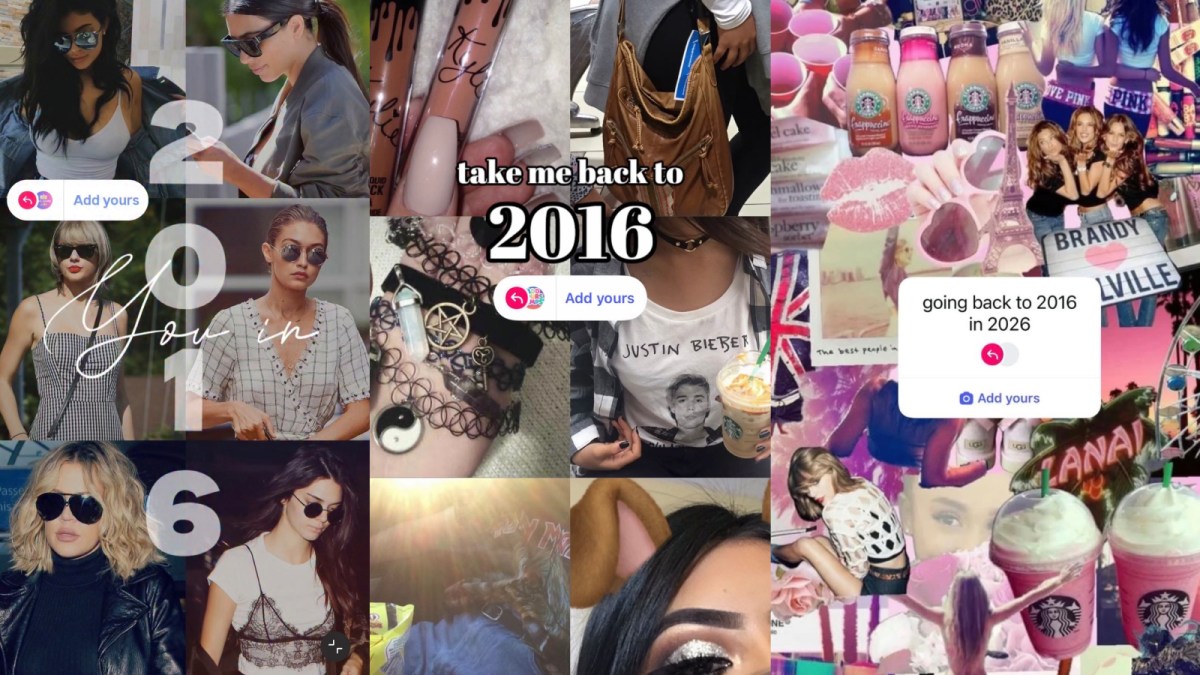
 techcrunch.com
 www.psychologicalscience.org