
Why People Are Starting to Want the Old Internet Back
The internet was supposed to make the world bigger. So why does today's internet sometimes feel smaller?
There was a time when going online felt less like entering a machine designed to keep your attention and more like walking into a neighborhood.
You could stumble across a strange personal website at two in the morning. You could discover a music blog written by someone you had never heard of. You could spend an entire evening reading a forum thread about a video game, a football club, photography, travel or a completely obscure hobby.
Nobody had necessarily designed the experience specifically for you.
There was no endless stream of perfectly selected videos waiting before you even decided what you wanted to watch. There was no sophisticated recommendation system constantly predicting what might make you stay for another thirty seconds.
The internet was messier.
It was slower.
It was often uglier.
And somehow, many people now remember it as being more human.
That feeling is becoming increasingly difficult to dismiss as simple nostalgia.
In 2026, the conversation around the internet is changing. Users are increasingly questioning algorithmic feeds, endless scrolling, engagement-driven content and the growing amount of commercially optimized material appearing in spaces that were once primarily social.
Australia has proposed giving social-media users more control over whether they receive algorithmically personalized feeds or content from accounts they deliberately follow. Meanwhile, European legal battles have already pushed Meta toward offering chronological alternatives in some circumstances.
And on September 10, 2026, Instagram chief Adam Mosseri publicly warned that abandoning algorithmic ranking could overwhelm users with content from frequent posters and brands. ()
The debate is revealing something important.
People may not actually want the old internet back exactly as it was.
They may want something that the old internet represented:
choice.
Choice over what to see.
Choice over who to follow.
Choice over when to leave.
And perhaps most importantly, the feeling that the internet belongs to the people using it — rather than the companies operating it.
The Internet Used to Feel Like a Place
The easiest way to understand today's nostalgia for the old internet is to forget the technology for a moment.
Forget dial-up.
Forget Internet Explorer.
Forget pixelated images and websites with terrible color combinations.
Think instead about the experience.
In the early years of the web, the internet was not one giant feed.
It was a collection of places.
There were forums.
Personal blogs.
Fan pages.
Message boards.
Independent news sites.
Chat rooms.
Photo galleries.
Gaming communities.
Music websites.
Personal homepages.
Small online stores.
University pages.
Weird websites created by people simply because they could.
The modern internet tends to organize information around platforms.
The older internet organized information around communities.
That distinction matters.
A forum about photography could contain thousands of posts, but you usually entered because you were interested in photography.
A football forum could have arguments lasting for years about a club, a manager or a particular player.
A personal blog might have only 200 readers.
But those 200 readers were there because they had deliberately chosen to be.
The audience was smaller.
The connection could be deeper.


This was not necessarily a better internet in every respect.
It was harder to use.
Information was more difficult to find.
Websites could disappear.
Spam was everywhere.
Search engines were nowhere near as sophisticated as they are today.
But there was a sense of discovery.
You did not always know what you were going to find.
And that uncertainty was part of the fun.
From Websites to Feeds
The biggest transformation in the history of the modern internet may not have been smartphones.
It may have been the shift from websites to feeds.
A website waits for you.
A feed comes looking for you.
That difference is enormous.
When you visited a website in the early 2000s, you had to make a decision.
You typed an address.
You clicked a bookmark.
You searched for something.
You followed a link.
You entered a forum.
You opened a blog.
The internet responded.
Today's social platforms reverse the relationship.
You open Instagram, TikTok, Facebook, YouTube or another platform and the platform immediately begins making decisions for you.
What should you see?
What should appear next?
Which creator deserves your attention?
Which advertisement should appear?
Which story is likely to make you stop scrolling?
Which video might keep you watching?
The feed is constantly making predictions.
Modern recommendation systems use signals such as viewing behavior, likes, comments, follows and other interactions to rank content. Social platforms have evolved from relatively simple chronological feeds toward increasingly sophisticated recommendation systems.
The result is incredibly convenient.
You don't have to search.
You don't have to know what you want.
The internet knows — or at least tries to guess.
And that is exactly where the problem begins.
The Algorithm Knows What You Like — But Does It Know What You Want?
Imagine opening TikTok because you are bored.
You watch one video about travel.
Then another.
Then one about Portugal.
Then one about football.
Then a funny video.
Then something about technology.
Before long, the platform has developed a surprisingly detailed understanding of your behavior.
It knows which videos you finish.
Which ones you skip.
Which ones you replay.
Which ones make you stop scrolling.
Which topics hold your attention.
The system is not necessarily asking:
"What would make this person happier?"
It is much more likely to ask something closer to:
"What is this person most likely to engage with next?"
Those are not the same question.
A video that makes you angry can be highly engaging.
A shocking story can keep you watching.
An argument can produce comments.
A controversial post can generate discussion.
An outrage-inducing headline can make you click.
The algorithm does not have to hate you to keep you inside the platform.
It simply has to become very good at predicting your behavior.
That distinction explains why people sometimes describe modern social media as exhausting even while continuing to use it.
The technology is doing exactly what it was designed to do.
The problem is that what is good for engagement is not always good for human attention.
The Strange Feeling of Being Trapped in Your Own Interests
There is another problem with highly personalized internet feeds.
They can become remarkably narrow.
Suppose you watch five videos about European travel.
The platform learns:
This person likes travel.
So it shows you ten more.
You watch videos about Porto.
Now you see more Porto.
You watch videos about Portugal.
Now you see Portugal.
Then Spain.
Then Italy.
Then budget airlines.
Then hotels.
Then travel influencers.
The system becomes increasingly confident about what you are interested in.
This sounds wonderful.
But something is lost.
Serendipity.
The accidental discovery of something completely unrelated.
On the old web, you could move from a travel website to a photography blog, from there to a music page, then to a forum about old cars, and eventually end up reading an article about something you had never previously considered.
There was no central system constantly trying to optimize the journey.
You wandered.
And wandering is one of the great pleasures of the internet.
The Return of Chronological Feeds
This is why the renewed debate over chronological feeds is so interesting.
A chronological feed is conceptually simple.
If someone you follow posts something at 10:00, you see it.
If another person posts at 10:05, you see that afterward.
The system is not necessarily deciding which post deserves more of your attention.
It simply presents the timeline.
That sounds almost primitive compared with modern recommendation systems.
Yet there is growing political and cultural pressure to give users more control over this choice.
Australia's proposed rules would require platforms to offer users a choice between personalized algorithmic recommendations and a feed based on people and creators they have chosen to follow. ()
In the Netherlands, a court ruling has also pushed Meta toward giving users the ability to view Facebook and Instagram content chronologically rather than exclusively through algorithmic ranking. ()
These developments are important because they change the question.
The question is no longer:
"Are algorithms good or bad?"
It becomes:
"Who gets to choose?"
And that is a much more interesting debate.
Instagram's Warning Is Part of the Story
Instagram's leadership has a different perspective.
On September 10, 2026, Instagram chief Adam Mosseri argued that removing algorithmic ranking entirely could actually make the experience worse.
His argument is straightforward.
If Instagram simply displayed posts chronologically, users could be overwhelmed by accounts that publish frequently — including brands and professional creators.
Someone who posts ten times a day could dominate someone's feed.
Meanwhile, a friend who posts once a week might disappear.
The algorithm exists partly to solve this problem by determining what is likely to be relevant or interesting.
Mosseri has also argued that algorithms are imperfect but can produce a better overall experience than a completely unfiltered chronological timeline. ()
And he has a point.
The old internet had problems.
A purely chronological internet does not automatically become a perfect internet.
If you follow 2,000 accounts, a chronological feed could become almost unusable.
The real question may therefore be whether we can have better algorithms without surrendering control to them.
Maybe People Don't Hate Algorithms
This distinction is important.
People probably don't hate algorithms themselves.
Algorithms are everywhere.
Search engines use algorithms.
Maps use algorithms.
Spam filters use algorithms.
Online stores use algorithms.
Streaming services use algorithms.
Airlines use algorithms.
Nobody wants to return to a world where every Google search produces completely random results.
The frustration is different.
People increasingly dislike algorithms when they become invisible decision-makers.
When the system decides what matters without explaining why.
When the platform constantly changes the rules.
When the user cannot easily switch between different modes.
When content from friends is mixed with advertisements, influencers, recommendations and viral posts.
When the platform seems to know what will make you angry better than it knows what will make you happy.
This is why the desire for the old internet is not necessarily anti-technology.
It is increasingly about digital autonomy.
The Rise of "Digital Solastalgia"
There is even an emerging academic way of describing this feeling.
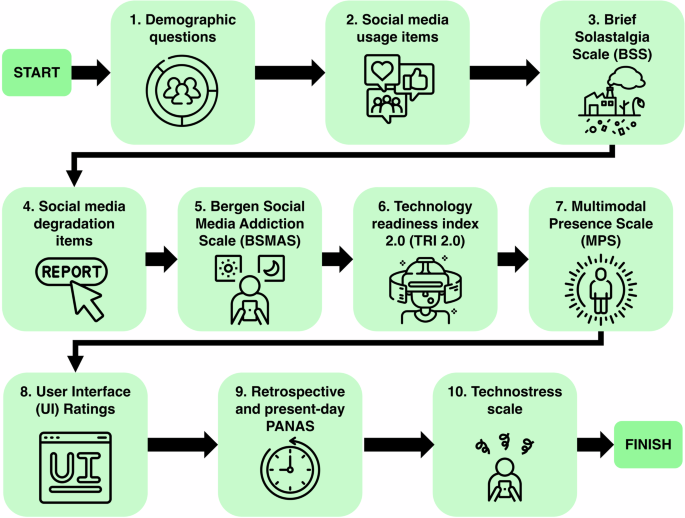
Researchers have begun examining something called digital solastalgia — a sense of loss associated with changes or perceived degradation of online environments.
A 2026 study found evidence that people can develop emotional attachment to social-media environments and experience something resembling grief when those environments change significantly. Preference for older interface designs was also associated with higher levels of this feeling. ()
That is fascinating.
Because it suggests that the old Facebook interface, an old forum, an old YouTube layout or even an old version of Instagram is not simply software.
For some people, it is a place associated with a particular period of their life.
The interface becomes a kind of digital photograph.
You remember what the internet looked like when you were 18.
You remember the websites you visited after school.
You remember the people you talked to.
You remember the music you discovered.
You remember the first time somebody commented on your photograph.
The design becomes connected to the memory.
When the platform changes, it can feel like the place itself has disappeared.
Why 2016 Suddenly Feels Like Another Internet
The recent nostalgia for 2016 provides an excellent example.
Across social platforms, users have increasingly romanticized 2016 as a kind of final golden age of internet culture.
A 2026 wave of nostalgia surrounding 2016 became large enough to generate millions of Instagram responses and a substantial increase in user-generated 2016 playlists on Spotify. ()
Why 2016?
It wasn't objectively perfect.
Political polarization was already intense.
Social media was already powerful.
Smartphones were already everywhere.
Instagram already had algorithms.
Facebook was already a giant corporation.
But culturally, 2016 represents something.
It was close enough to the present to be remembered vividly.
Yet far enough away to feel different.
TikTok culture, short-form video dominance, generative AI, today's recommendation systems and the current intensity of online discourse had not yet completely transformed the digital environment.
People aren't necessarily nostalgic for the calendar year.
They are nostalgic for the internet around that year.
And that distinction matters.
The Internet Before Everything Became Content
One of the biggest differences between the old internet and the modern internet is the role of content.
Today, almost everything can become content.
A vacation becomes an Instagram carousel.
A meal becomes a Reel.
A birthday becomes a story.
A political opinion becomes a post.
A football match becomes a collection of clips.
A conversation becomes a screenshot.
A personal experience becomes a TikTok.
Even relaxing can become content.
This changes how people experience life.
Instead of simply doing something, there is often an additional question:
"Could this be posted?"
The old internet was not completely free of this phenomenon.
People uploaded photographs and wrote blogs.
But the scale was different.
The incentive structure was different.
There was less pressure to constantly perform.
You could disappear for a week.
Nobody necessarily cared.
Today, creators can feel that if they stop posting, the algorithm will punish them.
The platform rewards consistency.
Visibility becomes something that must be maintained.
And suddenly social life starts resembling a job.
When Everyone Became a Brand
Another major transformation was the birth of the personal brand.
In the early internet, having a website did not necessarily mean you were trying to build an audience.
You could simply be yourself.
Today, social platforms encourage users to think in terms of:
followers,
reach,
engagement,
views,
conversion,
growth,
personal branding,
content strategy,
niche,
audience,
monetization.
Even ordinary users have absorbed some of this vocabulary.
People think about their profile grid.
They think about which photograph gets posted.
They consider whether a story is interesting enough.
They watch their view counts.
They check who liked something.
They sometimes delete posts that don't perform well.
The social network becomes a scoreboard.
And once everything becomes measurable, it becomes difficult to remain completely spontaneous.
The Anxiety of the Numbers
Imagine posting a photograph.
Twenty years ago, you might send it to friends.
Perhaps somebody replies.
Perhaps nobody does.
You move on.
Today, you can see:
312 views.
47 likes.
6 comments.
3 shares.
1,200 accounts reached.
Suddenly the photograph has become a performance.
Was it successful?
Did people like it?
Why did yesterday's post get 800 likes while today's got 120?
Did the algorithm suppress it?
Should you change the hashtag?
Should you post at another time?
Should you make it a Reel?
Should you use music?
Should you boost it?
This is one of the hidden psychological costs of modern social media.
The internet has turned attention into a measurable currency.
And once attention becomes measurable, people naturally start optimizing for it.
The Old Internet Was Full of Amateurism
One thing people often forget about early internet culture is how amateur it was.
And that's exactly why it could be charming.
Someone would create a website about their favorite football club.
The logo might be terrible.
The typography might be inconsistent.
The page might have a visitor counter.
There might be a flashing GIF somewhere.
The writing might contain spelling mistakes.
But it was theirs.
Today, a football fan can build an account with professional graphics, carefully edited videos, SEO captions and a content calendar.
The result may look much better.
But it can also feel less personal.
The old web was full of imperfections.
Those imperfections were evidence that a human being had made the thing.
From Personal Blogs to Creator Economy
The decline of personal blogs is one of the clearest examples.
Blogs were once a major part of internet culture.
People wrote about their lives.
They reviewed films.
They discussed music.
They documented travels.
They posted photographs.
They argued about politics.
They wrote tutorials.
Some blogs attracted huge audiences.
Others were read by 20 people.
But the basic model was relatively simple:
I have something to say, so I will publish it.
Today's creator economy often reverses that relationship:
What should I create that the platform will distribute?
That is a subtle but enormous change.
The platform increasingly influences the form of the content.
Shorter.
Faster.
More emotional.
More visually stimulating.
More immediately understandable.
More likely to generate engagement.
And over time, the internet begins to look increasingly similar.
The Great Problem of Similarity
Scroll through several major platforms today and you may notice something strange.
The interfaces are different.
The content is not.
Vertical video.
Captions.
Trending sounds.
Reaction videos.
Short clips.
Memes.
Influencers.
Sponsored posts.
Recommended accounts.
Shopping links.
The same creators appear everywhere.
The same stories travel from one platform to another.
A TikTok becomes an Instagram Reel.
An Instagram Reel becomes a YouTube Short.
A YouTube clip becomes a Facebook video.
The internet has become enormous.
But the experience can sometimes feel surprisingly repetitive.
The old web had the opposite problem.
It was fragmented.
You might find a website nobody else knew existed.
Today, the same viral video can reach millions of people within hours.
That is incredibly powerful.
But it also makes the internet feel less like a collection of communities and more like one enormous room.
The Death of the Weird Website
The weird website deserves special attention.
There was something wonderful about discovering a website that made absolutely no commercial sense.
A person might build an enormous website dedicated to:
a particular train station,
an obscure television show,
a 1980s synthesizer,
a football formation,
a particular species of bird,
a forgotten video game,
a collection of old advertisements,
or photographs of abandoned buildings.
Why?
Because they were obsessed with it.
There wasn't necessarily a business model.
There wasn't always a strategy.
There was simply enthusiasm.
The modern internet still contains this culture, but it is increasingly hidden beneath platforms, search results and commercial content.
The independent web has not disappeared.
It has simply become harder to see.
Search Is Changing Too
For decades, the basic internet experience was:
Question → search → websites.
Increasingly, the experience is becoming:
Question → answer.
This can be convenient.
But it changes the relationship between the user and the web.
Previously, searching for something often meant visiting several websites.
You compared information.
You discovered different voices.
You followed links.
You encountered advertisements, opinions, mistakes and unexpected information.
The journey mattered.
Today, users increasingly expect the answer immediately.
That creates an internet where the destination matters more than the journey.
And that is another reason the old web feels attractive.
The old internet often made you work.
But sometimes the work was the fun part.
Why Younger People Are Nostalgic for Something They Never Experienced
There is an interesting contradiction here.
Some people nostalgic for the old internet weren't even online during the early 2000s.
Gen Z users can romanticize old interfaces, early social media and retro websites despite having little or no direct experience with them.
Why?
Because nostalgia is not always about memory.
Sometimes it is about imagined simplicity.
Young people see an old website and think:
"At least nobody was trying to sell me something every five seconds."
They see an old forum and think:
"At least people were actually talking to each other."
They see an old YouTube interface and think:
"At least creators weren't all trying to become influencers."
Whether those perceptions are historically accurate is less important than what they reveal.
They reveal dissatisfaction with the present.
The old internet becomes a symbol.
Not necessarily a literal destination.
The "Dead Internet" Feeling
Another reason people are becoming nostalgic is the increasing suspicion that parts of the web are becoming less human.
The phrase "dead internet" is often used online to describe the feeling that much of the web consists of automated, repetitive, commercially optimized or AI-generated content rather than genuine human expression.
The theory itself is much more extreme than the evidence supports.
But the feeling behind it is real.
Users increasingly encounter:
AI-generated images.
AI-written articles.
AI-generated comments.
Engagement bait.
Automatically produced videos.
Content farms.
SEO pages.
Spam.
Bots.
Fake reviews.
Synthetic influencers.
Recycled content.
The average user does not necessarily know who created what they are seeing.
And that creates a new kind of internet fatigue.
People are beginning to value something that was once considered almost irrelevant:
proof of human effort.
Authenticity Has Become Valuable
This explains why authenticity is becoming such a powerful word in online culture.
In 2026, even major brands are increasingly being encouraged to publish less polished, more personal content.
Recent fashion-industry discussions around Instagram have emphasized authenticity, community and lower-production content rather than treating every post like a major advertising campaign. ()
That is revealing.
The internet spent years becoming more professional.
Now parts of the internet are becoming interested in amateurism again.
Not because people suddenly prefer bad photography.
But because imperfections communicate something:
a human was here.
A shaky video.
A badly framed photograph.
A strange caption.
A personal opinion.
A slightly ridiculous website.
These things can feel more trustworthy than something that looks like it has passed through five layers of corporate approval.
The Return of Small Communities
The future of the internet may therefore not be a return to the old web exactly.
It may be a return to smaller spaces.
Private Discord communities.
Group chats.
Specialized forums.
Newsletters.
Independent websites.
Niche social networks.
Small creator communities.
Membership communities.
Personal blogs.
Online clubs.
These spaces don't necessarily compete with TikTok or Instagram by trying to become bigger.
Their advantage is precisely that they are smaller.
A community of 500 people can feel more meaningful than an audience of 500,000.
That is one of the paradoxes of the modern internet.
The platforms became bigger.
The internet became more connected.
But people increasingly want smaller rooms.
Why Discord Feels Different
Discord is a particularly interesting example.
Instead of one giant public feed, communities are organized into servers.
You join a space because you are interested in something.
Gaming.
Music.
Football.
Programming.
A particular creator.
A hobby.
A group of friends.
The content is not necessarily designed to go viral.
There is often less pressure to perform for strangers.
That makes Discord feel closer to the community internet of the past.
It is not exactly a forum.
It is not exactly social media.
It is something between the two.
And that may be the direction the internet moves toward next.
The Future May Be "Small Internet"
Imagine an internet where you still use Instagram.
You still use YouTube.
You still use TikTok.
But you also have several small spaces that matter more.
A private travel group.
A football community.
A photography forum.
A newsletter you genuinely read.
A personal blog you visit every week.
A group chat with friends.
A niche website created by somebody who is obsessed with the same subject as you.
Instead of one algorithm deciding what matters, you build your own network of places.
This would not mean abandoning the modern internet.
It would mean taking back some control over it.
The Problem With Romanticizing the Past
Of course, there is a danger here.
The old internet was not paradise.
It had cyberbullying.
Scams.
Pornography.
Hate speech.
Misinformation.
Toxic forums.
Privacy problems.
Viruses.
Poor accessibility.
Bad search results.
Slow connections.
Broken websites.
And enormous amounts of useless content.
Many people remember the old internet selectively.
That is normal.
Nostalgia almost always edits reality.
The internet of 2004 was not necessarily better.
It was simply different.
And some of the things people miss about it can be recreated without bringing back its worst features.
We Don't Need to Go Back to 2004
The real opportunity is therefore not:
Old Internet vs New Internet.
It is:
What should we keep from each?
Keep modern search.
Keep fast connections.
Keep video.
Keep accessibility.
Keep global communication.
Keep online shopping.
Keep streaming.
Keep powerful recommendation tools when users want them.
But bring back:
chronological options,
user control,
smaller communities,
independent websites,
personal publishing,
human discovery,
privacy,
transparency,
and the ability to turn the algorithm off.
That could produce something much better than simply going backward.
What If Every Platform Had Two Modes?
Imagine Instagram offering two buttons.
Recommended
The algorithm chooses what it thinks you will enjoy.
Following
You see posts from people you follow in chronological order.
No complicated settings.
No hidden menus.
No psychological battle.
Just a choice.
You could use Recommended when you want entertainment.
You could switch to Following when you want to see what your friends are actually doing.
This would not destroy algorithms.
It would simply stop algorithms from becoming the only way of experiencing the platform.
That is essentially the direction behind Australia's proposed user-choice rules. ()
What If You Could Choose Your Algorithm?
There is an even more interesting possibility.
What if platforms allowed users to select the kind of recommendation system they wanted?
"Show me what's popular."
"Show me my friends."
"Show me new creators."
"Show me small accounts."
"Show me things outside my usual interests."
"Show me posts in chronological order."
"Show me fewer advertisements."
Instead of one algorithm deciding what the internet should feel like, users could choose.
That would represent a fundamental philosophical change.
From:
The platform knows best.
To:
The user decides how the platform behaves.
The Internet Needs Serendipity Again
Perhaps the most important thing we need to recover is serendipity.
Imagine clicking a link without knowing where it leads.
Discovering a musician because somebody on a tiny forum recommended them.
Finding a travel blog written by somebody living in a city you had never considered visiting.
Reading a strange article at midnight.
Following a chain of links until you end up somewhere completely unexpected.
This is what made the early web feel like exploration.
Modern recommendation systems are extraordinarily good at relevance.
But relevance and discovery are not the same thing.
If you only show people what they already like, you create a very efficient bubble.
Sometimes the best discovery is something you would never have searched for.
Why Boredom Might Be Good for the Internet
There is another forgotten feature of the old web:
boredom.
You could open your browser and not know what to do.
There was no infinite feed.
There was no endless stream of short videos.
Eventually, you left.
That might sound terrible to today's platforms.
But boredom has an important function.
It forces people to make decisions.
Go outside.
Call somebody.
Read something.
Create something.
Search for something.
Build something.
Or simply do nothing.
An internet that is optimized to eliminate every second of boredom is also an internet that can consume every second of your attention.
The return of the old internet may therefore partly be a return of the ability to stop.
Infinite Scroll Changed Everything
Infinite scroll is one of the most powerful design patterns of the modern internet.
There is no natural ending.
You don't reach page 5 and stop.
There is always another video.
Another post.
Another recommendation.
Another story.
Another article.
Another advertisement.
The European Commission has investigated aspects of Meta's platform design, including features such as infinite scrolling and personalized recommendations, in the context of concerns about potentially addictive design.
The psychological difference between:
"Would you like to see another page?"
and
"Here is another video."
is enormous.
The first requires a decision.
The second removes it.
And that may be one of the biggest reasons people are beginning to appreciate older forms of browsing.
The New Internet May Be More Intentional
If the old internet represented exploration and the current internet represents prediction, perhaps the next internet will represent intentionality.
People will still use algorithms.
But they may increasingly choose when and how.
They might subscribe to fewer accounts.
Turn off recommendations.
Use chronological feeds.
Read newsletters.
Join private communities.
Visit independent websites.
Use RSS again.
Create personal websites.
Build smaller networks.
The internet could become less about maximizing exposure and more about choosing where to spend attention.
RSS Might Have Been Ahead of Its Time
RSS sounds ancient.
But the underlying idea is surprisingly modern.
You choose websites.
Those websites publish.
Your reader collects the updates.
No algorithm decides what is important.
No company needs to know which post you are most likely to watch.
You simply subscribe.
That basic model is attractive again precisely because modern feeds have become so complicated.
The concept is beautifully simple:
I choose the sources.
They publish.
I read.
That is the kind of simplicity many people now miss.
Newsletters Are Another Quiet Rebellion
Email newsletters have also benefited from this shift.
A newsletter arrives because you subscribed.
You don't have to compete with thousands of other posts in a feed.
You don't have to hope an algorithm decides your favorite writer is worth showing.
The relationship is direct.
Writer → reader.
This is remarkably similar to the old web.
Except the technology is modern.
That may be the larger pattern.
The future of the internet will probably not literally recreate 2003.
It will take the principles of the old internet and rebuild them with modern technology.
The Creator's Perspective
The desire for a different internet is not only coming from users.
Creators are tired too.
Constant posting is exhausting.
The pressure to understand algorithms is exhausting.
Trying to predict trends is exhausting.
Producing short-form video continuously is exhausting.
Watching engagement numbers is exhausting.
Trying to maintain relevance across several platforms is exhausting.
This is why some creators are beginning to build direct relationships with audiences through newsletters, websites, podcasts, communities and memberships.
They want something they can control.
If Instagram changes its algorithm tomorrow, the creator has no control.
If TikTok changes its recommendation system, the creator has no control.
If YouTube changes monetization, the creator has no control.
But a website?
A newsletter?
A community?
Those provide a greater degree of independence.
The independent web is therefore not just nostalgia.
For some creators, it is becoming a business strategy.
The Brand Problem
Brands face the same dilemma.
The old advertising model was simple:
Buy space.
Place advertisement.
Reach audience.
Social media promised something better.
Build a community.
Become part of people's daily lives.
But as platforms became more commercial, feeds became increasingly crowded.
Users see advertisements.
Influencers see advertisements.
Creators make advertisements.
Brands sponsor creators.
Creators promote products.
Shopping is integrated into content.
The distinction between entertainment and advertising becomes increasingly blurry.
This is another reason authenticity matters.
People want to know:
Is this person actually recommending this?
Or:
Did someone pay them to say it?
The more commercial the internet becomes, the more valuable genuine human recommendation becomes.
The Internet as a Marketplace
The commercial transformation of the web is not inherently bad.
Advertising funds websites.
Creators need income.
Businesses need customers.
Platforms need revenue.
The problem is balance.
If every part of the internet becomes optimized for monetization, there are fewer places where people can simply exist.
A website can be informative without selling something.
A forum can exist without advertising every second.
A blog can be written because the author enjoys the subject.
A community can exist because people share an interest.
This is perhaps the central idea behind the nostalgia for the old internet:
Not everything needs to be optimized.
What the Old Internet Got Right
The old internet understood something that modern platforms sometimes forget:
People are interesting even when they are not influential.
A person with 14 followers can have something fascinating to say.
A photographer with 200 followers can take extraordinary photographs.
A traveler with no sponsorships can write the most useful travel guide.
A teenager on a forum can know more about a video game than a professional publication.
A hobbyist can build a better database than a corporation.
The old web gave these people somewhere to publish.
The modern internet often asks:
How many people will watch?
The old internet was more likely to ask:
Do you have something interesting to share?
That difference is worth preserving.
A New Golden Age Could Be Coming
Ironically, nostalgia for the old internet could eventually produce something new.
The internet may be entering another transition.
The first era was:
Web 1.0
Websites, forums and personal pages.
Then:
Web 2.0
Social networks, platforms and user-generated content.
Then:
Algorithmic Internet
Personalized feeds, recommendation systems and engagement optimization.
The next phase could be:
User-Controlled Internet
An internet where users have more control over:
what they see,
how content is ranked,
which recommendations they receive,
how much personalization they want,
who can reach them,
and how much of their attention they are willing to give away.
That would not be a technological regression.
It would be a philosophical correction.
Maybe the Future Looks Like the Past
This is one of the most interesting paradoxes.
The future of the internet may look surprisingly similar to its past.
Personal websites could return.
Forums could become fashionable again.
RSS could grow.
Small communities could become more important.
Chronological feeds could become an expected option.
People could publish under pseudonyms again.
Long-form writing could become more valuable.
Niche communities could replace some giant public platforms.
The technology would be completely different.
The underlying philosophy would not be.
The Internet We Actually Want
So what do people really mean when they say:
"I want the old internet back"?
They probably don't want dial-up.
They don't want broken websites.
They don't want viruses.
They don't want pop-up advertisements.
They don't want Internet Explorer.
They don't want websites that take two minutes to load.
They don't want to return to a world where finding basic information was difficult.
What they want is something much simpler.
They want an internet that feels:
human,
personal,
discoverable,
less commercial,
less exhausting,
less predictable,
and more under their control.
The Real Nostalgia Is Not for Old Technology
This may be the most important point.
People are not necessarily nostalgic for old technology.
They are nostalgic for an old relationship with technology.
The internet used to feel like a tool.
Today it can feel like an environment.
And increasingly, people are asking whether the environment is designed for them or whether they are being designed for the environment.
Every notification teaches us something.
Every recommendation changes our attention.
Every like influences what we post.
Every view becomes a metric.
Every algorithmic decision shapes what becomes visible.
The internet is no longer simply something we use.
It increasingly shapes how we think about what is worth seeing.
Maybe We Need a "Following" Button for Life
The simplest metaphor may be this.
Imagine that real life had an algorithmic feed.
You walk down the street.
Instead of seeing whatever is physically around you, an invisible system decides:
You probably want to see this building.
You probably want to hear this conversation.
You probably want to meet this person.
You probably want to read this newspaper.
It sounds absurd.
But online, we have accepted exactly this model.
And it works surprisingly well.
Until it doesn't.
The renewed interest in chronological feeds is therefore about more than Instagram.
It is about a fundamental human preference:
sometimes we want to choose for ourselves.
The Next Internet May Be a Compromise
The best future probably isn't algorithm-free.
It is algorithm-optional.
Algorithms are extremely useful.
They help us discover music.
Find restaurants.
Navigate cities.
Watch videos.
Discover creators.
Search for information.
Find products.
But they should not necessarily be invisible and unavoidable.
Give people options.
Let users decide.
Want recommendations?
Turn them on.
Want chronological posts?
Choose that.
Want content only from people you follow?
Choose that.
Want to explore?
Choose that.
Want to disappear for a while?
That should be possible too.
The Internet Was Always Supposed to Be Ours
The original promise of the internet was extraordinarily ambitious.
Anyone could publish.
Anyone could communicate.
Anyone could find information.
Anyone could build a community.
Geography became less important.
A person in Warsaw could talk to someone in Tokyo.
A teenager could discover a musician from Lisbon.
A football fan could join a discussion with supporters from Manchester.
A photographer could show their work to people around the world.
That promise still exists.
But it became buried under layers of platforms, algorithms, advertising and optimization.
Perhaps the current nostalgia is simply a reminder.
The internet is not supposed to be one enormous machine deciding what billions of people should see.
It can also be millions of small places where people choose to meet.
So, Do People Really Want the Old Internet Back?
Yes.
But probably not literally.
Nobody wants to spend ten minutes waiting for a website to load.
Nobody wants to return to broken HTML layouts.
Nobody wants to search through primitive directories to find basic information.
Nobody wants to lose modern connectivity.
What people want back is something more difficult to recreate:
the feeling that they were driving.
Today's internet often feels like a passenger experience.
Open an app.
The feed starts.
Scroll.
Watch.
Swipe.
Repeat.
The machine decides what comes next.
The old internet demanded more participation.
You searched.
You clicked.
You chose.
You wandered.
You discovered.
And perhaps that is exactly what people are beginning to miss.
The Internet After the Algorithm
The irony is that the algorithm probably isn't going away.
It is too useful.
Too profitable.
Too deeply embedded in modern technology.
But the internet after the algorithm could still look very different from today's internet.
It could be an internet where recommendation systems exist without controlling everything.
An internet where chronological feeds are normal.
An internet where small communities thrive.
An internet where personal websites matter again.
An internet where creators can build direct relationships with audiences.
An internet where not every post is a marketing campaign.
An internet where boredom is possible.
An internet where users can leave.
And perhaps most importantly:
an internet where people are allowed to be unpredictable.
Because human beings are not recommendation engines.
We change our minds.
We get bored.
We discover strange things.
We develop new interests.
We follow links for no reason.
We sometimes want exactly what the algorithm thinks we don't want.
And that unpredictability is not a bug.
It is one of the things that makes the internet — and people — interesting.
We Don't Want the Old Internet. We Want Its Soul.
The old internet is gone.
And that's okay.
Technology moves forward.
Websites become faster.
Phones become smarter.
Algorithms become more sophisticated.
AI will transform how we search, create and communicate.
There is no realistic path back to 2004.
But perhaps we don't need one.
The nostalgia surrounding the old internet is really nostalgia for a set of values.
Discovery instead of prediction.
Communities instead of audiences.
People instead of metrics.
Creativity instead of optimization.
Choice instead of automatic personalization.
Conversation instead of performance.
That is why the recent debate about chronological feeds is more significant than it initially appears.
When governments start discussing whether users should be able to opt out of algorithmic recommendations, when courts examine how platforms rank content, and when users themselves begin asking for more control, something fundamental is happening. ()
The question isn't whether algorithms are good or bad.
The question is whether they should be the only way we experience the internet.
Maybe the next great internet revolution will not be about making algorithms smarter.
Maybe it will be about making them optional.
And perhaps the strangest thing about the future of the web is this:
the internet of tomorrow may rediscover something the internet of yesterday already knew.
Sometimes, the best thing online is not what someone else decided you should see.
Sometimes, it is the thing you found yourself.


 www.theverge.com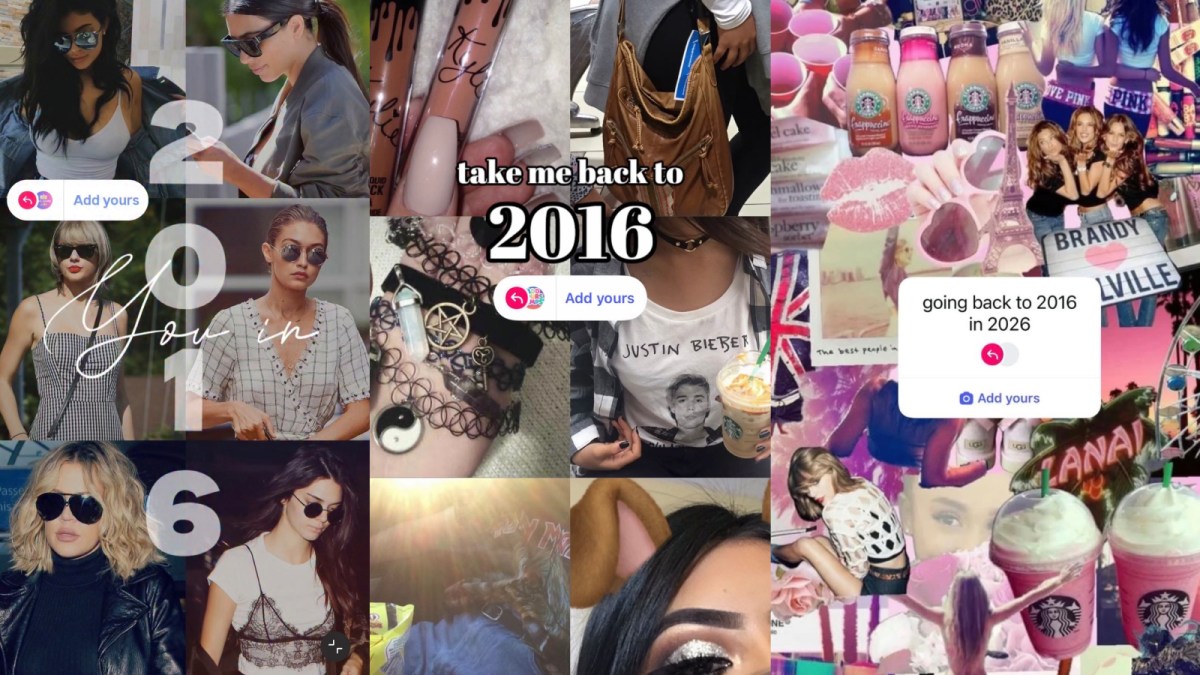
 techcrunch.com