

Summary:
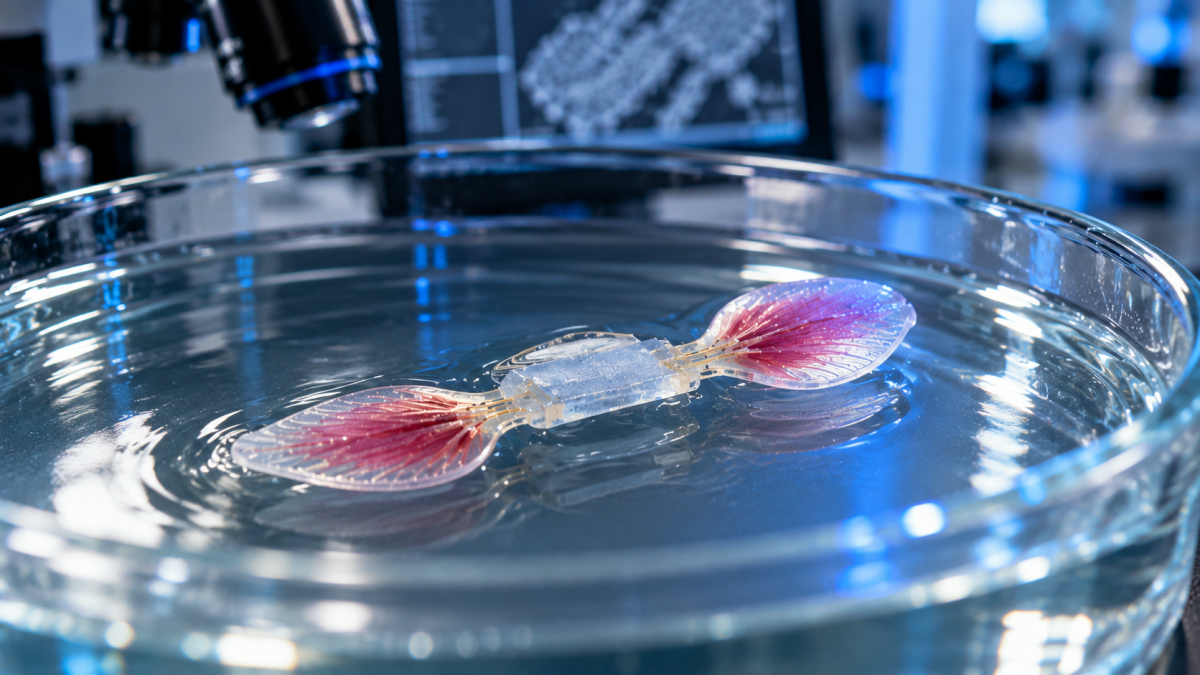
MIT researchers have developed a paper-thin swimming robot powered by living skeletal muscle cells that contract in response to light. By combining engineered muscle tissue with a flexible hydrogel structure, the team created a device capable of swimming and changing direction in water. The research demonstrates significant improvements in muscle efficiency and longevity, opening new possibilities for biohybrid robotics. Although practical applications in medicine and environmental monitoring remain experimental, this breakthrough highlights how living cells could help shape the future of robotics.