

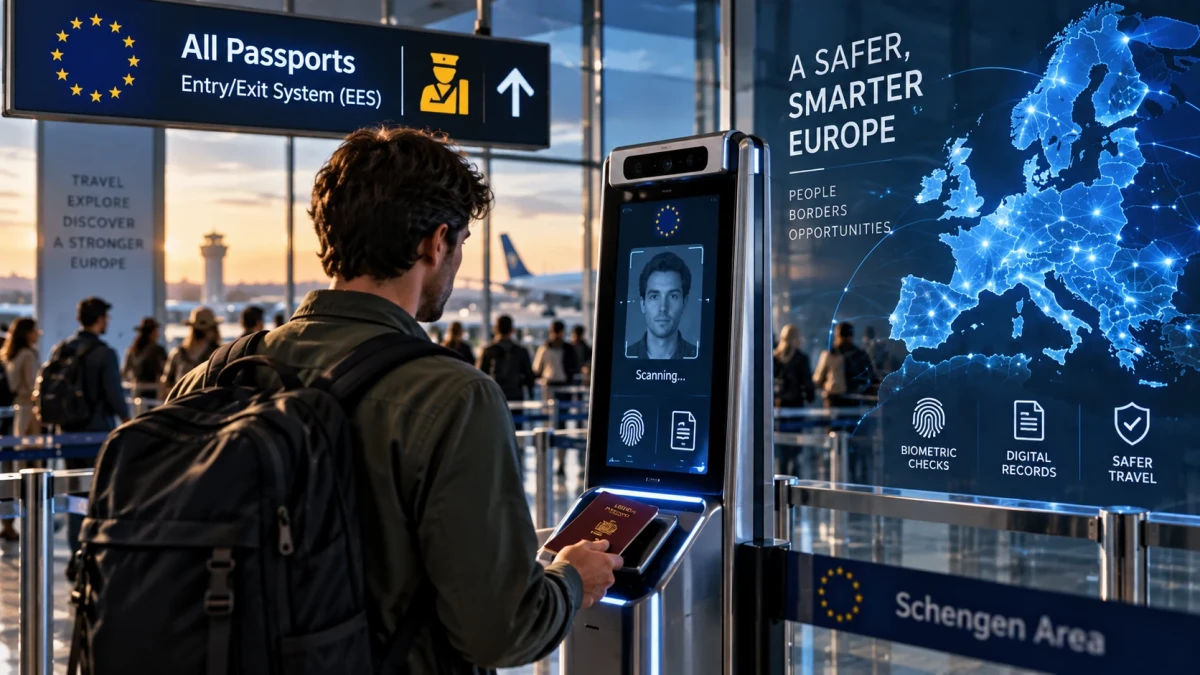
Europe is entering a new era of border travel. The EU’s Entry/Exit System (EES) is replacing traditional passport stamps with digital records, facial recognition and fingerprint checks for many non-EU travellers. As the system becomes fully enforced, airports and border crossings are facing new challenges, including longer queues and increased pressure on infrastructure and staff. But EES is about more than today’s travel delays. It is part of a much bigger transformation that could make European borders increasingly automated, biometric and digital. This article explores how EES works, who it affects, the concerns surrounding privacy and congestion, and what the future of travelling across Europe could look like.