

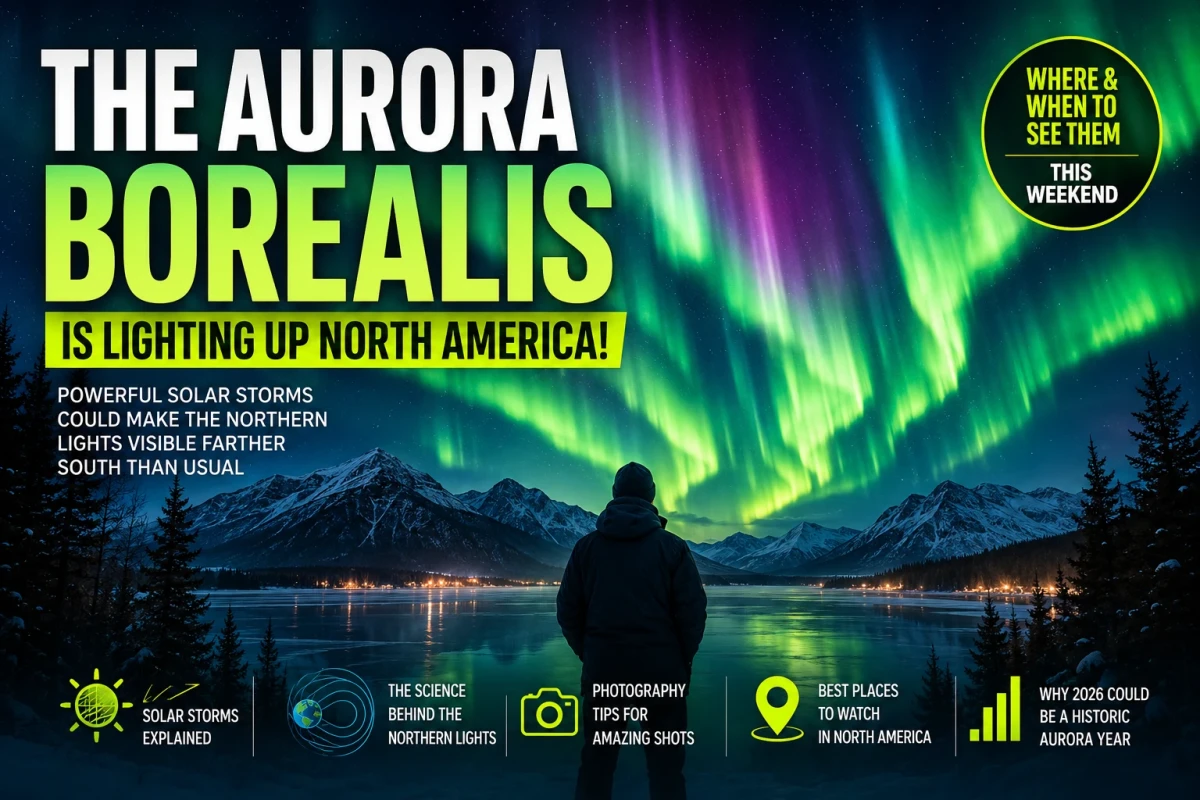
A rare wave of solar activity is once again turning the night skies above North America into a glowing spectacle. From Alaska to parts of the northern United States, millions of people are searching for the best places and times to witness the Aurora Borealis this weekend. Fueled by powerful geomagnetic storms connected to Solar Cycle 25, the northern lights are becoming one of the most talked-about natural events of 2026.
But the aurora is more than just a beautiful light show.
Behind the glowing green skies lies a violent cosmic interaction between the Sun and Earth’s magnetic field — one powerful enough to affect satellites, communications systems, and even global technology infrastructure. At the same time, the northern lights have evolved into a worldwide cultural phenomenon driven by social media, travel trends, smartphone photography, and humanity’s timeless fascination with the sky.