
Post to communication


Once upon a time, conversation was the heartbeat of human connection. We talked to understand, to comfort, to argue, to laugh, and to fall in love. Today, silence often fills the spaces where words once flowed freely. A couple sits across from each other in a café, eyes locked—not with one another, but with their screens. Friends meet for dinner, yet their hands reach for notifications before their forks. Parents scroll through feeds while their children wait for eye contact that never comes.
The smartphone, a miraculous device that promised to bring the world closer, has instead built invisible walls between us. It has redefined attention, rewired our brains, and reshaped the emotional language of our time. What we have gained in instant access, we have lost in depth, presence, and authenticity.
According to a 2024 Pew Research Center study, over 82% of adults admit to checking their phones during conversations, and 47% say they feel ignored when someone they’re with does the same. In essence, we’ve learned to coexist in parallel monologues — scrolling, reacting, and “liking” rather than listening.
This article explores the slow death of real conversation — how technology has silenced our social instincts, why it matters psychologically, and how we can reclaim what was once so natural: the human voice.
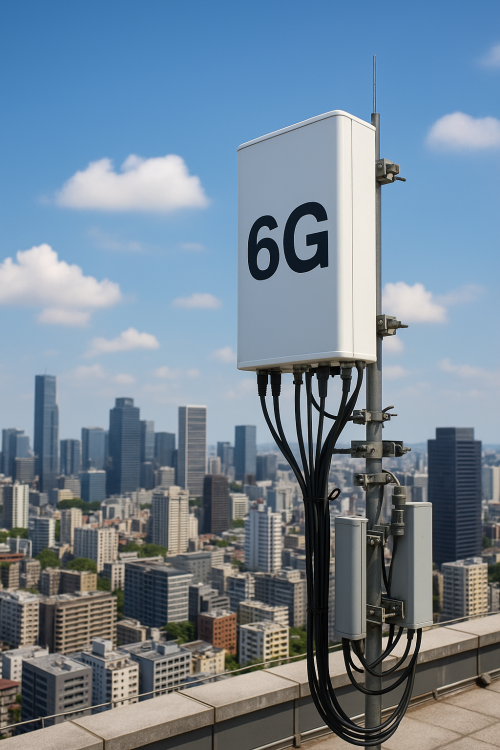
The story of wireless communication is one of constant reinvention. Every decade or two, society witnesses a generational leap forward, with new standards transforming the way people connect, consume, and create. The first mobile calls of the 1980s, the texting revolution of the 1990s, the mobile internet boom of the 2000s, and the rise of 5G in the 2020s all marked milestones in the history of global connectivity. As the world stands at the midpoint of the 2020s, a new buzzword has captured the imagination of policymakers, researchers, and industry leaders alike: 6G.
But what exactly is 6G, and will it truly arrive by 2026, as some optimistic forecasts suggest? The question has sparked heated debate. On one hand, major players such as South Korea, China, and Finland have already launched pilot projects, spectrum trials, and large-scale research initiatives. On the other, international standardization bodies like 3GPP and ITU emphasize that official technical specifications for 6G are unlikely to be finalized before 2030.
This article dives deep into the world of 6G, exploring its technological foundations, promises, and challenges, while critically analyzing whether 2026 is a realistic target for its arrival or simply a stepping stone toward a longer journey.