


Artemis II Explained: Why This Mission Mattered, How It Unfolded, What Humanity Gained, and What Comes Next on the Moon
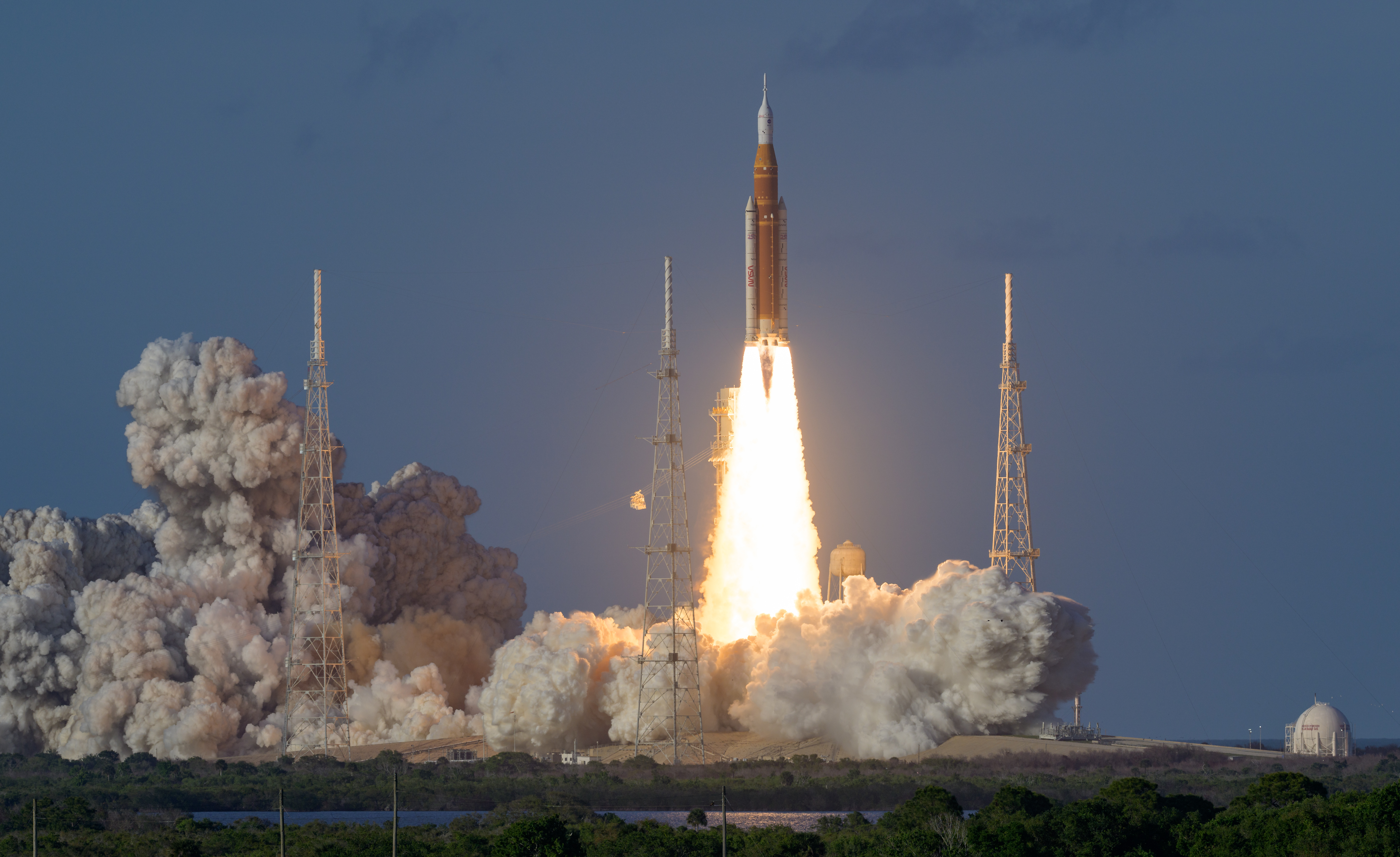
For more than half a century, the Moon lived in the human imagination as both memory and unfinished business. Apollo had proven that people could leave Earth, cross cislunar space, land on another world, and return. Yet after the last Apollo lunar mission, humanity never truly built on that achievement. The Moon remained close enough to inspire, but distant enough to become symbolic rather than strategic. Artemis II changed that. It did not land on the lunar surface, and that is precisely why it mattered. Its role was deeper, more structural, and arguably more consequential for the long future of exploration: it was the mission that had to prove human beings could once again travel to the vicinity of the Moon safely, operate there in a modern spacecraft, and come home with the confidence needed for the next phase of human expansion beyond low Earth orbit. NASA states that Artemis II was the first crewed Artemis flight, a lunar flyby mission, and a crucial step toward future Moon landings and eventual missions to Mars. The mission launched on April 1, 2026, and splashed down on April 10, 2026, after 9 days, 1 hour, and 32 minutes.
That simple summary, however, does not capture the true weight of the mission. Artemis II was not only a technical exercise. It was a systems demonstration, a human performance study, an operational rehearsal, a geopolitical signal, and a cultural moment. It was NASA’s first crewed journey around the Moon in more than 50 years, and it set a new human-distance record in space, taking four astronauts 252,756 miles from Earth at their farthest point. It also tested the very architecture that NASA hopes will support a sustained return to the Moon: the Orion spacecraft, the Space Launch System rocket, ground systems at Kennedy Space Center, deep-space mission control, recovery procedures, integrated science operations, and the logic of using the Moon as a proving ground for Mars. NASA’s own framing is clear: Artemis missions are designed for scientific discovery, technology advancement, learning how to live and work on another world, and preparing for human missions to Mars.
Artemis II also became one of those rare missions whose significance exists on several levels at once. For engineers, it was about risk reduction. For astronauts, it was about validating life support, operations, suits, procedures, and teamwork in real deep space. For scientists, it opened a modern human observational campaign around the Moon, including lunar photography, deep-space health research, solar corona observations, and hazard awareness related to meteoroid impacts. For policymakers and international partners, it was evidence that the post-Apollo Moon program is no longer abstract. For the broader public, it restored something that had gone quiet for generations: the idea that humans still do epoch-defining things in space. NASA specifically notes that Artemis II science operations were meant to lay the foundation for safe and efficient human exploration of the Moon and Mars, while the mission itself confirmed the systems necessary to support astronauts in deep space.
To understand what Artemis II was for, how it unfolded, and what it gave humanity, it helps to start with an essential truth. This was not a mission designed to produce one dramatic image or one single scientific headline. It was designed to retire uncertainty. In spaceflight, uncertainty is the enemy of sustainability. Before you can send people to land near the lunar south pole, operate with commercial landers, establish a repeating cadence of missions, develop a cislunar outpost, and eventually translate those lessons to Mars, you must prove that the core human transportation system works with real astronauts on board. Artemis II was that proof mission.
What Artemis II actually was
Artemis II was NASA’s first crewed flight of the Artemis program and the first time astronauts traveled around the Moon since the Apollo era. The crew consisted of NASA astronauts Reid Wiseman, Victor Glover, and Christina Koch, along with Canadian Space Agency astronaut Jeremy Hansen. The mission used NASA’s Orion spacecraft, launched atop the Space Launch System, or SLS, from Kennedy Space Center. Orion was the crew vehicle; SLS was the heavy-lift launcher that sent the crew beyond Earth orbit in a single launch. NASA emphasizes that SLS is currently the only rocket capable of sending Orion, astronauts, and cargo directly to the Moon in one launch, while Orion is the spacecraft designed to carry and sustain crews on Artemis missions and return them safely to Earth.
That pairing mattered because the Artemis architecture depends on both vehicles not as isolated pieces of hardware, but as a tightly integrated transportation system. SLS provides the energy to leave Earth decisively. Orion provides the environment in which astronauts can survive and work for days in deep space. Together they form the backbone of the early Artemis campaign. Artemis I had tested the system without crew. Artemis II had to prove it with human beings on board, where everything becomes more demanding. Tolerances narrow. Operations must work not just mechanically, but humanly. Interfaces must make sense in real time. Habitation must be manageable. Navigation must be dependable. Re-entry and recovery must not merely succeed, but succeed with crew survivability, comfort, timing, and postflight analysis in mind. NASA’s official Artemis II materials repeatedly frame the mission as the key step between an uncrewed test and future lunar surface exploration.
The mission profile itself was elegant and strategically conservative. Artemis II followed a free-return trajectory. In simple terms, that means the spacecraft used the gravity of the Earth and Moon in such a way that, after flying around the far side of the Moon, it would naturally arc back toward Earth even if major propulsion opportunities were limited. NASA explicitly describes Artemis II as using a free-return path that sends Orion out from Earth, around the Moon, and back home, with the Moon’s gravity bending the spacecraft’s path toward Earth again. This trajectory choice was not accidental. It reflected a deep design philosophy: when sending a crew beyond low Earth orbit for the first time in decades, build the mission around graceful recovery margins wherever possible.
The free-return design also says something important about Artemis as a whole. NASA is not treating the Moon as a one-off flag-and-footprints destination. The agency is treating cislunar space as an operational domain. Artemis II was about proving that crews can enter that domain again. It was a voyage into deep space, but also a return to discipline: measured ambition, stepwise expansion, and architecture-first exploration.
Why Artemis II was necessary before any new Moon landing
A common question about Artemis II is deceptively simple: why send astronauts around the Moon instead of landing them immediately? The answer is that a modern lunar program cannot rely on Apollo nostalgia. It needs verified systems, verified procedures, verified human factors, and verified cross-organizational operations. Artemis II was necessary because the United States and its partners are not reviving Apollo hardware or repeating Apollo exactly. They are building a new exploration system with new spacecraft, new software, new training pipelines, new recovery processes, new communication architectures, new international roles, and new long-term goals. A human lunar flyby was the logical mission to validate those pieces before committing astronauts to a landing architecture. NASA’s official Q&A states that the primary goal was a crewed test flight in lunar space and that the mission was intended to confirm the systems necessary to support astronauts in deep space and prepare for a sustained presence on the Moon.
There were at least five reasons this intermediate step mattered. First, life support and habitability cannot be fully validated on the ground. You can test components in chambers, run simulations, and fly uncrewed missions, but until astronauts actually live inside Orion in deep space, use the systems, follow procedures, eat, sleep, communicate, respond to anomalies, and manage fatigue, you do not truly know how the spacecraft performs as a crewed environment. NASA specifically identified crew sustainment in the flight environment and through return to Earth as one of the mission’s main priorities.
Second, the operations chain needed to be rehearsed as a real campaign, not as a paper exercise. Artemis II required launch operations, mission control, deep-space navigation, communications through the Deep Space Network, correction burns, suit operations, science coordination, splashdown, naval recovery, and postflight processing. Those are not add-ons. They are the mission. A lunar surface mission will only be as reliable as the institutional choreography behind it. NASA’s mission materials explicitly identify systems and operations across development, launch, flight, and recovery as central priorities of Artemis II.
Third, Artemis II had to collect hardware and data. In spaceflight, engineering maturity comes from flown evidence. Models improve after they meet reality. Performance margins become more trustworthy after thermal conditions, vibrations, propulsion events, navigation solutions, and re-entry loads are compared against predictions. NASA states that retrieving flight hardware and data for assessment on future missions was one of Artemis II’s core goals. That is a dry sentence, but it may be one of the most important in the whole program. Programs become sustainable when they stop guessing and start learning from flight.
Fourth, deep-space crews need their own human-performance evidence base. The Moon is far enough from Earth that crew autonomy, psychology, fatigue management, radiation exposure, and limited rescue options start to matter in ways they usually do not in low Earth orbit. NASA’s Artemis II science page says the health studies associated with the mission would provide an unprecedented glimpse into how deep-space travel influences the human body, mind, and behavior, and would help the agency build interventions, protocols, and preventative measures for future missions to the lunar surface and Mars. That is not just lunar science. It is operational medicine for the next era of exploration.
Fifth, Artemis II had to rebuild public and political confidence in human lunar exploration as a realistic, functioning enterprise. Programs that take years to develop can become politically fragile if they remain conceptual for too long. A successful mission changes the tone. It turns architecture diagrams into demonstrated capability. Artemis II, by launching, circling the Moon, breaking a long-standing human-distance record, and returning safely, did exactly that. NASA’s post-splashdown release framed the mission as a historic achievement and explicitly linked it to the future of Artemis.
The purpose of Artemis II: the clearest answer
So what, in the most direct language possible, was Artemis II for?
It was for proving that humanity can once again send astronauts safely beyond low Earth orbit, around the Moon, and back, using the hardware and operations framework that will support the next generation of lunar exploration.
That breaks down into several concrete purposes. The first was to validate Orion as a human spacecraft in deep space. The second was to validate SLS as the launch system for crewed lunar operations. The third was to validate the integrated mission architecture from countdown to splashdown. The fourth was to generate the operational and biomedical data needed for later missions. The fifth was to prepare the way for the missions that come next, especially Artemis III and beyond. NASA’s official language aligns closely with this summary: the primary goal was a crewed test flight in lunar space, while additional priorities included crew sustainment, systems demonstration, and hardware and data retrieval for future missions.
But there is another, more philosophical layer. Artemis II was for transforming the Moon from a remembered destination into an active frontier again. That may sound rhetorical, yet it reflects the deeper strategic motive behind Artemis. NASA’s Moon to Mars framework is not about a single triumphant landing. It is about developing “an integrated system of systems” to conduct a campaign of human exploration missions to the Moon and Mars, including living and working on the lunar and Martian surface with safe return to Earth. The Moon in this vision is not an endpoint. It is a training ground, a laboratory, an engineering testbed, and a platform for learning how to sustain human presence off Earth. Artemis II served that framework by proving the transportation and mission-operations layer on which the rest depends.
The crew and why this lineup mattered
The Artemis II crew was made up of Commander Reid Wiseman, Pilot Victor Glover, Mission Specialist Christina Koch, and Mission Specialist Jeremy Hansen of the Canadian Space Agency. In one sense, they were simply the people assigned to fly the mission. In a larger sense, they were a carefully assembled team representing experience, trust, international partnership, and the changing human face of lunar exploration. NASA and the Canadian Space Agency both emphasize that Artemis II was historic not only because it was the first crewed lunar mission since 1972, but also because it included the first Canadian to fly around the Moon.
Internationally, Jeremy Hansen’s presence mattered because Artemis is not being built as a purely national venture. NASA’s current lunar architecture relies heavily on international partners and a broader diplomatic framework. On the policy side, NASA notes that the Artemis Accords now have more than 60 signatories and are intended to provide common principles for civil exploration and use of space as more countries and private companies operate around the Moon. Hansen’s seat on Artemis II embodied that cooperative logic in human form. The mission was not just America returning to lunar space. It was a coalition future taking visible shape.
Operationally, the crew composition also reflected the fact that Artemis II was not a stunt flight. This was a systems mission. Every astronaut had to contribute to testing procedures, monitoring systems, conducting observations, working within the confined space of Orion, and functioning under real deep-space conditions. NASA’s mission materials repeatedly frame the flight as a collective demonstration of crew capability and team integration rather than a purely symbolic lunar tour. Even the naming of the Orion spacecraft, Integrity, emphasized this culture of trust, respect, and disciplined teamwork. NASA said the name was meant to reflect the foundation of trust, candor, humility, and respect across the crew and the large workforce behind the mission.
That name turned out to be apt. Artemis II was not about flamboyance. It was about proving that competence still scales into deep space.
How Artemis II unfolded: launch to splashdown
The mission began on April 1, 2026, when SLS launched Orion and its four-person crew from Kennedy Space Center. According to NASA, about 49 minutes after launch, the rocket’s upper stage fired to place Orion into an elliptical orbit around Earth. A second planned burn sent the spacecraft into a high Earth orbit extending roughly 46,000 miles above Earth, where the crew conducted system checkouts for about 24 hours before continuing onward. This phased departure profile was important. It gave the crew and flight teams time to assess the spacecraft before the translunar injection phase committed Orion to the journey toward the Moon.
From the public perspective, that first day may have looked like a relatively ordinary launch-and-departure sequence. From an operational perspective, it was the beginning of the mission’s most important work. Launch is spectacular, but checkouts determine whether spectacle becomes exploration. Artemis II had to transition from the violence of ascent into the precision of deep-space operations. Systems had to behave properly. The crew had to inhabit Orion as a working spacecraft. The mission teams had to confirm that what had been built, integrated, simulated, and trained for was functioning as intended under real mission conditions. NASA’s daily agenda for Artemis II makes clear that the days after launch were structured around system checkouts, crew timelines, suit testing, science support, and progressive mission milestones.
One of the mission’s key moments was the translunar injection burn, which NASA identified as the final major engine firing that would place Orion on its path to the Moon. Because Orion was using a free-return trajectory, this burn also set the spacecraft on the broad path that would ultimately bring the crew home on flight day 10. That single detail captures the beauty of mission design: the maneuver outward was also, in a meaningful sense, the beginning of the route back. Exploration and return were built into the same geometry.
As the mission proceeded, the crew tested procedures that future lunar missions will depend on. NASA noted that as the first astronauts to wear the new suits in space, the Artemis II crew tested how quickly they could don and pressurize the suits, install their seats and get into them while suited, and use food and drink interfaces through a helmet port. These are exactly the kinds of details the public often overlooks and mission designers obsess over. Space programs fail not only through dramatic catastrophes, but through small human-system mismatches that accumulate. Artemis II was built to catch those mismatches early.
The mission’s lunar flyby took place on flight day 6. NASA stated that the crew came within roughly 4,000 to 6,000 miles of the lunar surface as they swung around the far side of the Moon, with the closest approach recorded at about 4,067 miles above the surface. During that period, Orion traveled behind the Moon and entered a planned communications blackout lasting about 40 minutes, because the lunar body blocked radio contact with Earth-based systems. This was expected and historically resonant: the same basic reality faced Apollo crews. When Orion emerged from behind the Moon, the crew witnessed an Earthrise and communications were restored through the Deep Space Network.
That flyby day combined symbolism and hard operational value. It was during this phase that Artemis II set a new record for the farthest distance humans have ever traveled from Earth. NASA reported that the crew surpassed the Apollo 13 distance record of 248,655 miles and later reached a maximum distance of 252,756 miles from Earth. The record itself is meaningful, but the deeper significance lies in what it represents: the first time in generations that humans had operationally re-entered true deep space beyond low Earth orbit and done so not as a commemorative reenactment, but as part of a forward-looking exploration campaign.
The lunar flyby also served scientific and observational purposes. NASA’s updates note that the crew spent much of the day taking photos and videos of the Moon, recording observations, and becoming the first people in decades to see some parts of the lunar surface with their own eyes. During the eclipse phase created by the alignment of Orion, the Moon, and the Sun, the crew had the opportunity to study the solar corona and watch for flashes from meteoroid impacts on the Moon that could provide insight into surface hazards. These are not the kind of experiments that produce instant, headline-making discoveries, but they matter enormously when building operational knowledge for future explorers who will work near or on the lunar surface.
NASA also highlighted one visually powerful byproduct of the mission: the crew captured extraordinary images, including an “Earthset” from the lunar far side that echoed the cultural power of Apollo-era Earth imagery. Such images matter more than many analysts admit. They influence public imagination, political attention, education, and the emotional legitimacy of exploration. Space programs do not thrive on engineering logic alone. They thrive when they connect technical achievement to a broadened sense of human perspective. NASA’s Earth Observatory explicitly noted that Artemis II delivered a remarkable collection of photos, including an Earthset image from the lunar far side.
After the lunar flyby, Orion exited the Moon’s sphere of influence and began the return leg. NASA’s timeline describes a sequence of return trajectory correction burns, including one on flight day 7, additional refinements later in the mission, and a final correction burn before splashdown. These maneuvers were not dramatic from the outside, but they were central to proving navigation and propulsion performance across the whole mission arc. On flight day 10, the crew focused on safely preparing Orion for Earth return, stowing equipment, returning the cabin to entry configuration, re-suiting, and completing the final trajectory correction.
The mission concluded successfully on April 10, 2026, when Orion splashed down in the Pacific Ocean off the California coast. NASA reported splashdown at 5:07 p.m. PDT and confirmed that the crew had completed a nearly 10-day journey around the Moon and back. The recovery operation involved NASA and U.S. military teams, with Orion secured and the astronauts extracted after landing. Completion of the mission demonstrated not just travel to the Moon, but the full end-to-end chain of human lunar operations: launch, transit, deep-space habitation, lunar flyby, return navigation, atmospheric re-entry, splashdown, and recovery.
What Artemis II tested in practical terms
When NASA says Artemis II was a test flight, that phrase can sound strangely modest. In reality, it meant the mission was a comprehensive systems validation exercise with humans aboard. The spacecraft, launch vehicle, ground systems, mission control, recovery forces, communications network, crew procedures, suit interfaces, navigation solutions, and science coordination all had to function together. NASA’s official Q&A breaks the mission priorities into crew, systems, and hardware/data categories, and that breakdown is useful because it captures the mission’s real logic.
On the crew side, Artemis II tested whether astronauts could live and work inside Orion over multiple days in deep space. That included daily routines, confinement management, sleep schedules, communications, physiological monitoring, equipment handling, suit operations, and task execution under a mission timeline. NASA and the Canadian Space Agency both emphasize that Orion is a compact environment for four people on a nearly 10-day journey, which made habitability and workflow design central concerns. The goal was not merely survival. It was usable mission performance.
On the systems side, Artemis II tested everything from launch and orbital maneuvers to translunar injection, deep-space navigation, thermal control, onboard software, communication handoffs, and splashdown procedures. Because this was the first crewed use of the full system, the results matter not only for future Artemis flights but for confidence in the architecture itself. A lunar campaign cannot operate on assumptions. It must be built on flown, verified performance. Artemis II helped move Orion and SLS from developmental promise into demonstrated operational reality. NASA’s Artemis II and Artemis program pages repeatedly connect the mission to that broader architecture-building purpose.
On the hardware and data side, Artemis II produced the empirical record that engineers and mission planners now need. The exact value of such data often takes months or years to manifest because postflight analysis is where the next mission gets safer, more efficient, and more ambitious. Components are inspected. Telemetry is reviewed. Re-entry behavior is compared against models. Environmental conditions inside Orion are correlated with astronaut feedback. Procedural timelines are scrutinized for friction points. NASA explicitly said that retrieving flight hardware and data for assessment on future missions was one of Artemis II’s main priorities.
This is why asking “what did Artemis II give humanity?” should not be answered only with poetry about inspiration, although inspiration was part of it. The mission gave humanity verified knowledge. It reduced unknowns. It expanded operational confidence. It created a bridge between uncrewed testing and human surface ambitions.
The science of Artemis II: quieter than a landing, but more important than it looks
At first glance, Artemis II may seem like a mission in which engineering overshadowed science. There was no landing site geology campaign, no deployment of major surface instruments, and no sample return. Yet that would be a misleading way to read the mission. NASA’s science framework for Artemis II makes clear that science was embedded directly into the mission, both through astronaut-focused studies and through observations relevant to future exploration. The agency even established a dedicated SCIENCE console in Mission Control for Artemis missions, marking an evolution in how scientific objectives are integrated into human spaceflight operations.
One major area was astronaut health. NASA states that studies associated with Artemis II were intended to provide an unprecedented glimpse into how deep-space travel affects the human body, mind, and behavior. This matters because missions beyond low Earth orbit differ from life on the International Space Station. Communication delays, greater distance from Earth, different radiation exposures, and the psychological reality of true deep-space travel all make the environment more Mars-like than anything in low Earth orbit. Artemis II therefore served as an early human-data mission for deep-space biomedical planning. The results are expected to support future interventions, protocols, and preventative measures for lunar surface crews and eventually Mars astronauts.
Another area was lunar science and observational training. On flyby day, the crew photographed the Moon extensively and recorded their observations. NASA noted that they were the first to see some parts of the Moon with their own eyes in decades. This is not only sentimental language. Human observation remains valuable in exploration, especially when future missions will require astronauts to describe terrain, identify hazards, integrate instrument outputs with direct perception, and work in partnership with scientists on Earth. The mission also included structured interaction between the astronauts and the newly integrated Artemis science officers in Mission Control. This suggests an important principle for the future: Artemis is not reviving the division between “pilots” and “scientists.” It is making astronauts active scientific participants in a more integrated exploration system.
The eclipse opportunity during the lunar flyby further demonstrated how operational moments can generate science value. NASA said the crew used the alignment of spacecraft, Moon, and Sun to observe the solar corona and to watch for possible flashes caused by meteoroid impacts on the lunar surface. These observations are directly relevant to future missions because understanding lighting conditions, optical environments, and impact hazards matters for crews who will eventually work on and around the Moon for longer periods. The Moon is not a static postcard. It is a dynamic operational environment. Artemis II helped reintroduce human observers into that environment.
There is also a broader scientific significance in the mission’s imagery itself. High-quality crew photography of Earth, the Moon, and the surrounding geometry of deep space is valuable both technically and culturally. Operationally, images help with documentation, situational awareness, and scientific interpretation. Publicly, they reframe Earth and the Moon in ways machines alone rarely do. NASA’s highlighting of the Artemis II Earthset imagery reflects the enduring power of crewed observation to shape how people understand planetary context. In that sense, science and culture are not separate outcomes of exploration. They reinforce one another.
What Artemis II gave humanity
The most serious answer to this question begins with restraint. Artemis II did not solve every challenge of lunar exploration. It did not place humans on the Moon. It did not build a permanent outpost. It did not make Mars imminent. But judged by the standards of what it was designed to do, it gave humanity several things of durable importance.
First, it gave humanity a successful modern demonstration of crewed deep-space transportation. That is not a symbolic achievement. It is a foundational one. For the first time in more than half a century, astronauts traveled around the Moon and returned safely using a 21st-century spacecraft and launch system. NASA now has real mission data, real crew feedback, real recovery outcomes, and real confidence margins from a flown lunar mission rather than a purely modeled one. ()
Second, Artemis II gave future lunar surface missions a safer path. This may be its most direct legacy. A successful flyby mission reduces uncertainty before later crews attempt more complex operations. NASA has explicitly connected Artemis II’s outcomes to future missions through its emphasis on system validation, hardware/data retrieval, and preparing for future Moon missions. The value here is cumulative. One mission does not create a permanent presence on the Moon, but it can make the next mission more credible and the mission after that more sustainable.
Third, it gave science and medicine new deep-space data. Human physiology and psychology beyond low Earth orbit remain areas where every data point matters. Artemis II also expanded the operational role of science in mission control and lunar observation planning. For future lunar surface expeditions and eventual Mars flights, those lessons may prove more important than any individual image or headline result. NASA’s language on astronaut health and science operations strongly supports this interpretation.
Fourth, Artemis II gave the Moon back to history as a live destination. For decades, the Moon was discussed in future tense. Artemis II moved it into present tense. People were there again, in the broadest sense that counts for human exploration: not orbiting Earth and talking about the Moon, but physically traveling to lunar space, seeing the far side, enduring the blackout, witnessing Earthrise, and returning. That changes the psychology of exploration. It makes later missions easier to imagine because the first barrier, the one between aspiration and renewed capability, has been crossed. NASA’s own public framing of the mission leaned heavily into this historical break: the first astronauts to travel to the Moon in more than half a century are back on Earth.
Fifth, it gave international lunar exploration more legitimacy. Jeremy Hansen’s participation made Artemis II a visible expression of coalition-based exploration. The future of the Moon is likely to be multinational and partly commercial. Artemis II, by succeeding as a joint mission with a Canadian astronaut on board, reinforced the idea that humanity’s return to lunar space can be broader than the national prestige logic that dominated the 1960s. NASA’s Artemis pages further underline this by connecting Artemis to international partnerships, Gateway, the Accords, and a growing lunar economy.
Sixth, it gave the public something rarer than spectacle: continuity. Modern space exploration often suffers from fragmentation. Launches happen, headlines appear, and then attention moves elsewhere. Artemis II felt different because it sat inside a clear larger narrative. It was not an isolated achievement. It was visibly the second chapter of a program with defined successors. That continuity is one of the hardest things to build in exploration politics. Artemis II helped build it.
What the mission did not do, and why that matters too
A competent assessment of Artemis II should also say what it did not do. It did not demonstrate lunar landing operations. It did not test a crewed docking with a human landing system during the mission itself. It did not validate long-duration surface habitation. It did not put astronauts in spacesuits on the Moon. It did not establish Gateway in operation. Those remain future objectives.
This matters because public understanding of exploration can become distorted when every successful mission is treated as the completion of the whole roadmap. Artemis II was a major success, but it was not the end state. In some ways, its success increases pressure on future missions, because now the next steps become more tangible and the public will naturally ask: when do humans actually walk on the Moon again? NASA’s current answer is more complex than many expected a few years ago. Artemis III remains the next planned mission in sequence, but NASA’s current official Artemis III page says the mission is planned for 2027 and will launch a crew in Orion to test rendezvous and docking capabilities in low Earth orbit with one or both commercial landers needed for future Moon landings. In other words, Artemis III is currently framed not as the immediate crewed lunar landing many people assumed, but as an essential demonstration mission for the landing architecture.
That is an important update for any serious article because it shows how lunar exploration programs evolve in response to technical readiness. Exploration roadmaps are not static promises. They are living architectures adjusted to what systems can responsibly support. If Artemis II represented the return of human lunar travel, then Artemis III, in NASA’s current public framing, represents the maturation of the landing system interface needed before routine surface operations become real.
What the next mission is planned to be
As of April 2026, NASA lists Artemis III as the next mission in the sequence, with launch planned for 2027. However, the agency’s current official mission page says Artemis III will test rendezvous and docking capabilities in low Earth orbit between Orion and commercial spacecraft needed to land astronauts on the Moon, and that NASA will announce specific mission design details closer to launch. This is a notable evolution from earlier public expectations of Artemis III as the immediate return to a human lunar landing.
That does not mean the lunar surface goal has faded. It means NASA is currently prioritizing the validation of the architecture needed to make that landing safe and repeatable. Artemis depends not only on Orion and SLS, but also on commercial human landing systems. NASA’s broader Artemis program pages say the agency is working with industry to develop next-generation landers that will carry astronauts from lunar orbit to the Moon’s surface and back, and it specifically notes that SpaceX’s Starship Human Landing System is being developed for Artemis III and Artemis IV, while future missions will continue to build out broader surface and orbital capability.
In other words, if Artemis II proved the outbound crew transportation system, Artemis III is currently positioned to prove the interface between that crew transportation system and the landers that will actually deliver astronauts to the surface in future campaigns. This is a logical progression even if it sounds less dramatic than a direct landing. Space exploration matures through system integration.
What comes after that: Artemis IV and the shift from return to presence
If Artemis III is now framed around docking and system validation in Earth orbit, then Artemis IV becomes even more important in understanding NASA’s broader lunar ambition. NASA’s official Artemis IV page states that Artemis IV astronauts will travel to lunar orbit, with two crew members descending to the lunar surface and spending approximately a week near the Moon’s south pole conducting science before returning to orbit and then to Earth. NASA also says that two crew members will board a human landing system in lunar orbit and descend to the surface to collect samples, perform science experiments, and observe the lunar environment before returning.
That description matters because it signals the moment when Artemis is expected to shift from “return” to “presence.” Return means going back. Presence means staying long enough, often enough, and purposefully enough that the Moon becomes an operational environment rather than an episodic destination. Artemis IV, in NASA’s current framing, looks much closer to that threshold. A week near the south pole, conducting new science, collecting samples, and operating within a larger campaign architecture suggests a mission designed not merely to be historic, but to be programmatic.
The south pole focus is also strategically revealing. Unlike the equatorial sites favored by Apollo, the lunar south pole is attractive because of lighting conditions and the possibility of water ice in permanently shadowed regions nearby. That makes it scientifically valuable and potentially vital for future in-situ resource use. Even when Artemis missions are not directly extracting those resources yet, they are heading toward the part of the Moon most closely associated with long-term sustainability.
What humans want to achieve on the Moon
This is the broadest question in the Artemis story, and it deserves a serious answer because it goes beyond mission calendars. What exactly do people want to do on the Moon? Why not simply visit it again, plant flags, collect samples, and leave?
NASA’s official Moon to Mars framework provides the best answer. The agency says Artemis missions are intended for scientific discovery, technology advancement, learning how to live and work on another world, and preparing for the first human missions to Mars. It also describes the broader Moon to Mars objective as developing an integrated campaign that can support human exploration missions to the Moon and Mars, including living and working on their surfaces and returning safely to Earth.
From that, several concrete ambitions emerge.
1. Scientific discovery
The Moon is not scientifically “finished.” NASA’s Moon science framing describes it as a 4.5-billion-year-old time capsule, preserved by the vacuum and cold of space. Lunar rocks, polar volatiles, impact history, and geological context can all help scientists understand the early history of the Earth-Moon system and the wider solar system. Human missions add flexibility that robotic missions alone cannot always provide: judgment in sampling, adaptation in the field, richer contextual observations, and more complex instrument deployment. Artemis II did not perform surface science, but it clearly served the scientific pathway toward future surface exploration.
2. Learning to live and work on another world
This may be the single most important long-term goal. Mars is much farther away, much harder to reach, and far less forgiving. If humanity wants to become competent at off-world living, the Moon is the nearest place to learn. NASA explicitly says Artemis is about learning how to live and work on another world. That includes habitats, power systems, life support reliability, mobility, surface operations, dust mitigation, communication structures, crew psychology, emergency procedures, and mission cadence. The Moon is close enough for stepwise learning, but alien enough to teach hard lessons.
3. Building a sustainable exploration architecture
Apollo proved access. Artemis aims for sustainability. Sustainability in this context means repeatable missions, standardized systems, long-term infrastructure, and a broader ecosystem of partners. NASA’s current Artemis pages describe Gateway as a central element of deep-space exploration and a multipurpose outpost supporting lunar surface missions, science in lunar orbit, and exploration farther into the cosmos. The agency also frames commercial landers, spacesuits, rovers, and cargo services as part of the architecture, not side projects. Humans do not just want to reach the Moon again; they want a functioning cislunar transportation and operations network.
4. Using lunar resources and understanding lunar water ice
While NASA is cautious in official public messaging about overstating near-term resource exploitation, the strategic logic is unmistakable. Water ice at the lunar poles could one day support life support systems, radiation shielding concepts, and possibly the production of propellant ingredients. Even before industrial extraction becomes realistic, understanding the distribution, accessibility, and behavior of lunar ice is a major goal because it may determine where and how future sustained human presence develops. The south pole focus of future Artemis missions reflects this larger logic.
5. Preparing for Mars
NASA’s Artemis and Moon to Mars pages are explicit: the Moon is part of the path to Mars. This is not merely motivational branding. Mars missions will demand robust life support, long-duration operations, crew autonomy, deep-space navigation, radiation management, complex landing systems, and the psychological resilience of crews operating far from Earth. The Moon offers a nearer environment in which to test pieces of that challenge. Artemis II contributed to this objective directly by generating deep-space crew data and operational experience beyond low Earth orbit.
6. Growing a lunar economy and industrial base
NASA’s Artemis pages also frame the program in economic terms, saying these missions are critical to an expanding space economy, fueling industries, supporting jobs, and increasing demand for a skilled workforce. Commercial Lunar Payload Services, human landing systems, lunar mobility, cargo delivery, and orbital infrastructure all fit into that picture. Even if the phrase “lunar economy” can sound futuristic, Artemis is already organized around the idea that governments alone will not define the Moon’s future. Public-private partnership is built into the architecture.
7. Establishing norms for human activity beyond Earth
The Moon is also becoming a governance issue. Who operates where, how safely, under what principles, and with what regard for peaceful use and heritage? NASA’s references to the Artemis Accords underline that lunar exploration now includes questions of norms, transparency, interoperability, deconfliction, and international expectations. Humanity’s goals on the Moon are therefore not just scientific or technological. They are civilizational. The Moon is becoming the first major arena in which the rules of broader off-world activity may be shaped.
Why the Moon still matters in the age of Mars talk
There is a persistent temptation, especially in popular media, to treat the Moon as yesterday’s frontier and Mars as the real prize. Artemis II helps correct that misunderstanding. The Moon matters precisely because Mars is hard. If humanity cannot establish reliable transportation, operations, science integration, and international cooperation in cislunar space, then Mars ambitions remain aspirational rather than programmatic. NASA’s own framework strongly supports this interpretation: the Moon is not a distraction from Mars but a proving ground for it.
The Moon also matters on its own terms. It is scientifically rich, operationally challenging, and close enough to enable repeated missions. Its polar environments may hold resources of profound strategic significance. Its surface preserves records erased on Earth. Its proximity makes it ideal for testing technologies that cannot be meaningfully validated on Earth alone. And perhaps most importantly, the Moon is where humanity can first learn whether it is truly capable of becoming a multi-world species in a durable rather than episodic sense.
Artemis II therefore matters not only because it happened, but because of what it re-opened. It re-opened cislunar space to human crews. It re-opened the logic of iterative lunar operations. It re-opened the possibility that the 21st century will build an actual exploration infrastructure rather than isolated heroic missions.
The historical meaning of Artemis II
In historical terms, Artemis II will likely be remembered as one of those missions that looked quieter than it really was. The first landing after Apollo will one day command more attention. Surface expeditions near the south pole will likely generate bigger headlines. The first sustained lunar habitat, if it comes, will overshadow them all. Yet programs become real through transitions, and Artemis II was a transition mission of the highest order.
It marked the moment when the post-Apollo gap was operationally broken. Before Artemis II, the return of humans to lunar space was a plan backed by development progress and uncrewed testing. After Artemis II, it became a demonstrated fact. That distinction is enormous. Histories of exploration are written around such transitions: from maps to voyages, from prototypes to working systems, from symbolic aspirations to functioning routes.
NASA’s own messaging after splashdown captured this in institutional language, calling the mission historic and record-setting. But the larger historical truth is even simpler. Artemis II made the Moon reachable again by living crews using a mission framework intended to endure.
A clear verdict on whether Artemis II succeeded
By the standards that mattered most, Artemis II was a success.
It launched successfully. It carried a crew around the Moon and back. It validated a broad set of mission operations. It generated engineering and biomedical data. It set a new human-distance record in space. It returned safely to Earth. NASA itself frames the mission as a historic achievement and a foundational step toward future Artemis missions.
That does not mean every challenge of Artemis is solved. Lunar surface architecture, commercial lander readiness, long-term habitation, surface mobility, and the financial and political discipline needed for sustained exploration all remain major issues. But Artemis II was never meant to solve everything. It was meant to prove that the road forward was physically real. On that test, it passed.
Final conclusion: what Artemis II means for the future
Artemis II was not a Moon landing, but it may prove to be one of the most important lunar missions of the century. Its purpose was to validate human deep-space flight beyond low Earth orbit using the hardware and operational architecture that will support the next phase of exploration. It unfolded as a nearly 10-day crewed mission from Earth to lunar space and back, including high Earth orbit checkouts, translunar injection, a far-side lunar flyby, a communications blackout behind the Moon, record-setting distance from Earth, return correction burns, and a safe splashdown in the Pacific. NASA’s official record shows that it launched on April 1, 2026, splashed down on April 10, 2026, and reached a maximum distance of 252,756 miles from Earth.
What did it give humanity? It gave engineers flight-proven knowledge, planners reduced uncertainty, scientists new deep-space operational data, future crews a safer path, and the public a restored sense that human exploration beyond Earth orbit is not a relic of the past. It also gave the Artemis program something equally precious: credibility. The next mission in sequence is Artemis III, currently listed by NASA for 2027 as a mission to test rendezvous and docking capabilities in low Earth orbit with commercial lunar landing systems. Beyond that, Artemis IV is currently described by NASA as a lunar-orbit mission in which two astronauts will descend to the Moon’s south pole region for about a week of science and exploration.
And what do humans ultimately want to achieve on the Moon? Not just another visit. They want scientific discovery, polar exploration, operational mastery, long-term presence, better understanding of lunar resources, an enduring cislunar infrastructure, and the experience needed to go farther still. In NASA’s own terms, Artemis is about scientific discovery, technology advancement, learning how to live and work on another world, and preparing for the first human missions to Mars. Artemis II did not complete that project. It made it believable.
FAQ
What was the purpose of Artemis II?
The purpose of Artemis II was to serve as NASA’s first crewed Artemis mission and to validate the systems needed to send astronauts safely into deep space, around the Moon, and back to Earth. NASA says the mission’s main goal was a crewed test flight in lunar space, with additional priorities including crew sustainment, systems validation, and collecting flight hardware and data for future missions.
Did Artemis II land on the Moon?
No. Artemis II was a crewed lunar flyby mission, not a landing mission. The spacecraft traveled around the Moon and returned to Earth on a free-return trajectory.
When did Artemis II happen?
According to NASA, Artemis II launched on April 1, 2026, and splashed down on April 10, 2026. The mission duration was 9 days, 1 hour, and 32 minutes.
How close did Artemis II get to the Moon?
NASA reported that the crew came within roughly 4,000 to 6,000 miles of the lunar surface, with the closest approach at about 4,067 miles above the Moon.
How far from Earth did Artemis II travel?
NASA says Artemis II reached a maximum distance of 252,756 miles from Earth, setting a new human spaceflight distance record and surpassing the Apollo 13 record.
What is the next Artemis mission?
NASA currently lists Artemis III as the next mission in sequence, planned for 2027. The agency says it will test rendezvous and docking capabilities in low Earth orbit with commercial spacecraft needed for future Moon landings.
What comes after Artemis III?
NASA’s Artemis IV page says the mission will take astronauts to lunar orbit, with two crew members descending to the surface near the lunar south pole for about a week of science and exploration.
Why do humans want to return to the Moon?
NASA says the goals include scientific discovery, technology advancement, learning how to live and work on another world, building long-term exploration capability, and preparing for human missions to Mars.
#space #moon #artemisII #nasa #artemisIII #technology #science
 www.nasa.gov