
Pikachu Has Been to Space. Meanwhile, Europe Is Turning Its Borders Digital. 🚀⚡🛂
At first glance, these two stories could hardly be more different.
One involves rockets, astronauts, the International Space Station and one of the world's most recognizable fictional characters.
The other involves passports, border control, biometric data and queues at European airports.
And yet, there is something surprisingly fitting about seeing them appear in the European news at exactly the same time.
Because both stories are ultimately about the same thing: how technology is changing the way we explore the world.
One journey takes place around 400 kilometres above Earth.
The other begins the moment you arrive at an airport.
And in September 2026, Europe has found itself talking about both.
The strangest European travel story of 2026
Imagine checking in for a flight.
You arrive at the airport, present your passport, go through security and eventually reach border control.
The officer looks at your document.
A camera checks your face.
Your fingerprints may be scanned.
Your journey is recorded digitally.
No passport stamp.
No little rectangle of ink showing where you entered Europe.
Instead, your movement becomes part of a large digital border-management system.
Now imagine another traveller.
This passenger is small, yellow, has red cheeks, pointed ears and absolutely no passport.
And yet, somehow, this traveller has already made it to the International Space Station.
That is essentially the bizarre situation Europe is presenting us with in September 2026.
Pikachu has been to space.
And Europe's borders are becoming increasingly digital.
The two stories have no formal connection. Pokémon is working with the European Space Agency to celebrate World Space Week, while the Entry/Exit System is an EU border-management project.
But together they create an unusually good snapshot of modern Europe: exploration, technology, science, travel, entertainment and digitalisation increasingly overlap.
And there is a lot more to this story than a cute photograph of Pikachu floating inside the ISS.
Pikachu really went to the International Space Station

Let's start with the part that sounds like someone invented it for a joke.
It actually happened.
The European Space Agency and The Pokémon Company International have launched an official collaboration for World Space Week 2026.
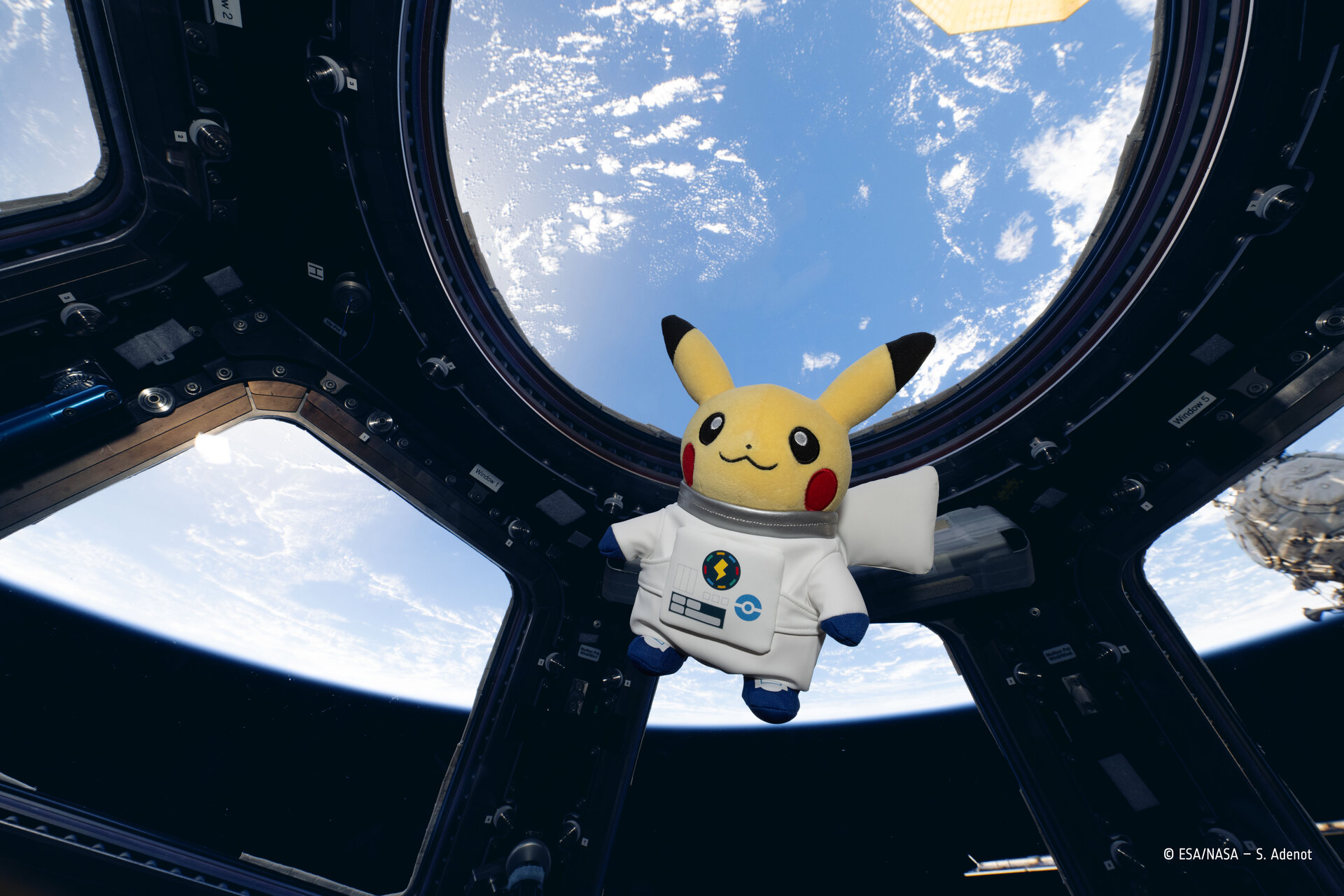
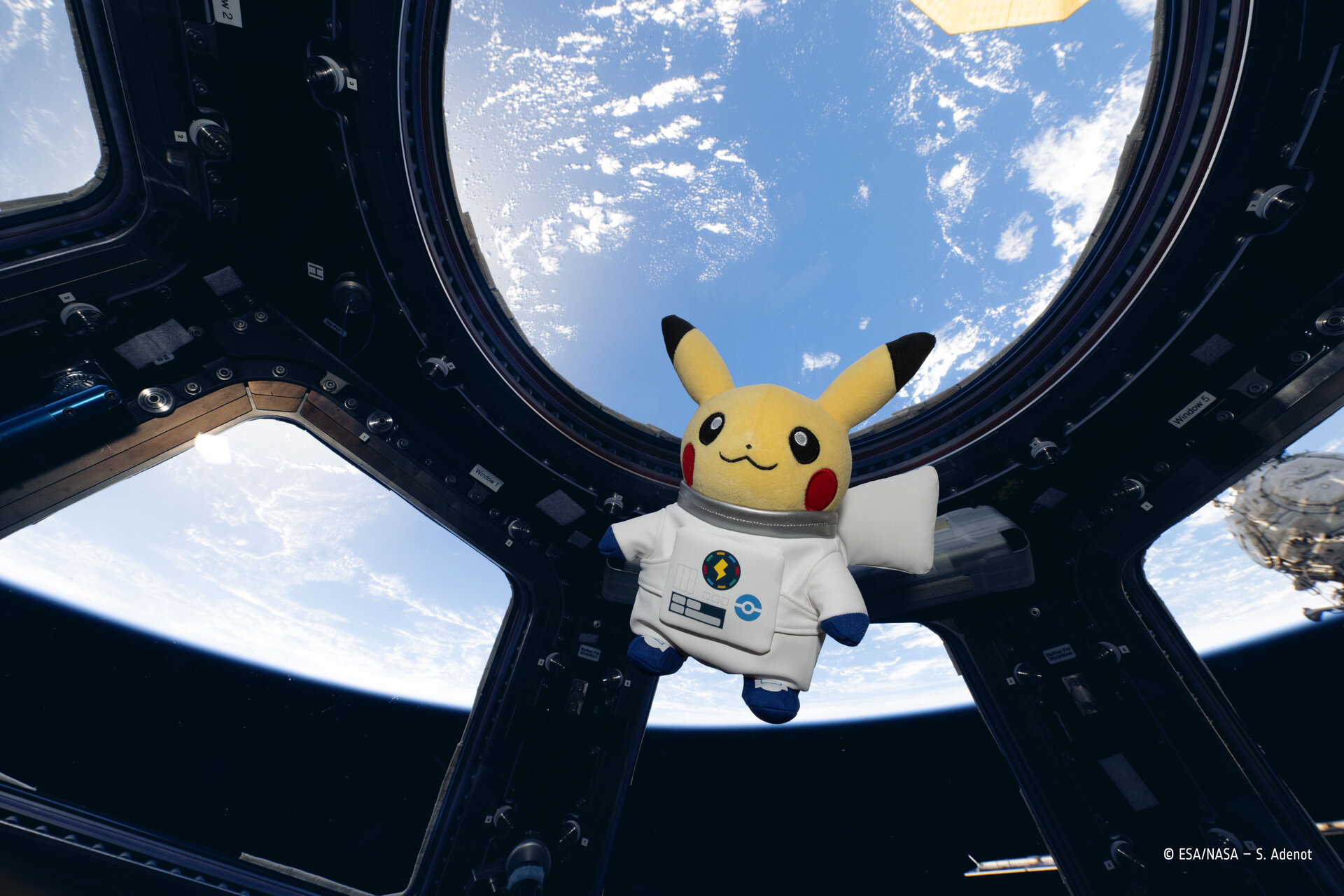
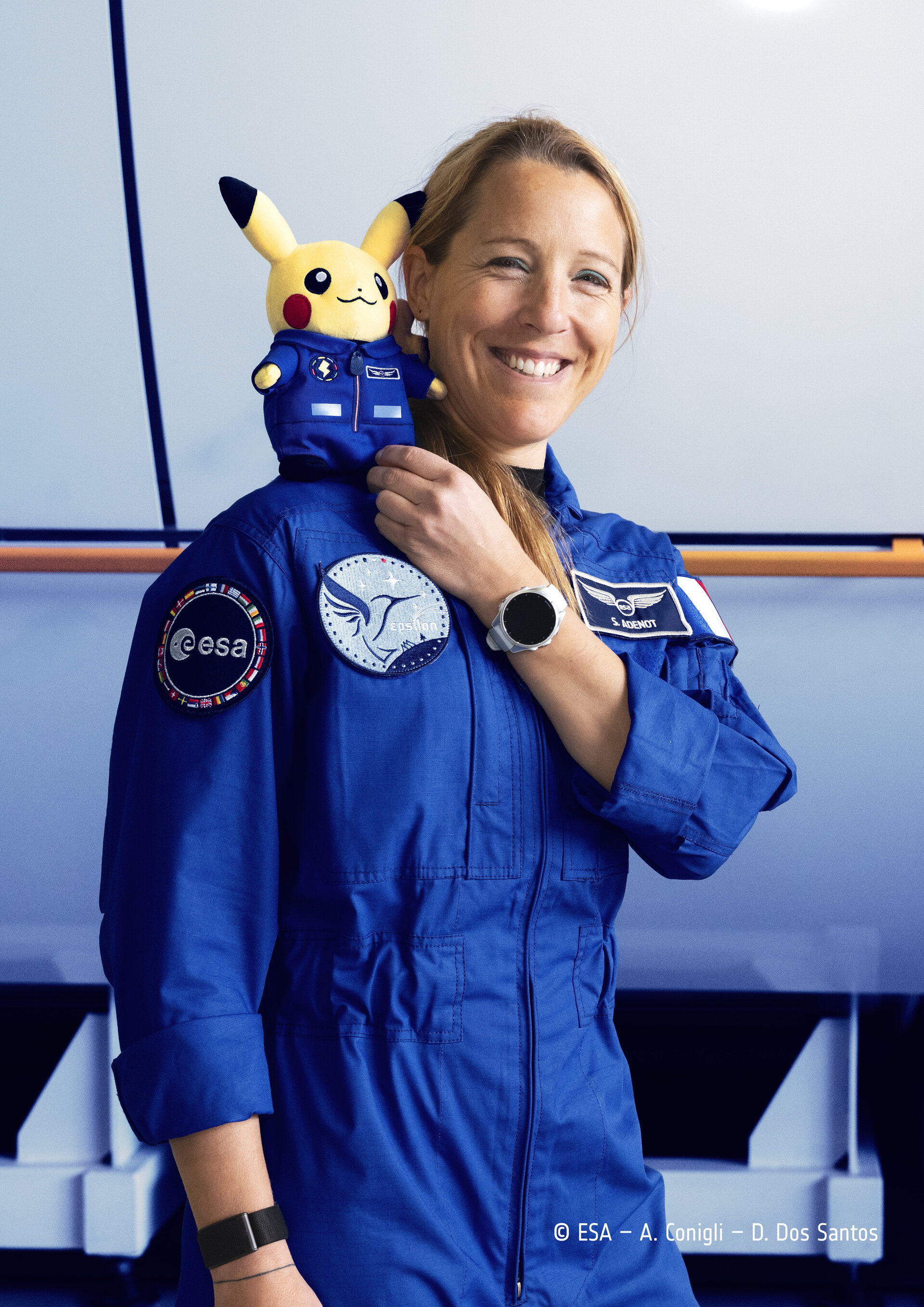
As part of that collaboration, a special Astronaut Pikachu plush travelled to the International Space Station during ESA astronaut Sophie Adenot's mission.
According to ESA, Pikachu spent 67 days in orbit, from 11 April to 17 June 2026, completing approximately 1,040 orbits around Earth.
That means this particular Pikachu has technically travelled farther than almost every human being on Earth.
It has also experienced something that most Pokémon fans never will:
microgravity.
The plush was photographed floating inside the ISS, including in the Cupola — the European-built observation module famous for its spectacular views of Earth. ()
And yes, that means there is now an official photograph of Pikachu looking down at Earth from space.
It is probably one of the more unexpected images to come out of European space exploration in 2026.
But the story becomes much more interesting when we ask why ESA would do this in the first place.
Why would a serious space agency work with Pokémon?
The obvious reaction might be:
"Wait… isn't ESA supposed to be doing science?"
Yes.
And that is exactly why the partnership is interesting.
ESA is not presenting Pokémon as a replacement for science.
Instead, the agency is using a globally recognizable fictional universe as a way of making science and space exploration more accessible to people who might not normally follow space missions.
ESA says the collaboration is built around shared ideas such as curiosity, imagination, exploration and discovery.
That makes considerable sense.
Space can be difficult to understand.
Orbital mechanics are not exactly dinner-table conversation.
Neither are radiation environments, microgravity experiments or spacecraft engineering.
But almost everyone understands the basic idea of exploration.
And Pokémon has spent decades teaching an enormous global audience a very simple concept:
Go out there and discover something.
That is remarkably close to the philosophy behind science.
A child who knows Pikachu may not know what ESA does.
They may not know what the ISS is.
They may not know what an astronaut actually does during a six-month mission.
But they know Pikachu.
And if Pikachu suddenly appears inside a European space exhibition, there is a good chance they will stop and look.
That moment of curiosity is precisely what ESA wants to create.

From Pokémon games to real space exploration
There is also a fascinating generational aspect to this collaboration.
Pokémon was launched in Japan in 1996.
That means that in 2026, the franchise is celebrating its 30th anniversary era.
A huge part of the original Pokémon audience is now adult.
Many people who played Pokémon as children in the 1990s and early 2000s are now in their 30s and 40s.
Some became engineers.
Some became scientists.
Some became pilots.
Some became astronauts.
And many simply remained fascinated by technology, games and exploration.
ESA is therefore not necessarily trying to make space "childish".
It is doing something more clever.
It is taking a cultural language that several generations already understand and using it to tell a scientific story.
And that may be one of the reasons the Pikachu image feels so strange — but also strangely appropriate.
For decades, Pokémon has asked people to explore fictional worlds.
Now Pikachu has literally been taken into orbit around the real one.
The real star of the story is still the Earth
There is another reason the ISS photographs work so well.
The International Space Station does not merely provide a backdrop for the Pokémon character.
It provides something much more powerful:
a view of Earth.
From orbit, political borders disappear.
Countries are no longer separated by passport-control booths.
There are no airport queues.
There is no immigration desk.
There is simply a planet.
The ISS orbits roughly 400 kilometres above Earth and circles the planet approximately every 90 minutes. Astronauts can experience around 16 sunrises and sunsets during a 24-hour period. ()
That makes the Cupola one of the most extraordinary windows humans have ever built.
And now Pikachu has been there.
It sounds ridiculous.
But it also creates a surprisingly powerful image.
A character whose entire identity revolves around exploration is floating above the planet it has been indirectly teaching generations of people to explore.
And then there is Europe down below
While Pikachu was looking at Earth from orbit, Europe was dealing with a very different kind of technological transformation.
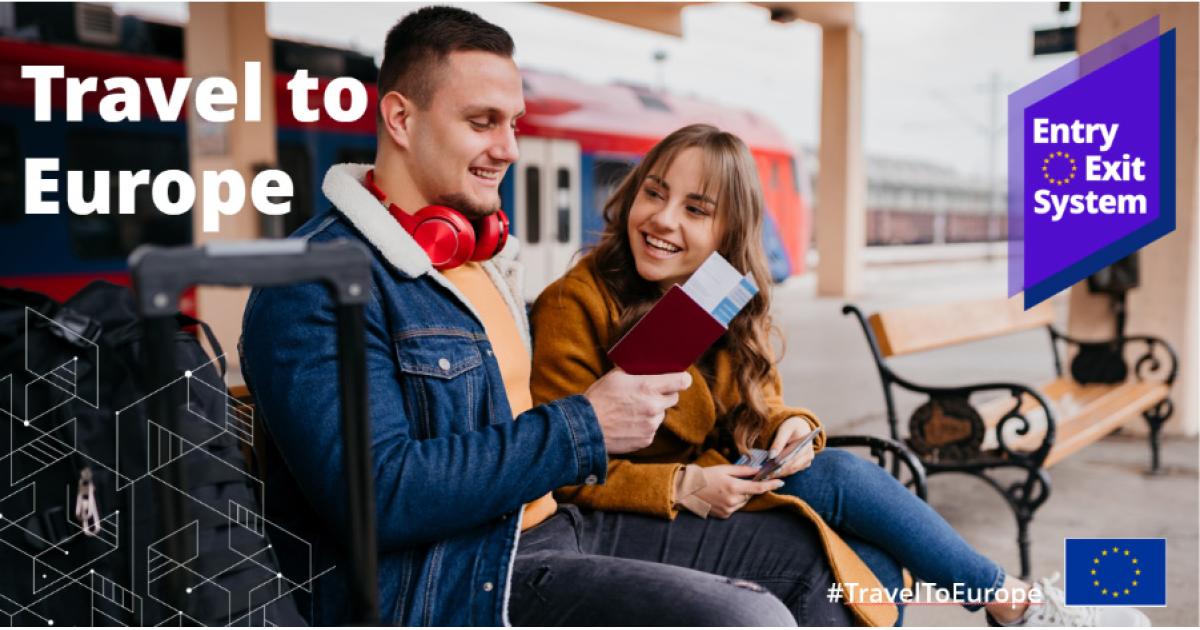
At Europe's external borders, the Entry/Exit System, known as EES, has become fully operational.
The system is designed for non-EU nationals travelling to the Schengen area for short stays.
Instead of relying on traditional passport stamps, EES digitally records entries, exits and refusals of entry.
The system also records information from travel documents as well as biometric information including a facial image and fingerprints.
For an EU citizen travelling within Europe, this may sound like something happening somewhere else.
And in many cases, it is.
But for travellers from outside the EU entering the Schengen area for short stays, it represents a significant change in the experience of crossing Europe's external borders.
The old passport stamp is disappearing.
The database is taking its place.
So what exactly is EES?
EES stands for Entry/Exit System.
It is an automated European border-management system designed to register non-EU nationals travelling for short stays across the external borders of the countries using the system.
The system records information including:
- name;
- travel document information;
- facial image;
- fingerprints;
- date and place of entry;
- date and place of exit;
- refusals of entry.
It is designed, among other things, to make it easier for authorities to identify people who overstay their authorised period and to detect attempts to cross borders using false identities or fraudulent documents. ()
The European Commission says EES replaces passport stamping with digital records.
In other words, Europe's external borders are becoming less dependent on paper and more dependent on databases.
That is a major technological change.
And it is happening at the same time that airports around the world are increasingly experimenting with automated gates, facial recognition and digital identity.
Does EES apply to everyone travelling in Europe?
No.
This is one of the most important points to understand.
EU citizens are not registered in EES.
The system applies primarily to non-EU nationals travelling for short stays in the Schengen area.
Citizens of EU countries, as well as Iceland, Liechtenstein, Norway and Switzerland, are not registered in EES under the standard rules.
There are also additional exemptions covering certain residence-permit holders, long-stay visa holders and specific categories of travellers.
So if you are a Polish citizen flying from Warsaw to Rome, Madrid, Lisbon or another Schengen destination, EES is not something that suddenly requires you to have your fingerprints taken.
The system concerns the external borders of the Schengen area.
That distinction matters.
Why did Europe introduce EES?
The idea behind EES is not new.
The EU has been working on the system for years.
The European Commission proposed EES as part of its broader "Smart Borders" approach, with legislation adopted in 2017.
The system eventually began its progressive operational rollout on 12 October 2025.
It then became fully operational under the planned EU framework on 10 April 2026.
The basic idea is straightforward:
Europe wants to know digitally who enters, who leaves and how long eligible non-EU travellers remain.
A passport stamp can show that somebody crossed a border.
A digital system can connect that crossing to a much larger record.
That makes it possible to automate some processes and identify patterns that are difficult to detect with stamps alone.
The surprising problem: technology meets millions of travellers
There is, however, a catch.
A digital border system may be technologically sophisticated.
But travellers are not digital files.
They arrive in huge numbers.
They arrive at different times.
They have luggage.
They have children.
They have connecting flights.
They are sometimes tired.
Sometimes they do not understand the procedure.
And sometimes an airport simply does not have enough physical space to process everyone efficiently.
That is why EES has been one of the biggest travel-technology stories in Europe.
The European system has faced concerns about queues, infrastructure and the practical speed of processing passengers.
And in September 2026, nine countries — including France, Germany, Greece, Italy, Belgium, the Netherlands, Malta, Portugal and Switzerland — have sought additional flexibility over full implementation of biometric checks at some locations, citing concerns around maintaining border flow.
That creates an amusing contrast.
Europe has built a futuristic biometric border system.
But the question remains very old-fashioned:
How quickly can people get through the airport?
The future is arriving — but it still has queues
This is perhaps the most interesting lesson from EES.
Technology does not automatically make a system faster.
It depends on how that technology is implemented.
A passport stamp can take seconds.
A digital system may eventually be more efficient because information only needs to be entered and associated with a traveller once.
But the first registration can require additional steps.
A traveller may have to provide biometric information.
Border officers may have to verify it.
Equipment must work.
Databases must communicate.
Staff need training.
Airports need space.
And every part of the process has to function when thousands of people arrive within a short period.
That is not particularly glamorous.
But it is the reality of technological transformation.
The futuristic future often arrives looking surprisingly similar to the present.
Sometimes it even comes with a queue.
And this is where Pikachu suddenly makes sense again
This brings us back to Pokémon.
Because the ESA collaboration is also about making technology understandable.
ESA has chosen a character that communicates exploration through imagination.
EES represents a very different side of technological change: automation, databases and biometric identification.
One is playful.
The other is administrative.
One involves space.
The other involves airports.
But both demonstrate something increasingly important about modern travel:
technology is becoming part of the journey itself.
The travel experience is no longer simply:
airport → aircraft → hotel → sightseeing.
It increasingly includes:
digital booking → biometric identity → automated border control → connected travel services → digital maps → real-time transport information → smart airports.
And potentially, one day, much more.
Europe is becoming a giant travel-tech laboratory
Look around a modern European airport and it is already possible to see the transformation.
There are automated passport gates.
Electronic boarding passes.
Self-service baggage machines.
Biometric identification.
Automated security lanes.
Digital travel authorisations.
Apps that provide travel information.
Artificial intelligence being tested for airport and air-traffic operations.
And now EES.
The passenger increasingly interacts with machines before interacting with another human.
That does not necessarily mean humans disappear.
Rather, the role of the human employee changes.
Instead of stamping passports, border officers increasingly supervise systems, resolve exceptions and deal with situations technology cannot handle.
The same transformation is happening throughout aviation.
Airports are becoming more automated because passenger numbers are enormous.
The technology has to handle not hundreds of people, but potentially millions.
What happens to the old passport stamp?
There is something oddly emotional about losing the passport stamp.
For frequent travellers, those little marks can become a physical diary.
A stamp from Italy.
Another from Morocco.
One from Japan.
A faded mark from a holiday taken ten years ago.
Digital records are much more efficient.
But they are also invisible.
You cannot open a database and flip through it while sitting at home.
That is perhaps one of the stranger consequences of digital travel.
The journey becomes easier to record but harder to hold in your hand.
The same thing has already happened to airline tickets.
Paper boarding passes were once souvenirs.
Now most passengers simply have a QR code on their phone.
Hotel confirmations live inside apps.
Maps are digital.
Photographs are digital.
And border records are becoming digital too.
Travel itself is slowly becoming an ecosystem of invisible information.
The same transformation is happening above Earth
Space travel is going through a similar change.
The ISS is still one of humanity's greatest engineering achievements.
But the space industry is already preparing for a world beyond the ISS.
ESA is exploring cooperation related to commercial low-Earth-orbit stations as part of preparations for the post-ISS era. In September 2026, ESA and Starlab signed a Letter of Intent concerning possible future cooperation and European use of a commercial space station.
That means the future of exploration is not simply about government agencies building enormous government-owned infrastructure.
Commercial space stations, private astronaut missions and new transportation systems are increasingly part of the discussion.
And that makes the Pokémon partnership even more interesting.
Pikachu is not simply appearing in an old photograph of the space age.
It is becoming part of the communication strategy for a space industry that is preparing for its next chapter.
From the ISS to museums across Europe
The Pikachu story does not end with its 67-day orbital adventure.
ESA and The Pokémon Company International have announced a Europe-wide exhibition focused on space and Pokémon.
The exhibition will appear at ESA sites and major museums across Europe, with the programme scheduled to run from autumn 2026 into 2027.
The initial programme includes ESA locations in Paris, Rome, Noordwijk, Darmstadt, Spain and the United Kingdom.
It will also appear at venues including Cité de l’espace in Toulouse, Ciudad de las Artes y las Ciencias in Valencia, Deutsches Museum in Nuremberg and Euro Space Center in Belgium. ()
That is a surprisingly extensive European tour.
And there is a particularly interesting date for Italian travellers.
The ESA site at ESRIN in Rome is scheduled to host the exhibition on 25 September 2026.
So someone visiting Rome at the end of September could potentially encounter a very unusual combination:
ancient Roman history outside…
and astronaut Pikachu inside.
Only in Europe.
World Space Week gets a Pokémon makeover
The collaboration is connected to World Space Week, which takes place from 4 to 10 October 2026.
World Space Week is an international celebration of space science and technology.
The dates commemorate the launch of Sputnik 1 on 4 October 1957 and the signing of the Outer Space Treaty on 10 October 1967.
ESA and Pokémon therefore chose a very appropriate moment for their collaboration.
The partnership is not simply a marketing gimmick.
ESA says its goal is to use the Pokémon universe to connect broader audiences with space exploration and inspire future generations.
Of course, there will also be merchandise.
And a special Pokémon GO event.
Because apparently even space exploration eventually leads back to your smartphone.
Pokémon GO is coming along for the ride
The Pokémon x ESA programme will include a special Pokémon GO element.
That is another clever bridge between the fictional and physical worlds.
Pokémon GO already encourages players to walk around real cities while interacting with an augmented digital world.
Space exploration, meanwhile, represents the ultimate physical exploration.
Putting the two together creates a rather modern definition of discovery:
walk through your city, look at the stars, learn about science and catch Pokémon along the way.
It is a very different model of science communication from a traditional textbook.
And perhaps that is the point.
Why viral stories like this matter
A story about a technical border-management system can be important without being particularly entertaining.
A story about Pikachu floating in space is entertaining almost automatically.
But entertainment can also be a gateway to information.
Someone might click the headline because they love Pokémon.
Then discover that Pikachu actually spent 67 days on the ISS.
Then discover who Sophie Adenot is.
Then learn what the ISS does.
Then discover World Space Week.
Then become interested in ESA.
That is a surprisingly effective chain of curiosity.
And this is exactly why museums, science organisations and space agencies increasingly use popular culture.
People rarely wake up and decide:
"Today I am going to learn about European orbital infrastructure."
But they might absolutely click:
"Pikachu Has Been to Space."
And suddenly they are learning about orbital research.
The internet loves strange combinations
There is also a very simple reason this story has viral potential.
The internet loves combinations that should not logically exist.
A cat on a skateboard.
A medieval painting recreated with modern technology.
A footballer playing chess.
And now:
Pikachu in space.
The visual itself does most of the work.
A yellow Pokémon floating inside the ISS is immediately understandable even without a headline.
You don't need to explain the joke.
It is the kind of image that makes people stop scrolling.
And that makes the ESA collaboration especially useful for communicating something much more serious.
The photograph is funny.
The science behind it is not.
EES has the opposite problem
The Entry/Exit System has almost the exact opposite communications challenge.
It is important.
It affects millions of travellers.
It involves major changes to Europe's border infrastructure.
But it is difficult to make exciting.
Nobody wakes up thinking:
"I hope there is a fantastic new database waiting for me at passport control."
And yet the technology behind EES could have a significant effect on how travellers experience Europe's external borders.
That is why explaining it clearly matters.
The system is not simply "new passport control."
It is a digital infrastructure designed to record crossings and biometric information for eligible non-EU short-stay travellers.
It also changes how Europe handles the concept of an overstayer.
Instead of relying primarily on physical passport stamps, the system can compare entry and exit records digitally.
That is a major change.
It just doesn't have Pikachu.
The two faces of travel technology
If we put the two stories next to each other, we get an almost perfect illustration of the two sides of modern travel technology.
The fun side
- Pokémon
- space
- astronauts
- virtual worlds
- Pokémon GO
- museums
- augmented reality
- exploration
The practical side
- biometric passports
- facial recognition
- fingerprints
- automated border checks
- digital databases
- airport infrastructure
- travel authorisations
One side makes us want to explore.
The other side makes exploration easier to manage.
And both are becoming increasingly important.
Could airports eventually feel more like science fiction?
Probably.
The direction of travel is clear.
Airports are becoming increasingly automated.
Biometrics are becoming more common.
Digital identity is expanding.
Artificial intelligence is being tested across aviation.
And border systems are becoming increasingly connected.
The EES is therefore not an isolated technological experiment.
It is part of a much larger transition.
In the future, travellers may increasingly move through airports without repeatedly presenting physical documents.
Instead, identity could be verified automatically at different stages.
That could mean less friction.
But it also means that digital infrastructure becomes even more important.
If the technology works, the passenger may barely notice it.
If it does not work, everyone notices.
Usually at the same time.
And that brings us to the great contradiction of smart travel
The promise of travel technology is simple:
make travel faster, easier and more convenient.
But every new technological layer creates its own challenges.
A digital boarding pass can save paper.
But your phone can run out of battery.
Automated gates can reduce queues.
But they can also stop working.
Facial recognition can accelerate identity checks.
But cameras need to function and databases need to communicate.
EES can create a more consistent digital record.
But airports still need enough staff, equipment and space.
Technology does not eliminate logistics.
It changes them.
What does EES mean for travellers from outside the EU?
For a traveller from the United States, United Kingdom, Canada, Australia, Japan or another non-EU country visiting Europe for a short stay, EES is particularly relevant.
Instead of simply receiving a passport stamp, the traveller may have biometric data registered as part of the EES process.
The system is intended to record entry and exit and help determine whether a traveller has respected the permitted duration of stay.
The standard short-stay framework is generally 90 days in any 180-day period, subject to the traveller's nationality and specific entry conditions.
This is important because EES is not itself a visa.
It is a border-management system.
It does not replace the underlying rules governing whether someone is allowed to enter Europe.
It records and helps enforce those rules digitally.
EES and ETIAS are not the same thing
Another source of confusion is the relationship between EES and ETIAS.
They are different systems.
EES is about recording entries and exits at Europe's external borders.
ETIAS is a travel authorisation system for eligible visa-exempt non-EU travellers.
The European Commission says ETIAS is scheduled to begin in the last quarter of 2026, with the exact date to be communicated officially.
So travellers should not think:
"EES is the European visa."
It isn't.
The two systems serve different purposes.
One records border crossings.
The other concerns pre-travel authorisation for eligible travellers.
And both are part of Europe's wider digitalisation of travel.
Europe is building a digital travel identity
Taken together, systems like EES and ETIAS point towards a broader transformation.
The traditional travel experience was built around physical documents.
Passport.
Stamp.
Paper boarding pass.
Printed hotel reservation.
Printed map.
Today, many of these things have already become digital.
The next stage is identity itself.
Who are you?
Where are you travelling?
When did you enter?
When are you expected to leave?
Are you authorised to enter?
Can your identity be verified automatically?
These questions are increasingly answered by interconnected digital systems.
That is a huge technological change — and one that most travellers will experience without necessarily thinking about the infrastructure behind it.
Meanwhile, 400 kilometres above Earth…
Pikachu has already experienced the ultimate digital-age travel experience.
No passport.
No airport.
No EES.
No security queue.
No boarding pass.
Just a rocket.
And the ISS.
And approximately 1,040 trips around Earth.
It is perhaps the only traveller in Europe right now who can genuinely say:
"I have seen the whole continent from above."
Of course, Pikachu is a plush character.
It does not actually possess a passport.
It does not need an immigration status.
And it is not a human astronaut.
But the fact that ESA chose to send the character into orbit says something about how the agency wants to communicate with the public.
Space is no longer being presented only as something distant and inaccessible.
It is becoming part of popular culture.
The future traveller might look very different
Imagine travelling through Europe twenty years from now.
You may still have a suitcase.
You may still complain about a delayed flight.
You may still search for the cheapest hotel.
You may still take 200 photographs of the same sunset.
Some things will never change.
But the infrastructure around you could be very different.
Your identity might be verified automatically.
Your passport may exist primarily as a digital identity.
Your luggage could be tracked continuously.
Artificial intelligence could help manage your flight.
Airport systems could predict congestion before it happens.
Translation could happen instantly.
And perhaps you will still be playing Pokémon GO while waiting at the gate.
That last part is not a prediction.
It is simply a reasonable bet.
Why this story is bigger than Pokémon

It would be easy to treat the ESA announcement as nothing more than a cute marketing collaboration.
But there is a bigger story here.
Science needs people.
Space agencies need future scientists, engineers and explorers.
Museums need visitors.
Technology needs public understanding.
And young people need reasons to become curious about subjects that can initially seem difficult.
Pokémon is a storytelling universe built almost entirely around curiosity.
You travel.
You discover.
You experiment.
You encounter something new.
You learn.
You keep going.
That is surprisingly close to the scientific method.
Science begins with a question.
Pokémon begins with a journey.
Both depend on curiosity.
The most unexpected travel influencer of 2026?
Maybe it is Pikachu.
Think about it.
Travel influencers normally post photographs from beaches, hotels and city streets.
Pikachu has posted from orbit.
Most influencers worry about airline baggage limits.
Pikachu had to deal with microgravity.
Most travellers complain when their hotel room has no view.
Pikachu looked through the Cupola at Earth.
Most people count countries visited.
Pikachu can count approximately 1,040 orbits.
Suddenly, 30 countries in Europe does not sound quite as impressive.
And then there is the border irony
There is something almost comically European about the contrast.
Pikachu:
"I want to explore the world."
Europe:
"Certainly. Please provide your biometric data."
Again, these are unrelated stories.
But as a headline combination, it is hard to resist.
And it captures something about the modern traveller.
We want freedom to explore.
At the same time, modern states want increasingly sophisticated systems for knowing who crosses their borders.
Technology sits right between those two ambitions.
The future of travel may be both more magical and more controlled
That sounds contradictory, but it isn't.
Technology can make travel more exciting.
Virtual reality can let us experience destinations before visiting them.
AI can help us plan trips.
Space technology can give us new views of Earth.
Apps can help us navigate unfamiliar cities.
Digital services can reduce paperwork.
But technology can also make travel more structured.
Biometric borders.
Digital authorisations.
Automated checks.
Travel databases.
Electronic records.
The modern traveller therefore lives between two technological worlds.
One says:
Explore further.
The other says:
Identify yourself first.
And Europe is rapidly building both.
What travellers should take away from the EES story
For EU citizens travelling within the Schengen Area, there is no reason to panic about EES.
The system is not designed to register EU citizens in the same way as eligible non-EU short-stay visitors.
For non-EU travellers, however, it is worth understanding the system before travelling.
The important points are:
EES is a border system, not a visa.
It applies primarily to non-EU nationals travelling for short stays.
Biometric data such as fingerprints and facial images form part of the system.
Passport stamping is being replaced by digital records.
The system is intended to help detect overstays and identity fraud.
Some categories of travellers are exempt.
And the practical experience can vary between border crossing points, particularly while countries continue adapting infrastructure and procedures. ()
What travellers should take away from the Pokémon story
This part is much easier.
Look up.
Seriously.
The next time you see a rocket launch, an astronaut photograph or a picture of Earth from space, remember that space exploration is no longer something that exists only in old science-fiction movies.
European astronauts are living and working in orbit.
European agencies are preparing for the post-ISS era.
And now a small yellow Pokémon has literally been there too.
ESA's collaboration will bring the story to museums and science venues across Europe.
The exhibition begins rolling out in September and October 2026 and is expected to continue into 2027. ()
That makes this much more than a one-day internet joke.
From Pokémon to the next generation of explorers
Perhaps the best part of the story is what happens after the viral photograph disappears from social media.
A child sees Pikachu floating in space.
They ask:
"How did Pikachu get there?"
An adult explains:
"On the International Space Station."
Then comes another question:
"What is the International Space Station?"
Then:
"Why do astronauts float?"
Then:
"How does the station stay in orbit?"
Then:
"How do rockets work?"
That is curiosity.
And curiosity is one of the most important resources science has.
If Pokémon can create that first question, the collaboration has already achieved something meaningful.
Europe has always been about exploration
There is a deeper historical connection here too.
Europe's story is full of exploration.
Ships crossed oceans.
Scientists mapped the skies.
Engineers built railways.
Aviation connected continents.
Satellites connected the planet.
Now spacecraft are extending that exploration beyond Earth.
At the same time, Europe's internal borders have become increasingly open while its external borders are becoming more technologically sophisticated.
That creates an interesting paradox.
Inside the Schengen Area, millions of people can move between countries without routine internal passport controls.
At the external border, technology is being used to create increasingly detailed digital records.
Europe is therefore simultaneously removing some traditional borders and modernising others.
The airport of the future may feel completely different
Imagine arriving at an airport in 2035.
You may not see as many traditional desks.
Instead, you might walk through a sequence of biometric checkpoints.
Your identity could be verified automatically.
Your luggage could be tracked.
Your boarding status could update in real time.
Artificial intelligence could predict congestion.
The airport could know that you are approaching before you reach the next checkpoint.
That sounds futuristic.
But pieces of that system already exist.
EES is one part of the larger transition.
Automated border gates are another.
Digital boarding passes are another.
And smartphone-based travel services are already normal.
The airport of the future is therefore not suddenly going to appear.
It is being assembled piece by piece.
And somewhere in that future, Pikachu will probably still be there
That might be the funniest part.
Technology changes rapidly.
Border systems change.
Airports change.
Spacecraft change.
But popular culture has an extraordinary ability to survive technological revolutions.
People who grew up playing Pokémon on a Game Boy are now adults.
They travel.
They work in technology.
They build companies.
They become scientists.
And they buy Pokémon merchandise.
The franchise has therefore followed an entire generation into adulthood.
Now ESA is bringing it into the world of space exploration.
That is a clever meeting point between nostalgia and the future.
One planet, two journeys
Ultimately, the stories of Pikachu and EES are about two completely different journeys.
Pikachu's journey went up.
The EES transformation is happening across.
One is measured in kilometres above Earth.
The other is measured in borders crossed.
One involves an orbital laboratory.
The other involves airports, seaports and land crossings.
One is playful.
The other is highly technical.
But both are part of the same broader transformation.
Travel is becoming more technological.
Exploration is becoming more connected.
And the line between science, entertainment and everyday life is becoming increasingly blurred.
So… where is Pikachu going next?
ESA has not sent Pikachu to Mars.
At least, not yet.
For now, its next destination is much closer to home.
The Pokémon x ESA exhibition will travel to locations across Europe, including ESA centres and major science museums.
There will also be special Pokémon GO activity connected to the collaboration.
And World Space Week will provide the main international focus from 4–10 October 2026. ()
So if you are travelling through Europe this autumn and happen to see an astronaut Pikachu, don't assume you've had too much jet lag.
It is probably real.
Europe in 2026: biometric borders and Pokémon in orbit
There could hardly be a better pair of stories to explain the strange technological moment we are living through.
Europe is simultaneously becoming more digital and more connected.
At its borders, biometric systems are replacing old-fashioned stamps.
In space, astronauts continue to conduct research hundreds of kilometres above Earth.
Museums are combining science with popular culture.
Apps are becoming part of the travel experience.
Artificial intelligence is entering aviation.
And somewhere in the middle of all this, Pikachu has managed to become an astronaut.
Maybe that is the most 2026 sentence imaginable.
Europe is digitising its borders while sending Pokémon into space.
And somehow, both stories make perfect sense.
Because travel has never really been about the passport stamp, the boarding pass or even the destination.
It has always been about curiosity.
About going somewhere you have never been.
About seeing something you have never seen.
About asking:
"What is out there?"
For centuries, humans have looked beyond the horizon to find the answer.
Now we have spacecraft, satellites, biometric databases and artificial intelligence helping us get there.
And apparently, we have Pikachu too.



 www.esabic-turin.it