


Santa Claus: From Saint to Cultural Icon
On a frosty December night, children around the world drift to sleep with dreams of a jolly old man in a red suit. Stockings hang by glowing hearths, cookies and milk are set out on tables, and an air of magic fills the winter darkness. This character – Santa Claus – has become one of the most recognizable figures in modern culture, a symbol of generosity, joy, and the spirit of Christmas. Yet Santa’s journey from a 4th-century saint to a modern cultural icon is a rich tapestry woven from various traditions, legends, and historical twists. His story spans continents and centuries: from the deeds of an ancient bishop in Asia Minor to medieval European folklore, from the bustling streets of 19th-century New York to the remote allure of the North Pole. Santa Claus as we know him today is the product of merged traditions – a patchwork of Western and European legends such as Saint Nicholas, Father Christmas, and Sinterklaas – stitched together over time. Each thread in this tapestry adds something unique: a penchant for secret gift-giving, a hearty love of feasting and good cheer, a snowy home at the top of the world, flying reindeer, or a warm red coat.
Origins of Santa Claus: Saints, Sages, and Yuletide Spirits
Every legend has an origin story, and for Santa Claus, the roots reach deep into history. Long before reindeer and elves entered the scene, there was a real man behind the myth – a saint whose generosity became the stuff of legend. Over the centuries, that saint’s legacy blended with folklore and festive customs across Europe. To truly understand Santa, we begin with these early influences: Saint Nicholas, the benevolent bishop of old; Father Christmas, the personification of holiday merriment in England; and Sinterklaas, the Dutch saint who sailed into children’s dreams each December. Each of these figures would contribute to the Santa we know, carrying hints of miracles, magic, and merrymaking across the ages.
Saint Nicholas: The Generous Bishop of Myra
The legend of Santa Claus begins with Saint Nicholas of Myra, a 4th-century Christian bishop whose life shined with charity and compassion. Saint Nicholas lived in what is now Demre, Turkey, far from the Arctic cold – indeed, “the real Santa Claus – the historical figure upon which the legend is based – never lived anywhere near the North Pole”. Born into wealth, Nicholas was known for using his inheritance to help the needy, earning him a reputation as a secret gift-giver. One famous story tells how he saved a poor man’s daughters from despair by secretly tossing bags of gold through their window at night, providing dowries so they could marry. The image of a midnight benefactor slipping gifts to those in need would echo through the ages, eventually inspiring Santa’s nocturnal visits to sleeping children.
Saint Nicholas’s kindness made him immensely popular, especially among children and sailors, and after his death he was revered as a saint across Christendom. His tomb in Myra became a pilgrimage site, so much so that rival cities coveted his remains. In the 11th century, Italian sailors stole Nicholas’s bones and brought them to Bari, Italy, where they remain enshrined to this day. (Venice also claims to hold some fragments, having spirited away relics during the First Crusade.) The spread of Saint Nicholas’s relics mirrored the spread of his cult of veneration throughout medieval Europe. By the Middle Ages, Saint Nicholas was celebrated annually on his feast day, December 6th, as the patron saint of children and gift-giving. In many places, particularly in Northern Europe, it became customary for children to receive treats or presents “often on the evening before his name day of 6 December” in honor of St. Nicholas. The notion of a kindly figure rewarding children with gifts was thus firmly embedded in European traditions centuries ago.
However, not all Christian regions welcomed saints equally. During the Protestant Reformation of the 16th century, devotion to saints (including St. Nicholas) was discouraged in many countries. Gift-giving festivities were shifted from St. Nicholas’s Day to Christmas Eve or Christmas Day, with some reformers promoting the Christkind (the Christ Child) as the new bearer of gifts in place of the saint. The Protestant leader Martin Luther, for example, “first suggested the Christkind as the bringer of gifts” on Christmas to focus children’s attention on the holy infant Jesus rather than saints. Yet despite these efforts, the kindly St. Nicholas refused to disappear – he remained popular among the people, and in many regions the old gift-giving customs persisted or eventually merged with Christmas traditions. By whatever name or date, the core idea endured: a special visitor comes in midwinter to bring joy and presents, especially to children.
Across Europe, various folk characters and customs kept St. Nicholas’s memory alive. In some German-speaking areas, the Christkind (often depicted as an angelic figure) took hold, but St. Nicholas in his bishop’s robes still visited on December 6th in others, accompanied by stern assistants like Knecht Ruprecht or Krampus who dealt with naughty children. In many Catholic countries, Saint Nicholas’s Eve remained a time of treats in shoes and stockings. These early traditions set the stage for Santa’s gift-delivering role, but other figures were also contributing ingredients to the Santa mythos. As we’ll see next, England had its own Christmas guardian – one less concerned with piety, and more with revelry.
Father Christmas: Merriment and Magic in Old England
While St. Nicholas’s cult flourished on the continent, England developed a different embodiment of the holiday spirit: Father Christmas. Far from a gift-bearing saint, the original Father Christmas was the personification of seasonal cheer and feasting. Traces of this character go back to medieval times – as early as the 15th century, English festivities personified “Christmas” as a merry old man who encouraged indulgence and good fellowship. During the mid-17th century, in the dark days when Puritans in England tried to ban Christmas celebration as too pagan or papist, royalist writers brought forth “Old Father Christmas” in pamphlets and plays as a symbol of the “good old days” of joyous holiday traditions. Draped in robes (early depictions showed him in anything from coarse wool to fine green or scarlet fur-lined coats), Father Christmas was portrayed as a large, jovial man often crowned with holly. He came not to children but to adult gatherings, presiding over feasts, ale, music, and mirth. Essentially, he embodied the spirit of good cheer, ensuring that Christmas was celebrated as a time of abundance and conviviality.
For centuries, Father Christmas did not carry a sack of toys, nor slide down chimneys. “Until Victorian times, Father Christmas was concerned with adult feasting and merry-making,” one historian notes. “He had no particular connection with children, nor with the giving of presents, nocturnal visits, stockings, chimneys or reindeer”. The transformation of Father Christmas into a gift-giver came only in the 19th century, as Christmas in England evolved into a more family-centered holiday. The Victorian era – helped along by literature like Charles Dickens’s A Christmas Carol (1843) – rekindled Christmas as a domestic celebration emphasizing charity, family warmth, and yes, children. As later Victorian Christmases became more child-centric, Father Christmas gradually assumed the role of gift-bringer, converging with the emerging Santa Claus figure from America. By the 1880s, English Christmas customs had absorbed Santa’s attributes: the once adult-oriented Father Christmas was now often depicted visiting children at night and leaving gifts, sometimes being referred to interchangeably as “Santa Claus”. He even adopted Santa’s wardrobe preferences; late Victorian illustrations commonly show Father Christmas/Santa in a long hooded red robe trimmed with white fur, much like the classic Santa suit.
Most of the distinctions between Father Christmas and Santa Claus faded in the early 20th century, effectively merging into one character in the English-speaking world. Today in Britain, “Father Christmas” is simply another name for Santa, though the older term harks back to an earthier spirit of Christmas past. The English contribution to Santa’s development, then, was the jovial holiday spirit – the image of a jolly, large man who represents generosity and good cheer amid the snow and holly. This persona melded perfectly with the gift-giving saint as the two characters became one. But we’re not done assembling Santa yet – we must now look to the Low Countries, where a beloved saint arrived each winter not by sleigh, but by steamboat and horse.
Sinterklaas: The Dutch Saint and Children’s Friend
In the Netherlands and Belgium, the tradition of Sinterklaas kept alive perhaps the most direct connection to Saint Nicholas. The very name “Sinterklaas” is simply a Dutch colloquialism for Saint Nicholas (Sint Nikolaas), and the figure is explicitly the saintly bishop: an elderly, stately man with a flowing white beard, wearing a red bishop’s robe and mitre, and carrying a crosier (bishop’s staff). According to Dutch lore, Sinterklaas resides in sunny Spain during the year, and each November he travels by ship to the Netherlands, then rides a white horse across the rooftops delivering gifts. The feast of Sinterklaas is celebrated on the eve of St. Nicholas’s Day – December 5th – when children set out shoes by the fireplace or windowsill, hoping to find them filled with sweets and presents by morning. In a scene very much like Christmas Eve elsewhere, Dutch children sing songs and leave hay or carrots for the Sinterklaas horse, listening for the hoofbeats signaling that “De Sint” has arrived. Good children awaken to find candy, chocolate initials, and small gifts in their shoes, while folktales warned that naughty children might receive a coal or be taken away by Sinterklaas’s helper (historically the character Zwarte Piet, whose role and depiction have become controversial in recent times).
The Sinterklaas tradition is extremely old – by the 16th and 17th centuries it was already an important family festivity in the Low Countries, beloved by both Catholics and Protestants (despite occasional Calvinist disapproval). When Dutch settlers carried their culture to the New World, they brought Sinterklaas with them in their memories and folklore. In fact, the very name “Santa Claus” is essentially an anglicized pronunciation of “Sinterklaas”. As one historian succinctly puts it, early representations of gift-givers “merged with the English character Father Christmas to create the mythical character known…as ‘Santa Claus’ (a phonetic derivation of ‘Sinterklaas’ in Dutch)”. This linguistic lineage is a clue to how crucial the Dutch influence was in forming the American Santa.
Even before the United States existed, the colony of New Amsterdam (later New York) had remembered St. Nicholas. After the British took over, the Dutch traditions waned for a time, but in the late 18th and early 19th centuries, New York scholars and writers with Dutch heritage sparked a revival of interest in St. Nicholas. An early reference appeared in a New York newspaper in 1773 referring to a local “St. A Claus” celebration – an early printed appearance of the name Santa Claus in America. The stage was set in New York City for Sinterklaas to evolve into something new, under a different name.
Sinterklaas contributed more than just his name. The concept of a dignified, bearded gift-bringer riding through the sky on a horse (or later, a sleigh with reindeer) and rewarding children clearly comes from the Nicholas/Sinterklaas tradition. Many of the earliest descriptions of Santa in America explicitly reference this Dutch connection. For example, in 1809 the writer Washington Irving, in his satirical History of New York, wrote of Saint Nicholas “riding over the tops of the trees, in that self-same wagon wherein he brings his yearly presents to children,” smoking a pipe and laying a finger beside his nose – mixing Old World folklore with New World humor. Irving’s portrayal was tongue-in-cheek (he even jokingly depicted St. Nicholas as a plump Dutch burgher in a green coat), but it planted seeds. By importing Sinterklaas into American literature, Irving and others helped spark a broader movement to domesticate Christmas in the young United States.
In summary, the European forebears of Santa Claus provided various ingredients: Saint Nicholas gave the model of a holy gift-giver devoted to children; Father Christmas gave the hearty, jovial spirit of festive cheer; and Sinterklaas gave the very name “Santa Claus” along with vivid customs of a magical visit in winter. Other influences simmered in the background as well – some folklorists note that pre-Christian pagan traditions (like the Norse god Odin, who rode the sky with an eight-footed steed and carried a bounty for the worthy) may have lent Santa the image of an old, bearded man who flies at Yule. But it was in the New World, especially 19th-century America, that these ingredients were stirred together and brought to a boil, yielding the modern Santa stew we all recognize. Let us travel, then, to the bustling streets of 1800s New York, where Santa Claus truly comes to life.
The Making of the Modern Santa: From New York to the North Pole
By the early 1800s, the American Christmas was ripe for reinvention. What had been a rowdy, carnivalesque holiday (marked by drunken revelry and even “aggressive home invasions” in some places under the guise of wassailing) was gradually being transformed into a warm family celebration. Influential New Yorkers – writers, poets, and illustrators – drew on Old World legends to create a new mythology of Christmas suited to their young nation’s sensibilities. Central to this mythology was Santa Claus, who would soon shed his bishop’s miter and cobbled shoes to become a plump, homely, and ever-so-jolly provider of children’s delights.
Knickerbocker’s Santa: Washington Irving and New York’s Saint Nick
In 19th-century New York, a group of literati deliberately sought to shape Christmas traditions. Among them was John Pintard, a prominent New York historian and philanthropist who in 1804 had revived the memory of Saint Nicholas as the city’s patron saint. Pintard, facing a city where Christmas celebrations were often rambunctious and disorderly, envisioned St. Nicholas as a symbol of family and civility, someone who could tame the holiday’s excesses and refocus it on home and children. He shared this idea with his friend Washington Irving, already famous for his imaginative stories. Irving enthusiastically ran with the notion.
In A History of New York (1809), written under the pseudonym Diedrich Knickerbocker, Irving wove playful folklore about New Amsterdam’s founding. He included a dreamlike sequence where St. Nicholas soars over treetops in a flying wagon, delivering presents – a scene that merges the Old World saint with a bit of whimsical fantasy. Irving described Nicholas smoking a pipe and watching over the city, presenting him as a kindly, magical visitor. He even Anglicized the Dutch name, referring to the figure as “Santa Claus”, marking one of the earliest known uses of that name in literature. Importantly, Irving depicted Santa Claus not in religious vestments but in a more down-to-earth way (as a “thick-bellied Dutch sailor” in one jokey aside). The bishop’s mitre was gone; instead Santa wore a typical Dutch winter coat and smoked a long pipe, a homely image that tickled American readers.
Irving’s fanciful Santa was part of a broader trend. As noted, Christmas in the early 1800s needed domesticating – gone would be the drunken mobs demanding figgy pudding at the manor door; in would come peaceful scenes of children and stockings by the fire. Pintard and Irving’s efforts were essentially an “invention of tradition.” While they didn’t single-handedly create Santa Claus, they laid critical groundwork by popularizing Saint Nicholas in the context of New York’s holiday celebrations. By the 1820s, New York newspapers were referring to Santa Claus as a known entity, and the figure was becoming linked to Christmas rather than early December. But it took a poem – a simple, catchy poem for children – to truly fix the image of Santa in the public’s mind.
“‘Twas the Night Before Christmas”: Clement Clarke Moore’s Vision
In 1823, an anonymous poem titled “A Visit from St. Nicholas” appeared in a Troy, New York newspaper. It would later be better known by its famous opening line: “‘Twas the night before Christmas, when all through the house…” This poem, attributed to Clement Clarke Moore (although authorship has been debated), became immensely popular and had an incalculable influence on the Santa Claus legend. For many, it was this poem that turned a vague folk character into a vivid, tangible presence. Moore’s verses introduced details that are now inseparable from Santa’s story:
- Santa’s appearance: The poem paints St. Nicholas as “chubby and plump, a right jolly old elf,” with a round belly that shakes like a bowlful of jelly when he laughs. Despite calling him an elf, Moore clearly imagines a small, rotund human figure brimming with mirth and kindness. Santa is described as diminutive in stature (hence he can fit down chimneys easily), with twinkling eyes, rosy cheeks, a snow-white beard, and a nose like a cherry – the quintessential grandfatherly figure. This charming, cuddly depiction was a departure from the dignified bishop or the towering Father Christmas; Moore made Santa approachable and whimsical.
- The sleigh and reindeer: Crucially, A Visit from St. Nicholas unveiled Santa’s magical mode of travel. In a miniature sleigh pulled by eight tiny reindeer, Santa streaks across the night sky. Moore even provided names for the eight reindeer – “Now! Dasher, now! Dancer, now! Prancer and Vixen, On! Comet, on! Cupid, on! Dunder and Blixem…”. (Those last two, meaning thunder and lightning in colloquial Dutch, were later germanized to Donner and Blitzen.) This was a brilliant melding of the fantastical with the familiar: reindeer, creatures of the northern snows, tied Santa to the winter landscape, and giving each a name and personality delighted children. The idea of a flying sleigh was not entirely new – earlier writers had hinted that St. Nick flew – but Moore’s poem firmly set Santa soaring through the starry Christmas Eve with reindeer as his companions.
- Christmas Eve visit: The poem firmly entrenched the timing: Santa comes on the night before Christmas, when children are asleep. He lands on the roof, carries a sack of toys, slips down the chimney, fills the stockings hung by the fireplace, and then vanishes with a joyous cry of “Happy Christmas to all, and to all a good night!” In Moore’s telling, Santa is cheerful and stealthy – an expert at avoiding waking the household. This established the model of Santa as a clandestine gift-giver who works his magic in the wee hours, unseen except perhaps by one lucky narrator who peeks. The traditions of hanging stockings and of Santa entering via the chimney were popularized by this single poem, which gathered up earlier bits of legend and crystallized them in memorable rhyme.
It’s hard to overstate how influential Moore’s poem was. It effectively canonized many Santa Claus tropes. As the Santa Claus article in Wikipedia notes, “Some modern ideas of Santa Claus seemingly became canon after the anonymous publication of the poem A Visit from St. Nicholas… in 1823”. Indeed, the poem’s descriptions became the standard – Santa was now universally imagined as the fat, jolly gift-bringer with reindeer and a sleigh. By the 1840s, Santa was so well-known in the United States that newspapers could refer to him offhand. For instance, by 1845 the name “Kris Kringle” (a corruption of the German Christkindl, but used in America as another nickname for Santa) was common in some regions. An 1853 magazine article explained to British readers that American children hung up their stockings for a “fabulous personage” whose name varied – in Pennsylvania, often Krishkinkle, in New York, St. Nicholas or Santa Claus – but in every case Moore’s poem’s imagery applied equally to all. Santa had become a nationally recognized figure, even as some local variations of name persisted.
However, one should note that in Moore’s poem, Santa is still described as “little” – he is a “jolly old elf” with a miniature sleigh. Over the next few decades, Santa would gradually “grow” in stature in the popular imagination. Artists and writers began portraying him as a full-sized human (albeit a portly one), and as the 19th century progressed, Santa morphed from a tiny elf into more of the grandfatherly figure we now know. This visual evolution was largely the work of one man – an illustrator who took Moore’s merry elf and gave him a wider girth, a homelier face, and even a home at the North Pole.
The Illustrator of Christmas: Thomas Nast and the American Santa
If Clement Moore provided Santa’s character and Clementine charm, it was Thomas Nast, a German-American political cartoonist, who provided Santa’s iconic visuals. Nast is often credited with defining the modern look of Santa Claus in the mid-to-late 1800s. A talented and influential illustrator, Nast worked for Harper’s Weekly magazine, and during the Civil War he began including Santa in his holiday drawings. In fact, one of Nast’s earliest Santa illustrations appeared on January 3, 1863, in the midst of the Civil War, showing Santa Claus visiting Union Army soldiers in camp. This image – “Santa Claus in Camp” – was powerful wartime propaganda: Nast drew Santa as a cheer-bringer for the Union troops, clad in a star-spangled outfit, distributing gifts (and even a toy puppet of Confederate president Jefferson Davis as if to mock the enemy). By doing so, Nast “gave Christmas to the North,” turning Santa into a symbol of Union goodwill and victory. It was the first widely seen depiction of Santa as a larger-than-life, bearded man (no longer an elf) and it struck a chord. From that point on, Nast continued to draw Santa almost every year for Harper’s Weekly, refining the image bit by bit.
Illustration: One of the first modern depictions of Santa Claus, as drawn by Thomas Nast for the January 1863 cover of Harper’s Weekly. In this Civil War scene, Santa (dressed in stars and stripes) brings gifts and cheer to Union soldiers in camp. Nast’s portrayal helped shape Santa into a patriotic, jovial figure – a man with a big beard, a bigger belly, and a heart full of generosity.
Nast, who was born in Bavaria and immigrated to America, likely drew upon the folklore of his German childhood as well. It is said he was inspired by the tales of Belsnickel, a fur-clad gift-bringer in southwestern German tradition who rewards good children and disciplines bad ones. Merging that with the established Saint Nick imagery, Nast gave Santa a thick white beard, a heavy-set body, and a kindly face. In Nast’s engravings from the 1860s and 1870s, Santa appears in a warm, fur-lined coat (often colored red in later reproductions) and a cap – sometimes a hood, sometimes a stocking cap. He is portrayed making toys, peering through his spectacles at a list of children’s names, and entertaining children on his knee. These images were hugely popular, widely reprinted and imitated. Through Nast’s art, the American public came to see Santa as a human-sized, grandfatherly man rather than a tiny elf, solidifying the transformation hinted at by Moore.
Thomas Nast’s contributions didn’t stop at Santa’s looks; he also gave Santa a home address and a mission control center, if you will. In December 1866, Harper’s Weekly published one of Nast’s most famous Christmas illustrations, a montage titled “Santa Claus and His Works.” This elaborate drawing included Santa performing various tasks associated with the job – from making toys in his workshop to checking his long list of children who were naughty or nice. In a corner of the illustration, Nast inscribed the words “Santa Claussville, N.P.” on a signpost. The “N.P.” stood for North Pole, boldly suggesting that this was Santa’s official residence. It was the first time Santa’s home base was explicitly set at the North Pole in popular media. Three years later, in 1869, a little poem that accompanied a collection of Nast’s drawings further entrenched the idea by describing Santa’s home as being “near the North Pole, in the ice and snow”. By the 1870s, the notion that jolly old Santa lived at the North Pole was widely accepted – children could imagine him in an ice-palace workshop surrounded by polar silence, far beyond the reach of prying eyes.
Why the North Pole? There was a clever logic to it. Santa had long been associated with winter and snow – after all, reindeer are indigenous to cold, northern regions. Earlier, he had variously been said to live in Lapland or Scandinavia in some European traditions. But the North Pole was the ultimate unreachable north. In the 19th century, it was a remote, mysterious locale; in fact, no explorer had even reached the geographic North Pole yet (that wouldn’t happen until the early 20th century). By placing Santa in this fantastical far-away spot, Nast gave the legend a universal and magical location – a place “no one could ever really go,” which preserved Santa’s mystique. As one commentator noted, “It’s a mythical place… you’re not going to run into him at the North Pole grocery store”. The North Pole address also neatly removed Santa from any specific country or church. He was now a citizen of the world, belonging to no nation – an important feature as Santa would soon become a global icon.
Thomas Nast’s imagery provided a visual canon for Santa Claus: rotund, white-bearded, fur-clad, toy-laden, and based at the North Pole. By the late 19th century, virtually all the elements of Santa’s myth that we know today were in place. Santa had a consistent form and a rich backstory beloved by children. In 1889, author Katherine Lee Bates even introduced Mrs. Claus in a poem, giving Santa a wife and partner in Christmas cheer. And in 1897, the famous “Yes, Virginia, there is a Santa Claus” editorial in the New York Sun affirmed Santa’s existence in the hearts of believers, cementing his role as the very personification of the Christmas spirit. From a once-obscure saint to a full-fledged legend, Santa Claus stood at the dawn of the 20th century as a cultural institution. Next, we’ll explore how Santa stepped into the modern era – how he became entangled with commercialism and mass media, donned the bright Coca-Cola red, and found new life in department stores, advertising, and movies. Santa was about to conquer not just the North Pole, but the entire world of popular culture.
Santa Claus and the North Pole: A Home in the Land of Snow
No discussion of Santa is complete without a look at his fabled North Pole home. We’ve already seen how Thomas Nast introduced the idea in the 1860s, but let’s delve a bit deeper into this lore and why it endures. The image of Santa’s workshop at the North Pole – a place of eternal winter, inhabited by elves and flying reindeer – is one of the most enchanting parts of the Santa mythos. But it is, notably, a relatively modern addition to the legend.
Before the mid-19th century, stories of St. Nicholas or Father Christmas didn’t specify an exact address. Some early 19th-century writers, logically noting the reindeer, placed Santa’s home in northern climes vaguely (e.g. “in the frosty north”). It was Thomas Nast’s “Santa Claussville, N.P.” that firmly pinned Santa to the top of the world. The choice of the North Pole captured the public’s imagination. In an era fascinated by Arctic exploration, the pole was a blank slate of magic. As historian Fiona Halloran explains, Santa had “always been understood to be somebody associated with cold places, and the ultimate cold place that is remote is the North Pole”. By relocating Santa there, Nast solved multiple narrative needs at once: Santa’s privacy would be protected by impassable ice and night; his operations would be hidden in a perpetual winter wonderland; and he would belong to no one nation or people, reinforcing his universal appeal.
The North Pole idea stuck quickly. By the 1870s, children writing letters to Santa addressed them to the North Pole, and stories in children’s magazines referenced Santa’s arctic abode. One boy’s letter to a magazine in 1874 whimsically noted, “If we did not live so very far from the North Pole, I should ask Santa Claus to bring me a donkey” – implying that even a child then knew Santa’s home was distant and icy. From then on, the North Pole became an integral part of Santa’s mythology. It gave rise to all the familiar trappings: the village of busy elves (a concept that developed in the later 19th century and early 20th – Santa’s little helpers making toys in a workshop), the mailroom at the Pole receiving children’s wish lists, and the idea that each Christmas Eve Santa’s journey starts from this frosty launch point.
The North Pole’s symbolic power lies in its remoteness and mystery. It’s a place no child could realistically go, which means the mystery of Santa can be preserved. As one modern commentator put it, the North Pole “fits into the legend of Santa Claus being someone who remains unseen and lives in an exotic or even impossible location”. Throughout the 20th century, various communities even claimed to be Santa’s North Pole in a more tangible way. For instance, North Pole, Alaska, is a real small town that capitalized on the name – even though it’s over 1,700 miles from the actual Pole. This town calls itself “the place where the spirit of Christmas lives year round” and features a Santa Claus House tourist attraction. Similarly, in the 1940s and ’50s, entrepreneurs built Santa-themed parks in places like North Pole, New York (in the Adirondacks), creating physical “Santa’s Workshops” for families to visit. And across the ocean, Rovaniemi in Lapland, Finland, styled itself as Santa’s official hometown, complete with a Santa Claus Village on the Arctic Circle – today a major tourist destination (Finland’s claim dates back to a 1927 radio show that declared Santa lives in Lapland’s Korvatunturi mountains).
These real-world North Poles show how deeply the concept has resonated. Children everywhere accept that Santa’s base is somewhere snowy and faraway. Organizations like the U.S. Postal Service and Canada Post even facilitate letters to Santa at “North Pole” addresses (with Canada using the special postal code “H0H 0H0”). And since 1955, the North American Aerospace Defense Command (NORAD) has run its famous Santa Tracker, “tracking” Santa’s flight from the North Pole every Christmas Eve – a tradition that started by accident from a misprinted phone number and turned into a beloved bit of modern folklore. Each year millions of children watch online as Santa is shown leaving the North Pole and zipping around the globe in real time.
In short, the North Pole lore has given Santa a mythical stage on which to prepare his yearly miracle. It’s the perfect imaginative answer to every child’s question: “Where does Santa live?” The answer invites further wonder: somewhere way up at the top of the world, where it’s always snowy and Christmasy. It’s a place that is everyone’s and no one’s, just like Santa himself. And as our world changes – even as the real Arctic faces challenges like melting ice – the idea of Santa’s North Pole can adapt or find new footing (as we’ll consider later when we talk about the future). No matter what, Santa’s “workshop in the ice and snow” remains a potent symbol of Christmas magic – a place as fanciful and enduring as Santa Claus, who, legend tells us, will always find a way to come “down from the North” when the holidays arrive.
The Rise of Santa the Salesman: Coca-Cola, Commercialism, and the Christmas Industry
By the late 19th century, Santa Claus had firmly taken up residence in the hearts of Western society. But the 20th century would elevate him even further – turning Santa into a marketing superstar and a central figure in the booming business of Christmas. This period saw Santa’s image reproduced everywhere: in shops and advertisements, on soda bottles and greeting cards, in films and department store grottos. As one writer quipped, Santa Claus became “a hardcore capitalist icon” – a benevolent figure who nonetheless proved incredibly useful for selling things. How did this happen? A combination of timing, technology, and a cultural embrace of Santa’s feel-good charm spurred his commercialization.
From the Dry Goods Store to the Parade: Santa Goes Shopping
One of the earliest chapters in Santa’s commercial career began in the 1890s, in the golden age of the American department store. In 1890, a shop owner named James Edgar in Brockton, Massachusetts, had a novel idea: he dressed up as Santa Claus to entertain the children visiting his store. Edgar’s portrayal of Santa – walking through the store in a red suit, chatting with kids – was a sensation. Children from neighboring towns “came by train to see Edgar” in his Santa costume. For many, it was the first time they could meet Santa in person, and the delight it caused was profound: one later recalled, “I saw Santa Claus. I couldn’t believe my eyes, and then Santa came up and started talking to me. It was a dream come true.”. Edgar effectively invented the concept of the department store Santa, bringing Santa out of chimneys and storybooks and into a real live interaction. After Edgar’s success, other stores quickly adopted the practice. By the early 20th century, it became a beloved tradition for children to visit Santa at the big downtown department stores, sit on his lap, and tell him their Christmas wishes.
This innovation not only spread joy but also made good business sense – it drew families into the stores during the crucial holiday shopping season. Major retailers embraced Santa as a sort of goodwill ambassador. Perhaps the most famous example is the Macy’s Department Store in New York City, which by the 1860s had Santa in-store and in 1924 placed Santa at the climax of its first Thanksgiving Day Parade. Since 1924, Macy’s annual parade each Thanksgiving has always featured Santa Claus riding in triumph on a float at the end – his arrival symbolically marks the start of the Christmas season and the shopping frenzy to follow. The sight of Santa waving to the crowds has become an iconic American image, “a magical moment, especially for children… a symbol of hope, joy, and the spirit of giving” as one account puts it. In essence, Santa became the harbinger of holiday commerce, ushering in the season when businesses make their biggest profits.
Other cities and stores followed suit with their own Santas and parades, and soon Santa Claus “meet-and-greet” became a widespread custom. By mid-20th century, one could find Santas in shopping malls, street corners ringing bells for charity (like the Salvation Army Santas that began appearing in the late 1890s to raise money for the poor), and even hiring schools for Santas. In 1937, a professional Santa Claus School was established by Charles W. Howard to train gentlemen in the art of being a convincing, kind Santa – a school that still operates today. This formalization shows how serious the Santa business had become.
But Santa’s biggest boost as the face of Christmas came from the world of advertising. Companies realized that Santa’s friendly, trustworthy image could sell practically anything. And no company is more famously linked to Santa’s commercial image than The Coca-Cola Company.
The Coca-Cola Santa: A Match Made in Marketing Heaven
One of the most persistent modern myths is that Santa’s red-and-white suit was invented by Coca-Cola. While this isn’t strictly true – Santa had appeared in red garments before Coke’s ads – there is no doubt that Coca-Cola’s advertising campaigns in the 1930s and onwards had a tremendous impact on popularizing and standardizing Santa’s appearance worldwide.
In 1931, Coca-Cola wanted to boost winter sales of its soda (at the time, people thought of Coke mostly as a summer drink). They commissioned illustrator Haddon H. Sundblom to create a series of Santa Claus advertisements for their Christmas marketing. Sundblom’s paintings depicted Santa Claus in rich detail, portraying him as a “warm, happy character with human features,” including those twinkling eyes, rosy cheeks, and laughing smile. Importantly, Sundblom’s Santa was full-size (not an elf), and he wore a red suit trimmed with white fur – colors that conveniently matched Coca-Cola’s brand, but which were also in line with decades of Santa art and Saint Nicholas’s traditional bishop colors. In these ads, Santa is often shown enjoying a bottle of Coca-Cola after a long night’s work, or delivering toys with a Coke in hand. The campaign was immensely successful. Sundblom continued painting Coca-Cola Santa illustrations each holiday season for over three decades (1931 to 1964), effectively fixing the image of Santa in the public’s mind as a round, grandfatherly man in a red-and-white suit. The Coca-Cola Santa was so popular that people wrote to the company asking for copies of the images to decorate their homes, and some even mistakenly thought Santa was a Coke product. The company itself clarifies: “Coca‑Cola did not create the legend of Santa Claus. But Coca‑Cola advertising did play a big role in shaping the jolly character we know today”. Indeed, before 1931 “there were many different depictions of Santa… including a tall gaunt man and an elf – there was even a scary Claus,” as Coca-Cola’s historians note. Sundblom’s work helped solidify the kindly, plump Santa with whom we are all familiar.
The impact was global. Coca-Cola was a massive brand that reached into many countries, carrying Sundblom’s Santa far and wide. “Because Coke had a global reach, this image reached further than many of the other portrayals of Santa,” one analysis notes. Thus, even though Santa was already known in Europe and elsewhere, it was often Sundblom’s portrayal that people everywhere came to recognize as the Santa Claus. It’s worth noting Coca-Cola was not the first advertiser to use Santa’s image – as early as 1915, White Rock Beverages featured Santa in ads for mineral water, and other soft drink companies did so in the 1920s. Santa had also appeared on covers of magazines like Puck in the early 1900s, wearing the red suit. But those earlier images hadn’t permeated culture the way Coke’s advertising blitz did. Coca-Cola’s Santa became iconic, spawning a host of imitations and urban legends. To this day, a persistent bit of folklore is that Santa’s suit is red because of Coca-Cola’s corporate colors – a myth Coke has taken pains to debunk while understandably not minding the association (they point out Santa was depicted in red at least as far back as Nast and even the 1870s Puck illustrations). Still, the symbolic linkage of Santa and Coca-Cola remains one of the most successful branding stories in history.
A modern depiction of Santa’s enduring commercial appeal: Santa Claus Village in Rovaniemi, Finland, a tourist destination on the Arctic Circle that styles itself as Santa’s “official hometown.” Festive lights, gift shops, and even a post office allow visitors to experience a bit of Santa’s world – a testament to how the Santa legend has been leveraged in tourism and retail in the present day.
Beyond Coca-Cola, Santa became the face of countless other marketing efforts. By mid-20th century, Santa was selling everything from luxury alcohol to automobile tires, often depicted in print ads with his sack or workshop, endorsing the product. Competing soda companies like Pepsi even used similar Santa imagery in the 1940s and ’50s, recognizing that where Santa went, consumer attention followed. Santa also became entwined with the retail cycle: the day after Thanksgiving (now “Black Friday”) was long heralded by Santa’s appearance, and the Christmas shopping season – with Santa’s smiling presence in store windows and advertisements – became an economic powerhouse. As one writer observes, Santa Claus “proved important to commercial and economic trends… an influence so prominent that he became a driver of things like never-ending holiday movies, Christmas music in late October, and [even] taking the whole week off between Christmas and New Year’s”. The Christmas industry was booming, and Santa was its goodwill ambassador, presiding over a season of gift-buying and giving that retailers rely upon.
Lest we forget, Santa’s commercial rise wasn’t all cynical. His image was also widely used to promote charitable causes and goodwill. The Salvation Army famously began dressing unemployed men in Santa suits to solicit donations for the needy as early as the 1890s – a practice that continues with Santas ringing bells on city sidewalks. Santa thus became associated with charity, reinforcing his image as a benevolent figure concerned with the happiness of all, especially children and the poor. Many a person has dropped a coin in a Santa’s kettle, moved by the sight. Santa also starred in movies that often carried moral or uplifting messages. The classic film Miracle on 34th Street (1947) portrayed a department store Santa (who just might be the real one) restoring a cynical city’s faith and goodwill. That film in particular even touches on the commercialization of Christmas, with Santa character Kris Kringle steering customers to rival stores if it means the children get the best gift – a gesture that ironically wins the heart of the public and benefits the store in the long run. The message was clear: Santa’s true spirit was giving, not profiting. Yet the irony remains that Santa is also an engine of retail; in the film, as in reality, the image of Santa draws people into stores in the first place.
By the mid to late 20th century, Santa Claus had transcended his folk origins to become a pop culture fixture. He was featured in dozens of songs (from the jaunty “Santa Claus Is Comin’ to Town” in 1934, which introduced the idea that Santa keeps a list and watches children’s behavior, to Gene Autry’s 1949 hit “Rudolph the Red-Nosed Reindeer” that added a 9th reindeer to Santa’s team). He appeared in comic strips, on television specials, and as a ubiquitous decoration. Norman Rockwell’s covers for The Saturday Evening Post frequently showed Santa in various humorous or heartwarming situations, further humanizing him. The Santa industry became elaborate: professional Santa performers, Santa costume manufacturers, and even an International Santa Claus Hall of Fame (founded to honor notable Santas in history).
In all this, Santa retained that dual nature: part magical gift-giver, part marketing icon. A writer for the Tedium newsletter remarked that Santa “was bound to be merged with commercialism and cultural messaging” given his compatibility with branding, yet he also “never came to be completely defined by them”. In other words, even as Santa shilled for soda pop and stood in store vestibules, he still represents something more – the generosity, joy, and hope of the season. Perhaps that is why his commercial success hasn’t really tarnished him in the public eye. People still see Santa first and foremost as a symbol of holiday spirit, with the merchandising aspect taken in stride as part of the Christmas landscape.
As we move into the present day, Santa remains a fixture in Western culture, beloved by children, invoked by advertisers, and upheld by communities. The Western world’s idea of Christmas is inseparable from Santa’s image and story. But how exactly does Santa fit into today’s various countries and cultures? Let’s take a look at Santa’s role in our contemporary world and see how the tradition varies – or stays remarkably consistent – across different Western societies.
Santa Claus Today: Traditions and Trends Across the West
Here in the 21st century, Santa Claus is as popular and pervasive as ever. Though originally a figure of European legend and then American reinvention, Santa has effectively become a global ambassador of Christmas joy, recognized far beyond the Western world (even in countries with little Christian tradition, Santa’s image appears in seasonal advertising and festivities). Let’s focus on Santa’s role in various Western countries and cultures, and how the figure is celebrated today:
United States and Canada: In Santa We Trust
In the United States (and similarly in Canada), Santa Claus is the undisputed king of Christmas iconography. From the day after Thanksgiving onwards, Santa’s smiling face is everywhere – in decorations, commercials, and community events. American children typically grow up with the full Santa mythos: writing letters to Santa (often mailed to “Santa, North Pole”), sitting on Santa’s lap at the mall to tell him their wishes, leaving out milk and cookies on Christmas Eve, and rushing to see what Santa brought on Christmas morning. Santa is often portrayed as omniscient regarding children’s behavior (thanks to that famous song “he knows if you’ve been bad or good”), reinforcing a fun moral incentive for kids to be well-behaved for Santa’s visit.
On Christmas Eve, it’s customary for families to track Santa’s progress via the NORAD Santa Tracker online or on TV, a modern tradition that combines holiday whimsy with a bit of tech – children will excitedly say “Santa is over Europe now, he’ll be in our town in a few hours!” before being hurried to bed. Communities also have Santa parades or tree-lighting ceremonies where Santa arrives as a guest of honor. In many neighborhoods, someone might dress as Santa to hand out candy or small gifts at community centers, hospitals, or charity events. And in a contemporary twist, some parents even rig up “evidence” of Santa’s visit (like ashy boot prints by the fireplace or half-eaten cookies) to prolong the magic for their little ones.
Santa in the U.S. has also become more inclusive and diverse in representation in recent years. While the traditional image is a white-bearded Caucasian man, it’s increasingly common to see Santa performers of different ethnic backgrounds. Many communities celebrate Black Santa, for instance, and there are also occasional appearances of Mrs. Claus or elves to accompany Santa. The underlying idea is that Santa is for everyone, and can look like anyone – a sentiment that aligns with America’s multicultural ethos.
Despite some perennial debates (a few cynics question whether perpetuating belief in Santa is “lying” to kids, but the prevailing attitude is that it’s a harmless and enriching fantasy), Santa remains deeply ingrained in American culture. Polls consistently find that a majority of American children believe in Santa at least up to a certain age, and even after they outgrow the belief, they often cherish the Santa tradition for their own kids. Santa’s image is also tied to philanthropy – for example, the U.S. Postal Service’s “Operation Santa” allows people to respond to children’s letters and send gifts to those in need, acting as Santa’s helpers. All these elements make Santa not just a commercial figure, but a focal point of family ritual and community goodwill each holiday season.
United Kingdom: Father Christmas Lives On
In the UK, Santa is generally referred to as Father Christmas (though “Santa” or “Santa Claus” are also widely used, especially under American cultural influence). The old Father Christmas has long merged with the Santa figure, so British children ascribe to him the same attributes: he wears red, comes down the chimney, leaves presents under the tree or in stockings. One notable difference is the timing – in Britain (as well as in many European countries), the big gift exchange often happens on Christmas Day morning (December 25th morning), rather than Christmas Eve night. Children go to bed on Christmas Eve after perhaps hanging up a pillowcase or stocking, and on Christmas morning they excitedly open their gifts from Father Christmas.
The UK also has some unique associated traditions: for instance, children might leave out mince pies and a glass of sherry or milk for Father Christmas (instead of cookies and milk), and perhaps a carrot for the reindeer. The idea of Santa’s reindeer is present, though their names are not as commonly recited as in the U.S. (Rudolph, however, thanks to the song, is universally known as the red-nosed lead reindeer).
British holiday culture also includes the tradition of pantomime theatre and Christmas crackers, but Santa/Father Christmas typically makes an appearance in one form or another at most public festivities or as a visiting character for kids. One can find Santa’s Grottoes in shopping centers where children can meet Father Christmas, much like the mall Santas in America.
Because Britain shares much of its Santa lore with the U.S., there’s a common understanding of the figure. But Father Christmas carries a bit of that older connotation of being the spirit of Christmas merriment too – you might hear adults say “Father Christmas” in contexts that emphasize the traditional, nostalgic aspect.
Continental Europe: Santa and His Cousins
On the European continent, Santa’s position varies by region due to the presence of other traditional gift-bringers. In countries like France, the Santa figure is called Père Noël (Father Christmas in French). He is essentially the same as Santa – bringing gifts on Christmas (often Christmas Eve) to children. French children might leave out their shoes by the fireplace for Père Noël to fill (a nod to older St. Nicholas day customs, transposed to Christmas). Père Noël is widely accepted in France, though in the eastern regions of France that border Germany, the tradition of St. Nicolas on Dec 6 is also still celebrated.
In Germany, the situation is very interesting because traditionally the Christkind (Christ Child) was the bringer of gifts on Christmas Eve, especially in the south and west of Germany, as well as Austria and some neighboring areas. The Christkind is usually depicted as an angelic figure, often a young girl with curly blond hair and wings, who silently delivers presents. However, in practice, the Christkind is a rather abstract figure (children rarely see someone dressed as Christkind, except perhaps in certain city ceremonies like in Nuremberg). In the 20th century, Santa Claus (der Weihnachtsmann) made huge inroads in Germany, particularly in the north and in commercial imagery. As one commentator humorously observed, the Christkind is hard to market – “nobody knows what he/she/it looks like… and if it is baby Jesus, he isn’t going to be doling out presents from the manger”. Santa Claus, being jolly and concrete, became far more marketable and ubiquitous. Today, even though officially many German families still talk of the Christkind bringing presents on Christmas Eve, they decorate with images of Santa, buy chocolate Santas, and have Santa in advertisements everywhere. Essentially, Santa (der Weihnachtsmann) has been “imported” and coexists with or even overshadows the older Christkind in practice – a testament to how global Santa’s brand has become. Meanwhile, Germans (and Austrians) also still honor St. Nicholas Day (December 6) to some extent – on the evening of Dec 5, children put out boots to be filled by Nikolaus with sweets and little gifts. Nikolaus often visits schools or homes, sometimes dressed in bishop’s attire, accompanied by a scary helper like Knecht Ruprecht who carries a switch for punishing bad kids. This means some lucky German kids effectively get two gift days: a small one on Dec 6 from Nikolaus, and a bigger haul on Dec 24/25 from the Christkind or Santa.
In the Netherlands and Belgium, the Sinterklaas tradition (early December) is still the main gift occasion for children, as mentioned earlier. Santa Claus (often called de Kerstman in Dutch, meaning “the Christmas man”) has also come into those cultures but usually takes a backseat to Sinterklaas. For example, Dutch families might give presents on Sinterklaasavond (Dec 5) and then Christmas Day might be more about church or family meals, with perhaps some small “Kerstman” gifts in some households. There’s a bit of a playful “competition” in popular culture – some kids ask, why should Santa come again when Sinterklaas already did? In practice, about a quarter of Dutch people exchange gifts at Christmas too, but many keep it only to Sinterklaas. As one statistic shows, 36% of the Dutch only give presents on Sinterklaas (Dec 5/6), 21% only on Christmas, and about 26% do both. In Belgium, St. Nicholas (le Saint Nicolas or de Sint) is strictly for kids on Dec 6, whereas Christmas Day gifts are more for general family members of all ages. Santa Claus in Dutch/Flemish is sometimes depicted similarly to the English/American one (called Kerstman or sometimes Papa Noël), but he’s a secondary figure.
In the Nordic countries, interestingly, their Santa traditions have local flavors. In Sweden, Denmark, and Norway, there was a folklore creature called the julTomte or nisse – basically a gnome or house spirit – which in the 19th century got conflated with Santa. Today, the Nordic countries generally have Santa equivalents: Jultomten (Sweden), Julemanden (Denmark), Julenissen (Norway), who bring gifts on Christmas. Often, one family member will dress up as the “Tomte/Nisse” on Christmas Eve and hand out presents. Finland calls Santa Joulupukki (literally “Yule goat”, a holdover from a pagan tradition where a man in a goat costume would visit). Finland has gone all-in on Santa tourism, declaring that Santa/Joulupukki lives in Finnish Lapland – in Rovaniemi as we saw, where Santa Claus Village gets many visitors. In these countries, the Santa figure is fully integrated, though the date of gift-giving is usually Christmas Eve (the 24th) rather than the morning of the 25th. Santa may actually knock on the door on Christmas Eve and say “Are there any well-behaved children here?” as per the old custom – which certainly makes an impression on the young ones!
Across Southern Europe and Latin Europe (Italy, Spain, etc.), Santa has gained popularity but often shares space with other traditions. In Italy, Babbo Natale (Father Christmas) is Santa’s equivalent, giving gifts on Christmas, but traditionally Italian kids received gifts on Epiphany (Jan 6) from La Befana (a kindly old witch figure). Nowadays most families do gifts on Christmas with Babbo Natale, but some still also do Befana stockings on Epiphany. In Spain and many Latin American countries, the primary gift-givers were historically the Three Wise Men (Los Reyes Magos) on January 6. Santa (Papá Noel) has become more common in recent decades, but a lot of Spanish families still keep the Reyes Magos tradition or do both (some gifts on Christmas, some on Three Kings Day).
What is notable is that Santa’s image and story have spread into all these places, even if he’s not always the sole gift-bringer. It’s common to see Santa Claus decorations in Tokyo, in Rio de Janeiro, in Nairobi – even where it’s summer in December or where Christians are a minority, Santa is a sort of secular symbol of holiday cheer. In Western countries especially, Santa has been fully embraced. As one blog writer wryly observed, even places with an existing Christmas gift figure (like Germany’s Christkind) have “incorporated Santa Claus into their Christmas repertoire” because “he is the ultimate marketable entity: chubby, fatherly… the best of the grandpa world without the headaches”. Santa is plastered on store windows, candy boxes, and wrapping paper worldwide. In essence, Santa as a cultural icon has transcended his origins; he belongs to everyone who celebrates Christmas in a commercial or familial way, whether or not they tie it to the Nativity story.
Santa today also finds himself in new kinds of stories. Hollywood frequently returns to Santa-centered plots – from classic tales like The Polar Express or Elf to countless cheesy holiday movies where someone might have to become Santa or save Santa. He’s a fixture in Christmas comedies, romantic comedies, animated features, you name it. In literature and media, people keep playing with Santa’s mythos (for example, imagining Santa’s operations as a high-tech enterprise in films like Arthur Christmas, or depicting him as a superhero-like figure). Through it all, the core image of Santa as a kind, magical gift-giver endures.
It’s also worth noting Santa’s role in charity and community remains strong. Many Western countries have charitable drives featuring Santa – toy drives, hospital visits, etc. Santa Claus has become a general symbol for giving and caring at year’s end. As one Santa portrayer in the U.S. nicely summarized: “Santa is really the only cultural icon we have who’s male, does not carry a gun, and is all about peace, joy, giving, and caring for other people… Santa is much more organic, integral, connected to the past, and therefore connected to the future”. This emphasizes how Santa occupies a unique spot in culture: among so many pop icons, he stands for pure benevolence and childlike wonder.
Of course, Santa is not without occasional controversy or challenges. Debates over the folklore of Santa occasionally arise – for instance, the Dutch Zwarte Piet (Black Pete) figure associated with Sinterklaas has been a subject of intense debate and reform in the Netherlands due to issues of racial stereotyping. Some have also discussed whether Santa should be re-imagined to be more inclusive (there have been tongue-in-cheek suggestions like a female Santa, or a Santa of different ethnic backgrounds as default, etc., which sometimes spark debate). And, on the religious side, a small number of Christian groups feel Santa commercializes or distracts from the “true meaning of Christmas,” but these voices remain relatively minor against the broad appeal of Santa even among many devout Christians who simply keep Santa as a fun secular tradition alongside their religious observances.
In sum, Santa Claus in present-day Western culture is a towering figure of the holiday season, around whom numerous local customs orbit. Whether he’s called Santa, Père Noël, Father Christmas, Papá Noel, Babbo Natale, Weihnachtsmann, or Joulupukki, his warm persona is recognized and loved. Santa has proven adaptable – he fits into winter in Arizona as well as winter in Siberia (though one imagines he prefers the snow). And that adaptability will likely serve him well as we look ahead. What does the future hold for Santa Claus? Will he continue to thrive in the 21st century and beyond? Let’s put on our futurist cap (or perhaps Santa’s fur-trimmed cap) and consider how Santa might evolve in a changing world.
The Future of Santa Claus: Adapting the Magic in a Modern World
As we move further into the 21st century, the world around Santa Claus is changing rapidly – culturally, technologically, and environmentally. And yet, Santa has always been about adapting to the times; he is, after all, a legend shaped by many hands over centuries. What might Santa Claus look like in the future? Here are some thoughtful speculations on how Santa’s role and image could evolve, while preserving the core magic that has kept him alive in hearts for so long.
Embracing Technology: Santa in the Digital Age
Santa may ride a vintage sleigh, but that doesn’t mean he can’t go digital. In fact, he already has in many ways – from tracking Santa’s sleigh via satellite to children emailing their wish lists. In the future, we might see Santa taking advantage of even more advanced tech (in our imaginations, if not literally). Perhaps Santa’s workshop will be envisioned as a high-tech operation with automated gadgetry – a sort of whimsical North Pole tech hub. This concept has already appeared humorously in films and stories where Santa’s elves use assembly lines or computers to manage the toy inventory. As technology becomes an ever bigger part of kids’ lives, Santa is often depicted as tech-savvy (though still in a charmingly old-fashioned way – picture Santa video-calling a child or using a rocket-powered sleigh upgrade).
One burgeoning area is virtual Santa experiences. We’ve seen hints, especially during times like the 2020 pandemic when in-person Santa visits were hard, of virtual Santa’s grottos where children can talk to Santa over a video call or AR (augmented reality) apps that let Santa “appear” in one’s living room via a smartphone. Looking ahead, perhaps families will have AR glasses that make it look like Santa is really here, or AI-driven Santa chatbots that can converse with kids in a realistic way – the ultimate extension of writing letters to Santa. Some have even speculated about AI Santas and “virtual Santa keeps the Christmas magic alive” through interactive technology experiences. While some might worry this could diminish the human touch, others see it as new avenue for imagination – Santa could become a personalized interactive character for each child through safe AI, telling stories or responding to their Christmas wishes in real time.
Of course, no matter how advanced the tech, children’s capacity for make-believe will likely wrap it into the Santa narrative seamlessly. Already, many kids think nothing of the idea that Santa’s workshop is hidden but perhaps has a sophisticated operation. The NORAD tracker, which began as a Cold War era fluke, has turned into a beloved modern tradition by basically melding Santa lore with scientific tracking, and children accept it as part of Santa’s magic (after all, Santa using radar seems plausible to them!). As new technology emerges – be it tracking chips, drones, or what have you – you can bet creative parents and storytellers will find a way to incorporate it. Imagine Santa with drone assistants to scout chimneys, or using 3D printers for toy prototypes. As fanciful as it sounds, it might actually help bridge the gap between the old-fashioned myth and the high-tech world kids live in. The key will be maintaining Santa’s personal touch and mystery even in a world of instant information. Perhaps the more technology advances, the more parents will devise clever “tech-proof” explanations – e.g., Santa’s magic is something even science can’t quite pin down, or Santa’s moves are encrypted from detection except when he wants to appear on the NORAD tracker.
Cultural and Social Evolution: A Santa for Everyone
As society grows more diverse and globally connected, the image of Santa may continue to diversify as well. Already we see multicultural Santa portrayals – Black Santas, Asian Santas, Indigenous Santas, etc., representing that the spirit of Santa transcends race or nationality. In a “rapidly changing cultural world,” there may be more calls to ensure Santa is inclusive. One can envision storybooks or media showing that Santa can manifest in different communities in a way that resonates locally. The essence – a kind figure bearing gifts – doesn’t change, but perhaps children will see Santa who looks more like them, or speaks their language. Some modern commentators have said we are thinking of Santa “in new and different ways, with the idea that he can manifest as people of different backgrounds or genders”. While the traditional image is deeply ingrained, the concept of Santa could become more fluid in some contexts – for instance, maybe a popular movie someday imagines the mantle of Santa being passed on to a female character or someone outside the stereotypical image, thereby normalizing the notion that “Santa” is a role of kindness that anyone can embody.
Also, as mentioned earlier, different cultures that imported Santa often blended him with local traditions. In the future, Santa might share holiday space with other figures not just historically but in contemporary invented ways. Perhaps new gift-bringers will be created in fiction to complement Santa – or Santa will team up with, say, the Three Kings or the Christkind in some imaginative narratives, symbolizing unity of traditions. It’s not hard to imagine a children’s book where Santa and Saint Nicholas and Father Christmas all meet (even though they are essentially the same figure’s different guises!).
We might also see Santa addressing modern values: promoting sustainability, for example. There’s already lighthearted discussion about Santa’s environmental footprint – eight reindeer are eco-friendly, but what about all that coal he used to give to naughty kids? (Good thing he’s mostly phased out the coal practice, as naughty-list traditions have softened.) Perhaps Santa’s workshop will be depicted as green and eco-conscious, with solar-powered candy cane factories and reindeer manure recycling – a teaching moment for kids that even Santa cares about climate change. In fact, climate change brings a somewhat poignant angle: as the Arctic ice cap retreats, one might whimsically ask “Will Santa have to move because of climate change?” Already scientists have used Santa in outreach to illustrate Arctic warming – noting that at current trends, “Santa’s home is projected to sink into the Arctic Ocean before the end of the current century,” implying Santa might need to relocate to one of his “second residences” like Lapland or Greenland. While this is often communicated with a wink, it does raise the point that even mythic figures get entangled in our real global concerns. Perhaps future Santa stories will indeed incorporate such themes, showing Santa adapting to environmental changes – maybe shifting operations to a secret Antarctic base if the North Pole ice disappears, or harnessing Christmas magic to refreeze the Pole (one can imagine a children’s tale where the belief of children helps restore Santa’s icy home). Santa has long been used as a tool to teach morality; in the future, that could extend to stewardship of the planet.
The Enduring Magic: Why Santa Will Last
Looking ahead, one can foresee some challenges: children are growing up faster in some ways, with the internet providing answers to questions that previous generations might have pondered longer. It’s possible that widespread connectivity and information could lead to kids questioning Santa’s reality at younger ages. Already, many parents fret that a classmate with internet knowledge might spoil Santa for their child too soon. However, reports suggest that the average age of “not believing” has not drastically dropped – the allure of Santa is strong enough that children often suspend disbelief or avoid looking too closely, because the payoff (the wonder, the gifts) is worth it. And families often actively preserve the magic with new tactics. In the future, parents might have to be more creative to keep Santa “real” for kids who have AI assistants that can answer any factual query. But perhaps AI will be programmed to play along with Santa myth at Christmas – imagine a kid asks a home smart-speaker “Is Santa Claus real?” and the AI, knowing it’s Christmas time and the child’s age, responds with a playful affirmation or a North Pole weather report.
Moreover, the social aspect of Santa – as a shared cultural myth – gives it a robustness. Even if a child stops believing literally, they often enjoy becoming part of the “keep the magic for younger ones” club. They might dress up as Santa’s elf to surprise a sibling, or simply cherish the symbolism of Santa as they mature. Society has basically formed a silent pact to keep Santa’s story going for the young, and that seems likely to continue. It’s a rare and beautiful thing: a mass conspiracy of kindness, if you will. Each new generation of parents, no matter how tech-savvy or modern, often finds itself reliving the Santa tradition with their own children with gusto – biting into carrots to simulate reindeer bites, or adopting new ideas like the popular “Elf on the Shelf” (a toy elf that moves around the house in December, said to report back to Santa). The forms may change, but the essence – creating wonder – remains.
Santa Claus, in a sense, is future-proof because he represents something fundamentally human: the joy of giving, the thrill of imagination, and the comfort of a kindly figure watching over us in the dark of winter. As long as humans celebrate love and generosity during the coldest, darkest times of the year, a Santa-like figure seems destined to be there. In the far future, even if humanity is living on space colonies, one can easily imagine Santa lore being adapted – perhaps Santa’s sleigh will be said to streak across the stars, and children on Mars will hang their space boots out for him. The details might shift to fit new environments, but the heart of the tradition – one night of miraculous giving and childlike awe – will persist.
In conclusion, Santa Claus stands as a bridge between the past, present, and future. He’s carried on his back (and in his sack) pieces of ancient saints, medieval merrymen, and modern media hype, yet somehow remains timeless. Every Christmas, when a child’s eyes light up at the sight of a furtive gift or a distant jingle of bells, the legend of Santa is renewed once again. The world will continue to change around him – we may trade letters for emails, fireplaces for smart-home chimneys, sleighs for spaceships – but it’s a safe bet that Santa Claus, in some beloved form, will continue to come to town for generations to come, as long as we value the spirit of giving and the magic of hope in the holiday season.
Conclusion: The Living Legend of Santa Claus
From a 4th-century bishop slipping gold into a poor man’s window, to a modern icon who tracks across our digital screens on Christmas Eve, Santa Claus is truly a legend for all ages. He embodies the accumulation of humanity’s goodwill, imagination, and love of story. We traced Santa’s journey from Saint Nicholas’s generosity in ancient Myra, through Father Christmas’s hearty revelry in old England, and Sinterklaas’s joyful entry in the Netherlands. We saw how these threads were woven together in America: how New Yorkers reimagined St. Nick as a night visitor, how Clement Moore gave him reindeer and a pipe, and how Thomas Nast dressed him in fur and settled him at the North Pole. We watched Santa explode into the 20th century as a commercial superstar, sipping Coca-Cola in warm paintings and greeting children in shopping malls. We found him equally at home in charity, lifting spirits of the less fortunate, and in folklore, inspiring movies and songs that reaffirm our belief in kindness.
Today, Santa Claus stands as a unifying figure in Western holiday culture – known by different names and flanked by different sidekicks, yet unmistakably the same character of cheer. Whether he’s filling boots in Belgium on St. Nicholas Day or piling gifts under a tree in California on Christmas morning, his presence signals a time of joy, generosity, and childlike wonder. He has navigated societal changes with aplomb: commercialization, rather than diluting him, made him even more visible (if sometimes too ubiquitous), and yet the core values he represents have not been lost. People still cherish Santa as a symbol of innocence and giving, something pure in a complicated world.
As we speculated about Santa’s future, one thing became clear: Santa endures because we need him to. We, the storytellers – parents, communities, creatives – keep the flame alive, adjusting the tale for new eras while guarding its heart. In a world of rapid change, Santa offers a reassuring constant each year: the idea that, for one night, wonders can happen, time slows down, and someone benevolent is looking out for us. Even if Santa’s North Pole one day shifts to another locale (should climate or culture necessitate), we can imagine he’d simply nod and carry on – much as he always has when faced with new cookies to try or new chimneys to tackle.
In the end, Santa Claus is more than the sum of his parts (red suit, white beard, sack of toys). He is a vessel of belief – our belief in the power of giving and the magic that arises when people care for one another. As long as children continue to gasp in awe at the rustle of presents on Christmas morning, and as long as adults remember the spark of their own childhood Christmases, Santa Claus will remain real. To borrow the famous newspaper editorial’s words: Yes, Virginia, there is a Santa Claus. He exists as certainly as love and generosity and devotion exist. And in all likelihood, he will continue to exist – metamorphosing subtly with the times yet ever himself – for as long as the human heart craves the light and laughter he brings on even the darkest winter night.
Santa Claus’s tale is ultimately a story of continuity amid change, a kind of living history passed from generation to generation. It connects us to medieval feasts and to modern megastores, to simple acts of kindness and to grand cultural celebrations. It reminds us that legends can evolve without losing their soul. So as we conclude this journey through Santa’s history and cultural impact, we find that Santa Claus is not just a character in a story – he is all of our stories, woven into one. And each Christmas, we have the chance to add a new chapter, whether by teaching a child to believe or by embodying Santa’s spirit ourselves through giving. In doing so, we keep Saint Nicholas’s light shining, we echo Father Christmas’s laughter, and we send Sinterklaas’s steamboat for another joyful voyage. Santa Claus, in essence, is the story of the best in us, dressed in red and trimmed with fur, forever coming down the chimney with a twinkle in his eye.
Merry Christmas to all, and to all a good night!
Sources:
- Smithsonian Magazine – Why Is Santa From the North Pole? (Historical origins and North Pole lore)
- Wikipedia – Santa Claus (Origins of name, 19th-century evolution, Clement Moore poem details)
- Wikipedia – Father Christmas (English Father Christmas tradition and merging with Santa)
- St. Nicholas Center – Father Christmas (Description of Father Christmas’s original role)
- Tedium.co – How Santa Morphs (Discussion of Coca-Cola’s influence and prior Santa images)
- Coca-Cola Company FAQ – Did Coca-Cola create Santa Claus? (Clarification of Coke’s role in shaping modern Santa image)
- Wikipedia – Santa Claus (Coca-Cola advertising and earlier uses of Santa in ads)
- Wikipedia – Santa Claus (Charity and Salvation Army Santas)
- Wikipedia – Santa Claus (Use of “Kris Kringle” and regional naming in 19th-century US)
- Wikipedia – Santa Claus (Thomas Nast’s North Pole creation in 1866)
- Smithsonian Magazine – Civil War Cartoonist Thomas Nast... (Santa used as Union symbol in Civil War)
- Smithsonian Magazine – Why Is Santa From the North Pole? (Why North Pole chosen – remoteness)
- Britannica – Saint Nicholas (Life of St. Nicholas of Myra)
- Expat Chatter – What happened to Santa Claus? (Discussion of Christkind vs. Santa in Germany)
- Wikipedia – Santa Claus in different countries (Stats on Sinterklaas vs. Santa gift-giving in Netherlands/Belgium)
- European Geosciences blog – Will Santa have to move because of Climate Change? (Noting Arctic ice decline and various claimed Santa homes like Finland, Greenland, etc.)
- The New York Sun (1897) – Is There a Santa Claus? (Referenced via Wikipedia) (Famous “Yes, Virginia” quote affirming Santa’s spirit of love and generosity)
#santaclaus #merrychristmas #christmas #xmas #santa #cocacola #northpole


 tedium.co
 blogs.egu.eu
 www.rd.com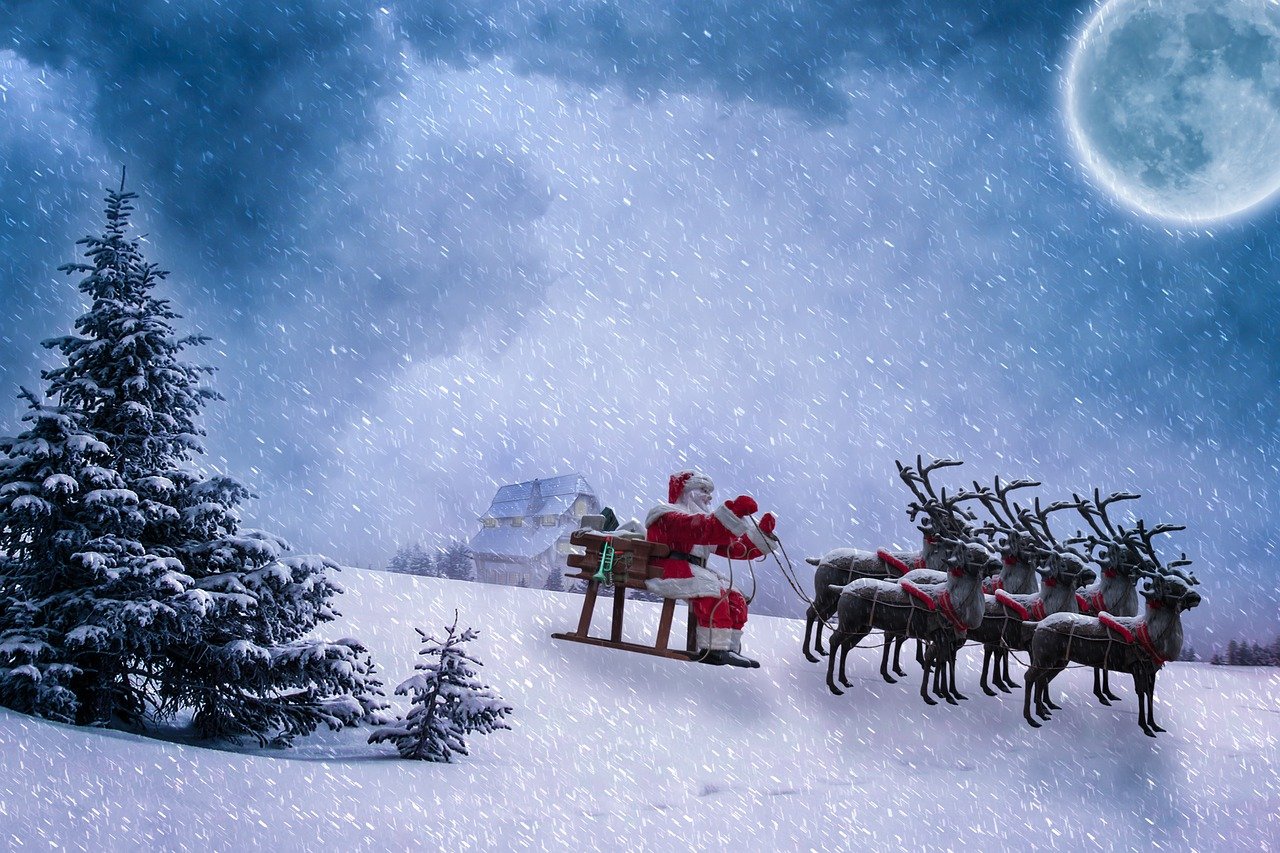
 www.expatchatter.net