


The World in 2026 Feels Different: 5 Trends That Prove Everything Is Changing
1. Artificial Intelligence Is Replacing Human Thinking

Artificial intelligence is no longer a tool.
It is becoming a decision-maker.
In previous years, AI helped humans complete tasks faster. In 2026, it is increasingly replacing the need for human input altogether. Businesses now rely on AI not just for automation, but for strategy, analysis, and even creativity.
Entire departments are shrinking — not because companies are failing, but because they no longer need as many people.
Customer support is handled by AI agents that respond instantly, without fatigue. Marketing campaigns are generated by algorithms that analyze millions of data points in seconds. Financial predictions are no longer based on human intuition but on machine learning systems that constantly adapt in real time.
Even creative industries are changing.
Music, images, videos, and articles can now be generated at a level that rivals human output. For many users, it is becoming increasingly difficult to distinguish between human-made and AI-generated content.
But the deeper shift is psychological.
People are starting to trust machines more than themselves.
When faced with decisions — from investments to health advice — many now turn to AI systems first. The authority of human expertise is slowly being replaced by algorithmic confidence.
This raises uncomfortable questions.
If machines can think faster, learn faster, and produce faster — what is left for humans?
The answer may not be competition.
It may be adaptation.
Those who learn how to work with AI, guide it, and understand its limitations will thrive. Those who ignore it may find themselves left behind in a world that no longer waits.
2. Extreme Weather Is Becoming the New Normal

The climate is no longer changing slowly.
It is shifting aggressively.
In 2026, extreme weather events are not rare headlines — they are recurring realities. Heatwaves arrive earlier and last longer. Storms grow more intense. Floods and droughts appear in places that were once considered stable.
The idea of “normal weather” is disappearing.
Cities are being forced to adapt quickly. Infrastructure designed decades ago is struggling to handle modern conditions. Air conditioning is no longer a luxury in many regions — it is a necessity. Water shortages are becoming a political issue, not just an environmental one.
For travelers, this changes everything.
Destinations that were once predictable are now uncertain. A sunny coastal escape can quickly turn into a week of strong winds and cold temperatures. Mountain regions face unpredictable snowfall. Even traditional “safe seasons” are becoming unreliable.
The psychological impact is just as significant.
People are beginning to feel a loss of control. The environment, once seen as stable and predictable, now feels volatile and uncertain. This creates a subtle but constant sense of tension.
And yet, adaptation is already happening.
New technologies are emerging to monitor, predict, and respond to extreme conditions. Cities are redesigning urban spaces to handle heat and water more efficiently. Individuals are becoming more aware of sustainability and environmental impact.
But the question remains:
Are we adapting fast enough?
Because the climate is not waiting.
3. Digital Life Is Replacing Real Life

Human connection is changing.
Not disappearing — but transforming.
In 2026, more interactions happen through screens than in person. Friendships are maintained through messages, reactions, and short videos. Relationships begin online, evolve online, and sometimes end without ever fully existing in the physical world.
The line between digital and real is fading.
Social media is no longer just a platform for sharing moments. It is becoming the place where moments are created. Experiences are often shaped by how they will appear online rather than how they are felt in reality.
Travel itself has changed.
For many, the goal is no longer just to experience a destination — but to capture it. A perfect photo can matter more than the moment itself. Locations become backdrops for content rather than places to explore.
At the same time, virtual spaces are becoming more immersive.
People attend events in digital environments, interact through avatars, and form communities that exist entirely online. These spaces offer connection without distance, but also without physical presence.
This shift has both benefits and consequences.
On one hand, digital life allows people to stay connected across the world. It creates opportunities for collaboration, creativity, and communication that were impossible before.
On the other hand, it can lead to isolation.
The paradox of 2026 is this:
We are more connected than ever — yet many feel more alone than ever.
Understanding how to balance digital and real life may become one of the most important skills of this decade.
4. The “Longevity Boom” Is Redefining Life Itself
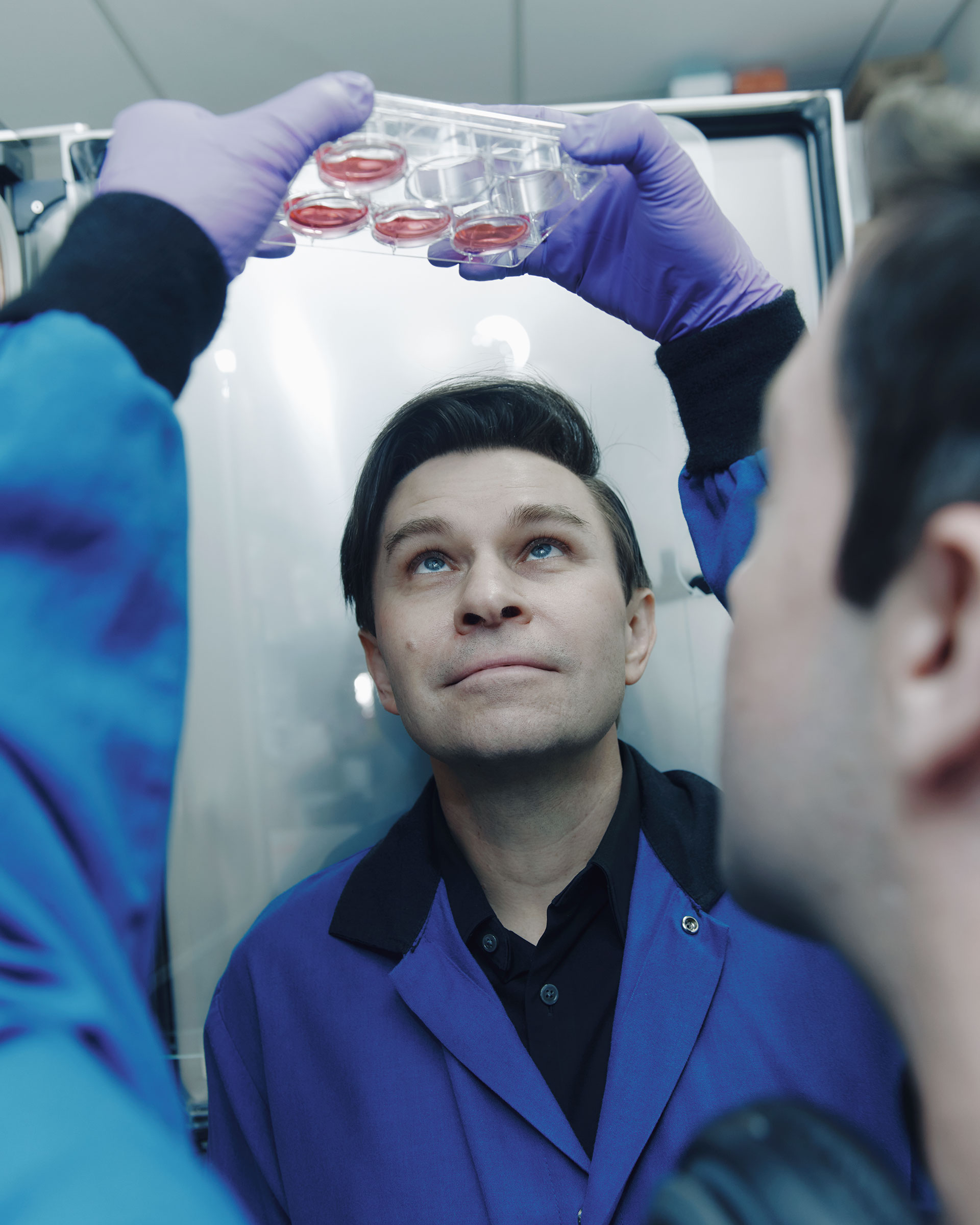
A new industry is quietly growing — and it is worth billions.
The longevity industry.
In 2026, more people are investing in extending their lives than ever before. From advanced medical treatments to daily supplements, from biohacking routines to genetic research — the goal is no longer just to live longer, but to live better for longer.
Aging is being redefined.
Instead of accepting it as an inevitable decline, people are treating it as a process that can be slowed, optimized, and potentially reversed. Wealthy individuals are funding research into cellular regeneration, while everyday consumers are adopting routines designed to improve long-term health.
This shift is not just scientific.
It is cultural.
People are planning their lives differently. Careers, relationships, and financial decisions are being reconsidered in a world where living to 100 or beyond may become more common.
The implications are enormous.
Healthcare systems will need to adapt. Retirement may no longer begin at a fixed age. Entire industries — from insurance to real estate — will need to rethink their models.
But there is also a deeper question:
What does it mean to live a longer life?
If we extend our years, how do we ensure those years are meaningful?
Longevity is not just about time.
It is about quality, purpose, and experience.
And in 2026, that conversation is only just beginning.
5. Reality Is Becoming Harder to Trust

The final trend may be the most unsettling.
Reality itself is becoming uncertain.
With the rise of advanced AI, it is now possible to generate images, videos, and voices that are almost indistinguishable from real ones. Deepfakes are no longer rare — they are increasingly accessible.
This creates a new kind of challenge.
Not just knowing what is true — but knowing if anything is true.
News spreads faster than ever, but verification struggles to keep up. Social media platforms amplify content regardless of its accuracy. As a result, misinformation can travel across the world in minutes.
For individuals, this creates confusion.
For societies, it creates risk.
Trust — in media, in institutions, in each other — becomes harder to maintain.
And yet, awareness is growing.
People are becoming more cautious, more analytical, and more aware of how information is created and shared. New tools are being developed to detect manipulation and verify authenticity.
But the reality is clear:
The information age has entered a new phase.
It is no longer just about access to information.
It is about the ability to navigate it.
A World That Will Not Slow Down
The world in 2026 is not just changing.
It is accelerating.
Artificial intelligence is reshaping how we work and think. The climate is redefining how we live. Digital life is transforming how we connect. Longevity is changing how we plan our futures. And reality itself is becoming more complex and harder to trust.
These trends are not temporary.
They are structural.
They will continue to evolve, influence one another, and shape the direction of the world for years to come.
For individuals, the challenge is not to stop these changes.
It is to understand them.
To adapt.
To stay aware.
Because in a world that is constantly shifting, the greatest advantage is not strength or speed.
It is clarity.
And those who see the change — truly see it — will be the ones best prepared for what comes next.