

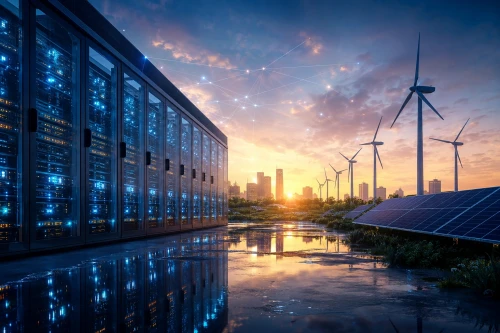
Artificial intelligence is becoming one of the defining technologies of the 2020s. AI assistants can write, create images, analyze documents, generate software and increasingly perform tasks on behalf of their users. But behind every AI interaction lies something less visible: enormous computing infrastructure.
As the global AI race accelerates, technology companies are building data centers at unprecedented speed. These facilities require huge amounts of electricity, water and advanced computer chips. The result is a new question that is becoming increasingly important around the world:
Can the planet generate enough energy to power the AI revolution?
The answer could shape not only the future of technology, but also energy markets, climate policy, infrastructure and geopolitics.
The Hidden Infrastructure Behind AI
When people use an AI chatbot, the experience appears almost effortless. A question is typed into a phone or computer and an answer appears seconds later.
Behind that simple interaction, however, are thousands of servers working inside massive data centers.
Training advanced AI models requires enormous computational resources. Running those models for millions of users also requires continuous electricity. As AI becomes integrated into search engines, smartphones, office software, autonomous systems, financial services and industrial operations, demand for computing power is growing rapidly.
Gartner estimates that worldwide spending on AI-optimized infrastructure as a service could reach approximately $42 billion in 2026, representing a 96% increase over the previous year.
That growth is transforming AI from a purely technological story into an energy story.
Data Centers Are Becoming Strategic Infrastructure
For decades, countries primarily competed over oil, gas, electricity grids and industrial capacity.
Now another resource is becoming strategically important: computing power.
The largest technology companies are investing billions of dollars in new data centers. These facilities are increasingly being built close to reliable electricity sources and major network infrastructure.
The trend is changing local economies as well.
A new data center can bring investment, construction jobs and tax revenue. But it can also create pressure on electricity grids and water supplies.
This is why communities in several parts of the world are beginning to ask whether AI infrastructure should have unrestricted access to local resources.
The debate is no longer simply about whether AI is useful.
It is becoming a debate about who pays for the infrastructure that makes AI possible.
AI's Growing Electricity Appetite
The International Energy Agency has highlighted the rapid growth of electricity consumption by data centers. Global electricity demand from data centers increased by around 17% in 2025.
The number becomes more significant when considering what may happen next.
AI models are becoming more powerful. At the same time, more people are using them and companies are integrating AI into everyday software.
Instead of asking a chatbot one question, an AI agent may eventually perform dozens of actions automatically: searching the internet, analyzing files, booking appointments, writing emails, monitoring markets or managing business processes.
That means the future of AI may involve not just more users, but more continuous computation.
The shift from "asking AI" to "AI doing things" is already becoming visible. OpenAI recently described this transition as AI moving from something people ask questions to something they actively put to work.
More useful AI could therefore also mean more demand for electricity.
The Climate Paradox
This creates one of the most fascinating contradictions surrounding artificial intelligence.
AI could help reduce emissions.
It can optimize electricity grids, improve weather forecasting, make industrial processes more efficient, reduce unnecessary transportation and help researchers develop new technologies.
AI could also accelerate scientific research into batteries, renewable energy and climate adaptation.
The World Economic Forum has argued that AI can play an important role in accelerating the energy transition and improving climate adaptation.
But AI itself requires enormous infrastructure.
And that infrastructure consumes electricity.
If the additional electricity comes from low-carbon sources, the environmental impact can be significantly reduced.
If it comes from coal, oil or natural gas, the situation becomes much more complicated.
This creates what could become the AI climate paradox:
The technology that could help humanity fight climate change could also increase energy demand enough to make the problem harder.
The Return of Fossil Fuels?
The AI boom is already influencing discussions about the future of natural gas, nuclear power and renewable energy.
Technology companies want reliable electricity available 24 hours a day. Solar and wind power are expanding rapidly, but their output depends on weather conditions.
That makes energy storage, nuclear power, hydroelectricity and natural gas increasingly important parts of the conversation.
Some recent analyses have raised concerns that AI could increase demand for fossil-fuel energy rather than immediately replacing it with renewable alternatives.
This does not mean AI will inevitably increase global emissions.
The outcome will depend heavily on how quickly electricity generation becomes cleaner and how efficiently AI systems operate.
In other words, the environmental impact of AI may ultimately depend as much on the energy system surrounding the technology as on the technology itself.
Water: The Other Resource Nobody Sees
Electricity is not the only resource required by modern data centers.
Cooling powerful computers can require significant amounts of water.
As AI infrastructure expands, water consumption is becoming another part of the debate.
This matters particularly in regions already suffering from drought or water shortages.
A data center may appear to be a highly digital facility, but its physical infrastructure can have a very real impact on the surrounding environment.
The United Nations University has highlighted the growing environmental footprint of AI infrastructure, including carbon emissions, water consumption and land use.
This means that the AI revolution is not happening entirely in the cloud.
It is happening in buildings, power stations, transmission networks, semiconductor factories and cooling systems around the world.
The New Geopolitics of Computing
Energy is only one side of the AI competition.
Countries are also competing for advanced semiconductors, data centers, research talent and access to computing infrastructure.
The United States and China remain central players in this competition, while Europe, Japan, South Korea, Taiwan and other economies are trying to strengthen their own technological capabilities.
Computing power is increasingly becoming a strategic asset.
The geopolitical consequences could be enormous.
A country with abundant electricity, advanced chips and powerful AI infrastructure may gain an advantage in manufacturing, defense, science and financial services.
This means that the global AI race could eventually resemble previous races over oil, telecommunications or space technology.
The difference is that the new strategic resource is not something extracted from the ground.
It is computation.
AI Could Change the Electricity Grid
There is another possibility that is often overlooked.
AI may not simply consume electricity.
It could also help transform the electricity system itself.
AI can analyze enormous quantities of data from power grids and predict demand more accurately. It can help operators identify failures, optimize energy distribution and coordinate renewable generation with consumption.
In the future, AI-powered systems could potentially help households and businesses automatically decide when to charge batteries, use appliances or consume electricity based on real-time prices and availability.
That could make the grid more flexible.
In this scenario, AI becomes both a major consumer of electricity and a tool for managing electricity more intelligently.
The Race for More Efficient AI
The solution may not simply be to build more power plants.
Another approach is to make AI itself more efficient.
Researchers and technology companies are working on smaller models, specialized chips and more efficient methods of running AI systems.
If the amount of computing required to perform a task falls dramatically, the energy cost of that task could also decline.
This could become one of the most important technological competitions of the next decade.
The winning AI company may not necessarily be the one with the largest model.
It could be the company that produces the most capable AI with the least computing power.
A New Kind of Digital Infrastructure
The first internet revolution required cables, routers, mobile networks and data centers.
The AI revolution is building another layer on top of that infrastructure.
It requires specialized chips, enormous data centers, high-capacity electricity connections and increasingly sophisticated cooling systems.
That infrastructure is becoming so important that it may influence where factories are built, where energy infrastructure is developed and which regions become technology hubs.
The geography of AI could therefore become just as important as the software itself.
What Happens Next?
The next few years could determine whether the AI boom becomes compatible with a cleaner energy future.
Three things will matter enormously.
First, how quickly renewable and low-carbon electricity expands.
Second, how efficiently AI models and data centers use energy and water.
Third, whether governments and technology companies can coordinate infrastructure development before electricity and water shortages become serious constraints.
The stakes are high.
AI could help humanity solve some of its biggest problems, from energy optimization to scientific discovery.
But technological progress has never been free.
Every digital service ultimately depends on physical resources.
The smartphone in your hand may feel weightless.
The cloud may sound invisible.
Artificial intelligence may appear almost magical.
But somewhere in the world, machines are consuming electricity to make it work.
And as AI becomes more powerful, that invisible energy bill could become one of the biggest stories of the decade.
The Real AI Question
For years, the central question surrounding artificial intelligence was:
How intelligent can machines become?
That question is still important.
But a new question is emerging:
How much energy will the world need to support them?
The answer could determine the speed of the AI revolution, the future of electricity markets and even the environmental consequences of one of the most transformative technologies in human history.
AI may ultimately become greener, smarter and more efficient.
But for now, the world's most powerful technology is discovering a very physical limitation:
intelligence needs energy.
#AI #artificialintelligence #technology #energy #climatechange #future
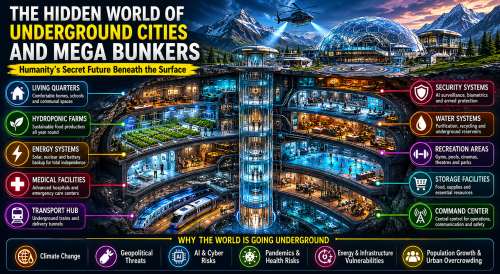


As we stand at the precipice of the future, the Earth faces an array of formidable challenges that pose grave threats to its delicate balance. From environmental issues to technological advancements, the following are some of the greatest threats that loom over our planet in the coming years.
- Climate Change:
Undoubtedly, one of the most pressing threats to Earth is climate change. The planet is experiencing unprecedented shifts in weather patterns, rising temperatures, and extreme weather events. Human activities, such as the burning of fossil fuels and deforestation, contribute to the accumulation of greenhouse gases, intensifying the greenhouse effect and disrupting the Earth's climate equilibrium.
The consequences of climate change are far-reaching, including rising sea levels, more frequent and severe natural disasters, and the endangerment of countless species. Urgent and collective action is required to mitigate the impact of climate change and transition towards a sustainable, low-carbon future.
- Biodiversity Loss:
The loss of biodiversity is another critical threat that jeopardizes the intricate web of life on Earth. Habitat destruction, pollution, over-exploitation of natural resources, and climate change contribute to the alarming decline in biodiversity. The extinction of species disrupts ecosystems, diminishing their resilience and functionality.
Biodiversity loss not only threatens countless plant and animal species but also jeopardizes human well-being. Ecosystem services, such as pollination, water purification, and climate regulation, depend on a diverse array of species. Preserving and restoring biodiversity is essential for maintaining the health and balance of our planet.
- Technological Risks:
While technological advancements have brought about numerous benefits, they also pose significant risks to Earth. Artificial intelligence, biotechnology, and nanotechnology hold the potential for both great advancements and catastrophic consequences if not managed responsibly. The development of powerful technologies, such as autonomous weapons and unregulated artificial intelligence, raises ethical and security concerns.
Additionally, the rapid growth of electronic waste, coupled with the depletion of natural resources to manufacture technology, contributes to environmental degradation. Striking a balance between technological innovation and responsible use is crucial for safeguarding the planet's future.
- Water Scarcity:
As the global population continues to rise, so does the demand for water. Water scarcity is emerging as a significant threat, exacerbated by climate change, pollution, and unsustainable water management practices. Many regions are already facing water stress, leading to conflicts over access to this essential resource.
Efforts to address water scarcity must include sustainable water management practices, conservation, and the development of innovative technologies for water purification and desalination. Promoting water-conscious lifestyles and policies is essential to ensure equitable access to clean water for all.
- Global Health Crises:
Recent global health crises, such as the COVID-19 pandemic, highlight the interconnectedness of human health and the environment. Zoonotic diseases, which originate in animals and transmit to humans, underscore the importance of preserving ecosystems and addressing the factors that contribute to the emergence of such diseases.
Preventing and managing global health crises requires international cooperation, investment in healthcare infrastructure, and a focus on sustainable practices to reduce the risk of future pandemics.
As we navigate the challenges of the coming years, addressing these threats to Earth requires a concerted and global effort. Governments, businesses, communities, and individuals must work together to enact sustainable practices, prioritize environmental conservation, and embrace technological innovation responsibly. By acknowledging and actively combating these threats, we can pave the way for a more resilient and sustainable future for our planet.