

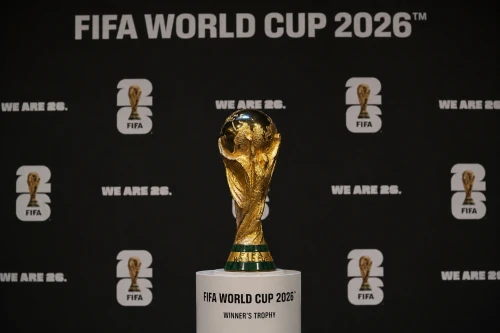




The 2026 FIFA World Cup is set to be a landmark event, marking the first time the tournament will be hosted across three countries: the United States, Canada, and Mexico. This edition also introduces an expanded format, increasing the number of participating teams from 32 to 48, resulting in a total of 104 matches.
A Brief History of the 2026 World Cup Bid
In 2018, the joint bid from the United States, Canada, and Mexico, known as the "United 2026" bid, was selected by FIFA over Morocco by a vote of 134–65. The North American bid highlighted the availability of 23 already constructed stadiums and the necessary infrastructure to accommodate the influx of players and fans. FIFA's evaluation deemed the United bid as low to medium risk, while Morocco's bid received higher risk assessments. Additionally, the projected profits from the North American bid were estimated at $11 billion, significantly higher than Morocco's projections, influencing FIFA's decision.
Tournament Schedule
The 2026 World Cup is scheduled to take place from June 11 to July 19, 2026. The opening match will be held at the historic Estadio Azteca in Mexico City, making it the first stadium to host World Cup matches in three different tournaments (1970, 1986, and 2026). The final is set to take place at MetLife Stadium in East Rutherford, New Jersey, on July 19, 2026.
Host Cities and Stadiums
The tournament will be hosted across 16 cities in the three countries, each offering unique venues:
United States (11 cities):
- Atlanta: Mercedes-Benz Stadium
- Boston (Foxborough): Gillette Stadium
- Dallas (Arlington): AT&T Stadium
- Houston: NRG Stadium
- Kansas City: Arrowhead Stadium
- Los Angeles (Inglewood): SoFi Stadium
- Miami (Miami Gardens): Hard Rock Stadium
- New York/New Jersey (East Rutherford): MetLife Stadium
- Philadelphia: Lincoln Financial Field
- San Francisco Bay Area (Santa Clara): Levi's Stadium
- Seattle: Lumen Field
Canada (2 cities):
- Toronto: BMO Field
- Vancouver: BC Place
Mexico (3 cities):
- Guadalajara: Estadio Akron
- Mexico City: Estadio Azteca
- Monterrey: Estadio BBVA
Political Climate and Its Impact on the Tournament
The lead-up to the 2026 World Cup has been influenced by notable political dynamics among the host nations. In March 2025, U.S. President Donald Trump imposed a 25% tariff on goods from Canada and Mexico, leading to heightened trade tensions. Despite these challenges, President Trump expressed optimism, suggesting that such tensions could enhance the tournament's excitement. He established a task force, chaired by himself, to coordinate federal security and planning for the event, emphasizing the administration's commitment to organizing a successful World Cup.
Innovations and Fan Reactions
FIFA has announced the introduction of a halftime show during the 2026 World Cup final, a first in the tournament's history. The final, to be held at MetLife Stadium, will feature a Super Bowl-like halftime show, with artists performing and extending the usual 15-minute break. This decision has sparked mixed reactions among fans, with some expressing concerns that it may disrupt the traditional football experience.
The 2026 FIFA World Cup promises to be a historic event, not only for its unprecedented tri-nation hosting arrangement and expanded team format but also for the interplay between sports and politics. As preparations continue amidst complex political landscapes and innovative changes, fans worldwide eagerly anticipate a tournament that will undoubtedly leave a lasting impact on the world of football.
Key Innovations & New Features
✔ 48 Teams Instead of 32 – The tournament expands to 48 teams, divided into 12 groups of 4 teams each.
✔ More Matches – A record-breaking 104 matches will be played.
✔ Three Host Countries – The first time the World Cup is hosted by three nations.
✔ Automatic Qualification for Hosts – USA, Canada, and Mexico qualify automatically.
✔ Expanded Knockout Stage – A Round of 32 is introduced for the first time.
✔ Halftime Show in the Final – FIFA plans to introduce an NFL-style halftime show during the World Cup Final.
✔ New Sustainability Measures – FIFA aims to reduce the carbon footprint of the event through green initiatives.
Tournament Schedule
- Opening Match: June 11, 2026 – Estadio Azteca, Mexico City 🇲🇽
- Group Stage: June 11 - June 27, 2026
- Round of 32: June 28 - July 2, 2026
- Round of 16: July 3 - July 6, 2026
- Quarter-finals: July 9 - July 11, 2026
- Semi-finals: July 14 - July 15, 2026
- Third-place Match: July 18, 2026
- Final: July 19, 2026 – MetLife Stadium, New York/New Jersey 🇺🇸

The European Football Championships, commonly known as the Euros, is one of the most prestigious and eagerly anticipated tournaments in the world of football. Organized by the Union of European Football Associations (UEFA), this quadrennial event brings together the finest national teams from across Europe to compete for continental glory. Since its inception, the Euros have been a stage for thrilling matches, historic moments, and remarkable records. Let's delve into some fascinating facts and curiosities about this celebrated tournament.
Historical Beginnings
The idea for a European football championship was first proposed in 1927 by Henri Delaunay, then secretary of the French Football Federation. However, it wasn't until 1960 that the first tournament took place, with France as the host nation. Initially called the European Nations' Cup, the competition featured only four teams in the final tournament. The Soviet Union emerged as the first champions, defeating Yugoslavia 2-1 in the final held in Paris.
Evolution of the Tournament
Over the years, the Euros have expanded significantly. The tournament format has evolved from the original four-team competition to a 16-team event in 1996, and eventually to the current 24-team format introduced in 2016. This expansion has allowed for more thrilling matches and given smaller nations a chance to shine on the big stage.
Record-Breaking Performances
- Most Titles: Spain hold the record for the most European Championship titles. Spain claimed their titles in 1964, 2008, 2012 and 2024.
- Historic Goals: Michel Platini, the French football legend, holds the record for the most goals scored in a single tournament. He netted nine goals during the 1984 Euros, leading France to their first title.
- Longest Match: The longest match in Euros history took place in 1960 when the semi-final between Czechoslovakia and the Soviet Union ended 3-0 in favor of the Soviets after 120 minutes of play.
Memorable Moments
- Denmark's Fairytale Win (1992): Denmark's victory in the 1992 Euros is one of the most remarkable underdog stories in football. The Danes were initially not part of the tournament but were called up to replace Yugoslavia, who were disqualified due to the civil war. Against all odds, Denmark went on to win the championship, defeating Germany 2-0 in the final.
- Greece's Stunning Triumph (2004): Another incredible upset occurred in 2004 when Greece, managed by Otto Rehhagel, won the Euros by defeating hosts Portugal 1-0 in the final. Greece's disciplined and defensive play stunned the football world and earned them their first major international trophy.
- Spain's Dominance (2008-2012): Spain's national team achieved an unprecedented feat by winning three consecutive major tournaments: Euro 2008, the 2010 FIFA World Cup, and Euro 2012. Their style of play, known as "tiki-taka," revolutionized football and set a new standard for excellence.
Unique Trivia
- Pan-European Format (2020): To celebrate the 60th anniversary of the European Championships, UEFA decided to host the 2020 tournament across 12 different cities in 12 different countries. This unique format aimed to bring the competition closer to fans across the continent. Despite the COVID-19 pandemic causing a one-year postponement, the tournament retained its original name, Euro 2020.
- Oldest and Youngest Players: The oldest player to appear in a European Championship match is Hungary's Gábor Király, who played at Euro 2016 at the age of 40. The youngest player to feature in the tournament is Dutch forward Jetro Willems, who made his debut at Euro 2012 at just 18 years and 71 days old.
- Golden Boot: The Golden Boot, awarded to the top scorer of the tournament, has seen joint winners on several occasions. For example, in Euro 2000, Patrick Kluivert of the Netherlands and Savo Milošević of Yugoslavia both scored five goals each.
Cultural Impact
The European Football Championships have a significant cultural impact, uniting fans from diverse backgrounds and fostering a sense of continental camaraderie. The tournament has produced iconic moments that resonate far beyond the football pitch, influencing art, music, and national pride.
As the Euros continue to evolve and capture the imagination of football enthusiasts worldwide, the tournament's rich history and unique stories ensure its place as a cornerstone of international football. Whether it's witnessing underdog victories, record-breaking performances, or the sheer passion of the fans, the European Football Championships remain a celebration of the beautiful game.