


The Geography of Safety: Why Safe Countries Will Become the Most Expensive in the World
Redefining Safety in the 21st Century
When people hear “safety,” they often think of crime statistics. But the geography of safety extends far beyond street-level security.
In a macroeconomic context, safety includes:
- Political stability and peaceful transfers of power
- Low corruption and strong rule of law
- Reliable property rights
- Stable currency and fiscal governance
- Predictable regulatory environments
- Social cohesion and low polarization
- Climate resilience
- Energy security
- Cyber defense capacity
Safety is systemic. It is the sum of institutional reliability across time.
In the industrial era, safety was tied to military strength. In the Cold War era, it was tied to ideological alignment. In the globalized era, it was tied to economic integration.
In the fragmented era emerging today, safety is increasingly tied to resilience.
The safest countries will not necessarily be the most dynamic ones. They will be the most durable.
Volatility as the New Baseline
For three decades following the Cold War, global markets experienced a relatively stable macro-environment:
- Expanding globalization
- Falling trade barriers
- Integrated supply chains
- Energy abundance
- Central bank credibility
- Predictable geopolitical blocs
This period conditioned investors and households to assume that shocks were temporary.
Today, that assumption is fading.
Geopolitical competition between major powers is intensifying. Trade fragmentation is accelerating. Strategic industries are being reshored. Demographic aging is straining fiscal systems. Climate events are increasing in frequency and cost.
These forces are not cyclical. They are structural.
And structural volatility changes how capital allocates.
When risk becomes persistent rather than episodic, the premium attached to safety increases dramatically.
The Risk Premium Reimagined
In financial markets, risk is priced.
Sovereign bond yields reflect perceived government stability.
Currency valuations reflect trust in monetary institutions.
Equity multiples reflect long-term confidence.
Countries perceived as risky pay more to borrow. Their currencies depreciate under stress. Their equity markets trade at discounts.
Countries perceived as safe benefit from lower borrowing costs, stronger currencies, and higher asset valuations.
This mechanism is not new. But its importance may increase in a more unstable world.
If volatility remains elevated for decades rather than years, the divergence between safe and unstable countries may widen dramatically.
Safety becomes compounded.
Real Estate: The Physical Expression of Trust
The first and most visible market to reflect the geography of safety is property.
Real estate captures long-term expectations. A home is not a short-term trade. It is a bet on the durability of a location.
When families choose where to live, they consider:
- Education systems
- Healthcare reliability
- Crime levels
- Political calm
- Infrastructure quality
- Environmental risk
In safe countries, property is not just shelter. It is embedded insurance.
Consider global examples of consistently stable societies.
🇨🇭 Switzerland

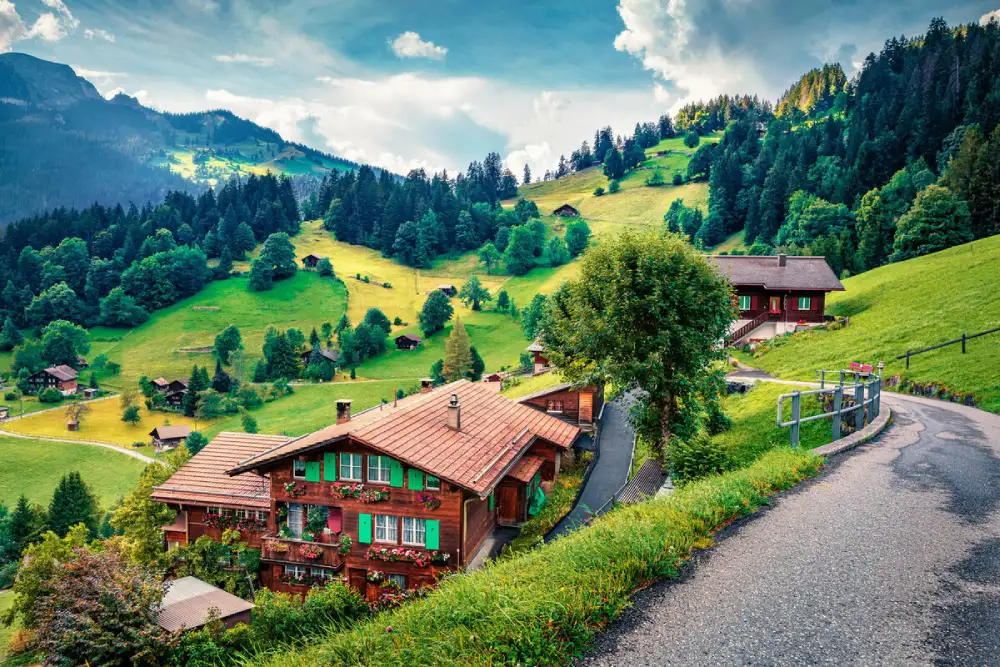


Switzerland’s neutrality, decentralized governance, fiscal discipline, and strong banking tradition have built long-term institutional trust. Its property markets reflect not only wealth but demand for predictability.
🇸🇬 Singapore


Singapore offers regulatory clarity, strong public order, and economic resilience. Its urban safety is part of its global brand. Property pricing reflects global capital seeking stability.
🇳🇴 Norway


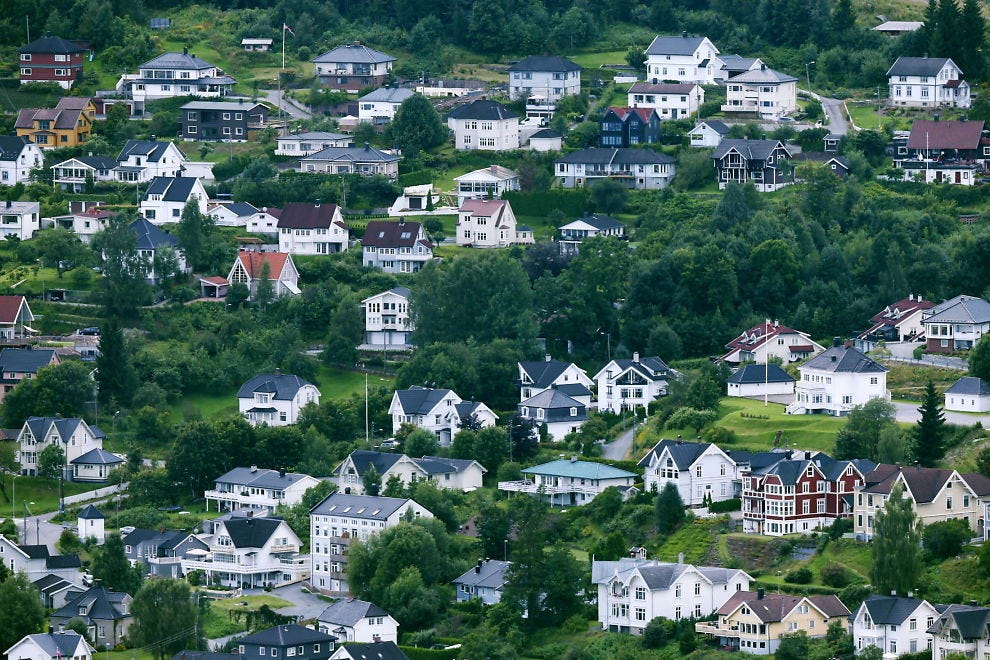
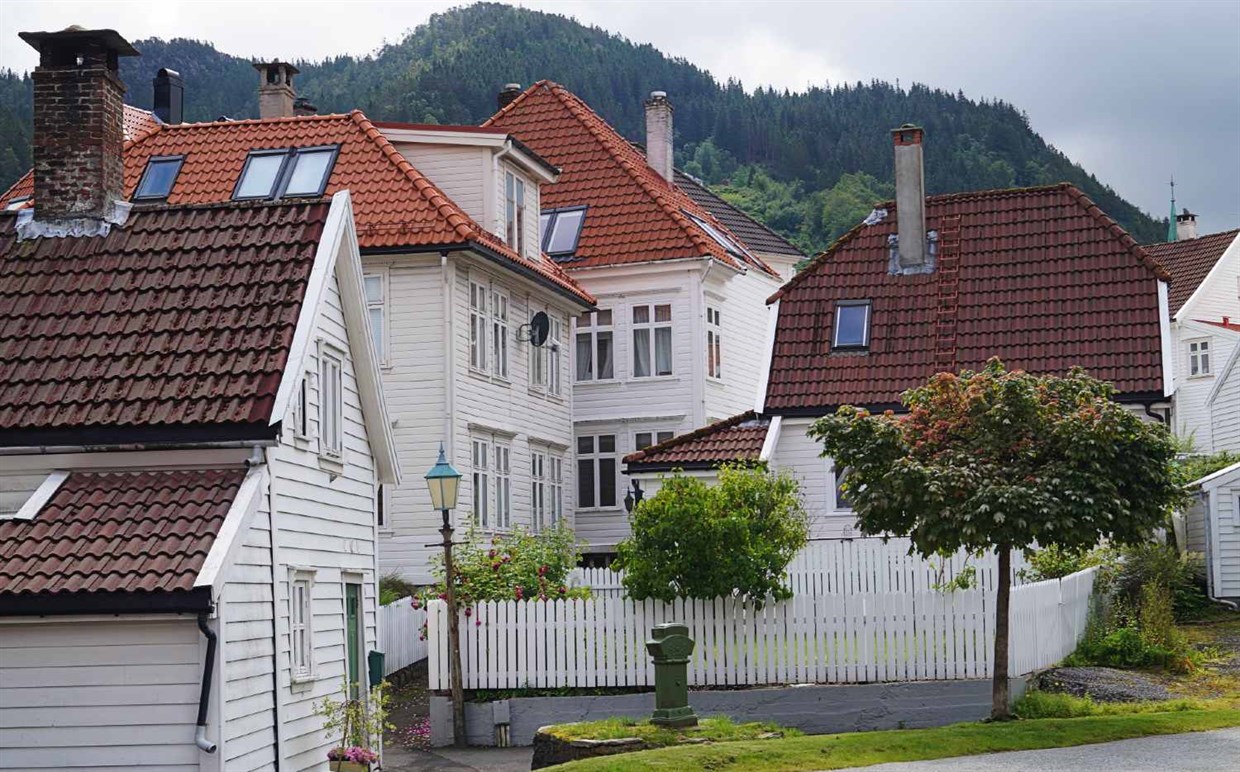
With sovereign wealth backing, low corruption, and high social trust, Norway exemplifies structural security embedded in governance.
In all these cases, safety is capitalized into land values.
As instability increases elsewhere, demand pressure may intensify.
Demography and the Security Dividend
Population aging is often framed as an economic burden. But in stable countries, it may produce an unexpected dividend.
Older populations prioritize safety over growth. They vote for stability, fiscal prudence, and institutional continuity.
This reinforces predictable governance.
Meanwhile, countries experiencing youth bulges combined with economic strain may face higher volatility risks.
Demography influences politics. Politics influences stability. Stability influences valuation.
Safety becomes self-reinforcing in certain regions.
Climate Stability: The Emerging Dimension
Climate change introduces a new axis of safety.
Regions facing extreme heat, water shortages, flooding, or wildfire exposure may see:
- Rising insurance costs
- Declining property valuations
- Infrastructure strain
- Population outflows
Conversely, temperate regions with resilient infrastructure may benefit from relative environmental stability.
Climate-safe zones may command growing premiums.
The geography of safety increasingly intersects with the geography of livability.
Energy Security and Strategic Autonomy
Energy shocks reveal structural vulnerability.
Countries heavily dependent on external energy sources face geopolitical leverage risks.
Energy independence or diversification reduces volatility.
Safe countries in the future may not be those with the highest GDP, but those with secure energy systems and resilient supply chains.
Resilience is the new competitiveness.
Social Cohesion as an Economic Asset
Polarization weakens institutional trust.
High-trust societies experience:
- Lower transaction costs
- Higher civic cooperation
- Stable regulatory cycles
- Lower corruption
When polarization rises, policy becomes unpredictable. Regulation swings. Business confidence erodes.
Safety is partly psychological.
Trust reduces perceived risk.
Countries with strong social cohesion may increasingly outperform those with political fragmentation.
Migration Toward Stability
Migration patterns increasingly reflect safety concerns.
Families relocating internationally cite:
- Political predictability
- Healthcare systems
- Educational quality
- Public order
Skilled migrants strengthen tax bases and innovation ecosystems.
This creates a virtuous cycle:
Safety attracts talent.
Talent strengthens institutions.
Institutions reinforce safety.
Meanwhile, unstable regions risk capital and human flight.
The divergence compounds.
Currency Stability as Psychological Anchor
Currency volatility undermines household security.
Inflation erodes savings.
Devaluation reduces purchasing power.
Fiscal instability weakens trust.
Safe countries maintain monetary credibility.
Central bank independence becomes part of national security architecture.
Stable currencies attract capital.
Capital inflows strengthen stability.
The feedback loop tightens.
Digital Security: The Invisible Frontier
As economies digitize, cyber resilience becomes essential.
A nation vulnerable to cyberattacks risks:
- Financial system paralysis
- Energy grid disruption
- Communication breakdown
- Institutional panic
Safe countries will increasingly invest in cybersecurity infrastructure as a competitive advantage.
Digital stability becomes part of geographic safety.
The Two-Tier World Scenario
If current trajectories continue, the world may gradually divide into:
Tier 1:
Highly stable, institutionally resilient, climate-moderate, expensive nations.
Tier 2:
Higher-growth but structurally volatile nations.
In such a world, safety becomes a premium good.
Access to Tier 1 environments may become limited by wealth.
The middle class could find itself priced out of the safest zones.
This introduces ethical and political implications.
Safety inequality may emerge.
Growth vs Preservation
In volatile eras, investors prioritize capital preservation.
High-growth but unstable markets may lose relative appeal.
If this shift persists, safe countries may not grow fastest — but they may accumulate the most long-term capital.
Valuations may reflect resilience rather than dynamism.
The economic narrative shifts from expansion to endurance.
Long-Term Structural Outlook
The geography of safety is not a trend driven by media cycles.
It reflects structural forces:
- Geopolitical fragmentation
- Climate instability
- Demographic aging
- Energy transitions
- Technological vulnerability
- Social polarization
These forces are unlikely to disappear quickly.
Countries that manage them effectively may see decades of premium positioning.
The Scarcity of Calm
Calm is invisible until it is rare.
In an increasingly volatile world, structural safety becomes scarce.
Scarcity drives value.
The safest countries may become the most expensive — not because they promise rapid growth, but because they offer something more valuable: durability.
The geography of safety is quietly becoming the new global map of value.
And in the decades ahead, resilience may matter more than expansion.
Comparative Safety Snapshot: Country-by-Country Analysis
Instead of reducing structural safety to a simple table, it is more useful to examine how leading “safe countries” perform across multiple independent metrics simultaneously.
What matters is not a single ranking — but convergence.
When peace, rule of law, corruption control, sovereign credit ratings, crime statistics, and property market behavior all point in the same direction, the economic signal becomes powerful.
Below is a structured country-by-country breakdown.
Switzerland: Institutional Stability as Economic Infrastructure
Switzerland consistently ranks in the global top tier across major safety metrics.
- Top 10 in the Global Peace Index
- Among global leaders in Rule of Law
- Very high score in Corruption Perceptions Index
- AAA sovereign credit rating
- Extremely low homicide rate (~0.5 per 100,000)
Its currency, the Swiss franc, often appreciates during global crises — a classic safe-haven behavior.
Property prices remain among the highest in Europe, with strong demand from international capital despite limited land supply.
Switzerland demonstrates how institutional trust becomes embedded in asset valuation.
Singapore: Order, Predictability and Capital Magnetism
Singapore combines strong governance, strict public order, and regulatory clarity.
- Top 10 in Global Peace rankings
- Among least corrupt countries globally
- AAA sovereign credit rating
- One of the lowest homicide rates worldwide (~0.2 per 100,000)
It consistently attracts high-net-worth individuals and global financial firms.
Despite limited geographic size, real estate prices remain among the most expensive in Asia.
Singapore shows how urban safety and administrative efficiency translate directly into capital inflows.
Denmark: High Trust, High Cost
Denmark frequently ranks:
- Top 5 in Global Peace Index
- #1 or #2 in Corruption Perceptions Index
- Top 5 in Rule of Law
Its homicide rate remains extremely low by global standards.
Denmark also maintains strong fiscal credibility and institutional transparency.
Housing costs in Copenhagen have risen significantly over the past decade, reflecting high demand in a limited, stable market.
High trust societies tend to produce high asset valuations.
Norway: Resource Wealth Combined with Governance
Norway offers a unique model of stability supported by its sovereign wealth fund.
- Among global leaders in Rule of Law
- Very low corruption
- Low homicide rates
- Strong fiscal reserves
Although the Norwegian krone fluctuates with energy markets, the country’s long-term financial buffers reduce systemic risk.
Property prices remain elevated, supported by political predictability and social cohesion.
Norway illustrates how resource wealth, when managed prudently, enhances structural safety.
New Zealand: Geographic Isolation as a Safety Asset
New Zealand ranks highly in peace and governance metrics.
- Top 5 in Global Peace Index
- High Rule of Law score
- Low corruption
- Low violent crime rates
Its geographic isolation provides an additional layer of perceived security.
In recent years, New Zealand property markets have experienced sharp price growth, partly reflecting global demand for stability.
Geographic remoteness, once a disadvantage, is increasingly perceived as insulation.
Cross-Country Pattern Recognition
When comparing these countries across:
- Peace rankings
- Rule of law performance
- Corruption control
- Sovereign credit ratings
- Crime statistics
- Housing affordability pressures
A consistent pattern emerges:
Countries that score highly across multiple safety dimensions tend to exhibit:
- Strong currencies
- Lower borrowing costs
- Higher property valuations
- Strong migration inflows
- Stable political transitions
Safety is multi-layered — and when multiple layers align, the economic premium strengthens.
Safety Convergence: The Key Signal
What matters most is not whether a country ranks 3rd or 7th.
What matters is convergence across independent indices.
When peace rankings, corruption indices, rule-of-law scores, and bond markets all align, they reinforce each other.
Markets interpret this convergence as structural durability.
Durability becomes value.
And value becomes price.